
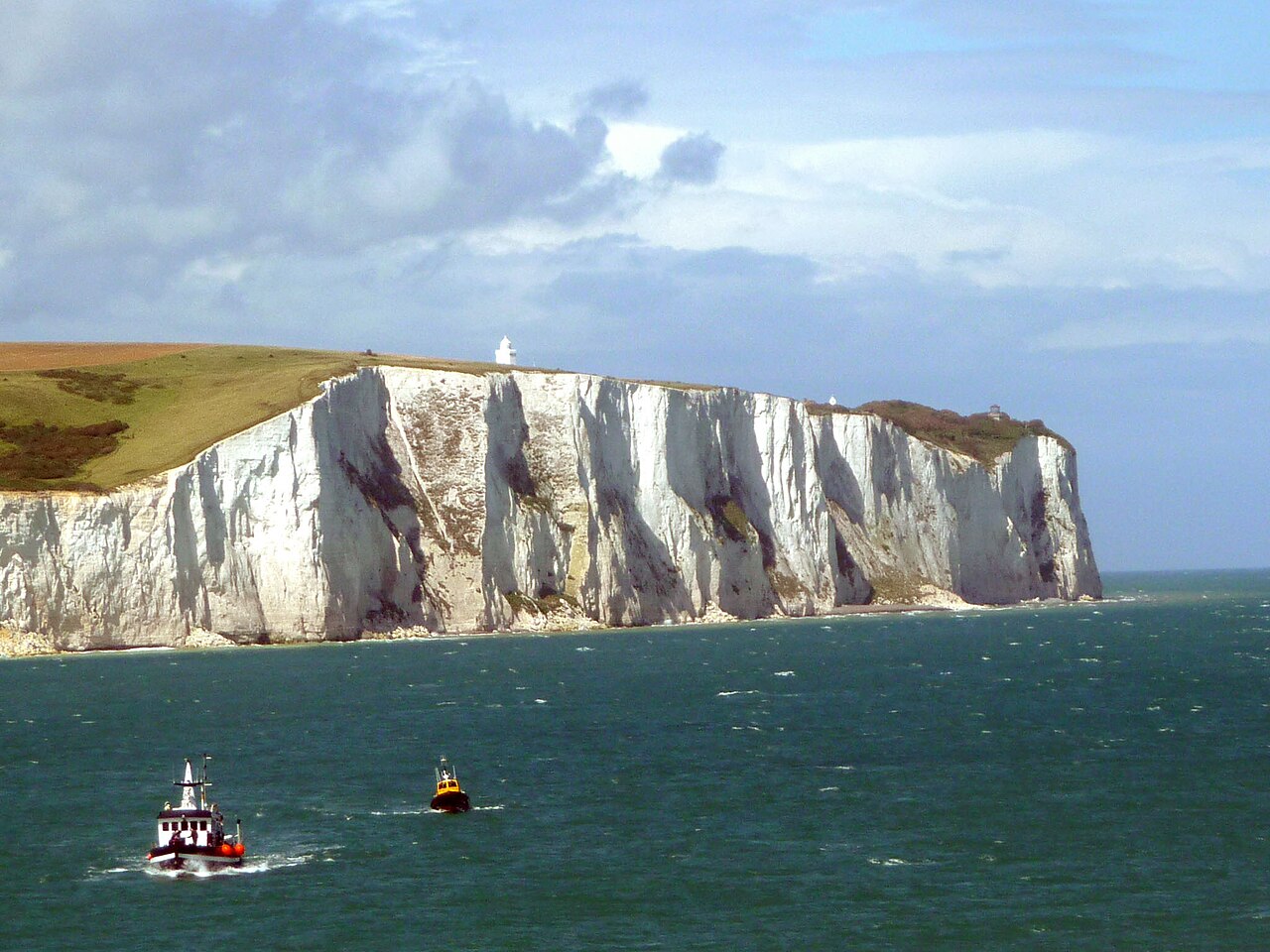
A bluff is a high, steep bank or cliff that rises sharply above a body of water such as a river, lake, or ocean. Unlike a sheer rock cliff, a bluff usually has a broad, rounded face, often partially covered with vegetation, and is built from softer material like clay, sand, glacial deposits, or loess. Bluffs form mainly through erosion, when moving water undercuts the base of a slope and the unsupported material above collapses.
Introduction
Bluffs are among the most recognizable landforms along rivers and coastlines worldwide. They mark the boundary where land meets water at an elevated edge, offering sweeping views and a sense of natural separation. Throughout human history, bluffs have served as strategic lookout points, defensive positions, and prime settlement sites because they provide elevation, drainage, and protection from flooding. Many towns and cities grew up on bluffs precisely for these reasons, and the word itself appears in dozens of place names across the United States.

How Bluffs Form
Every bluff is the product of erosion working faster on the base of a slope than on the top. As water removes material from below, the overlying ground loses support and breaks away, leaving a steep face. The process repeats over years, decades, and centuries, causing the bluff to retreat gradually inland. The specific mechanism depends on whether the bluff borders a river, an ocean, or a lake.
- River bluffs: Form when a meandering river erodes the outer bank of a bend, where the current runs fastest and deepest.
- Coastal bluffs: Created by ocean waves undercutting the base of a shoreline slope, often combined with salt-spray weathering.
- Lake bluffs: Shaped by wave action and, in cold climates, by the grinding and shoving of shoreline ice.
- Material: Composed of rock, glacial till, sand, clay, or wind-blown silt called loess.
River bluffs develop on the outside of meander bends where the current is strongest. The river scours the base of the bank, undercutting it until the unsupported material above topples into the channel. Over time this carves a high, steep bank along the outer curve, while the inner bank of the bend builds up a gentle deposit called a point bar. The result is the classic asymmetry of a meandering river valley: steep bluff on one side, low floodplain on the other.
Coastal bluffs form through a similar undercutting process, but the eroding agent is the sea. The constant pounding of waves, combined with chemical weathering from salt spray and the freeze-thaw cycle in colder regions, gradually eats away the bluff face. Material slumps to the beach below, where waves carry it off, exposing fresh ground to attack. This is why coastal bluffs are dynamic, ever-changing features rather than permanent walls.
Bluffs Versus Cliffs and Other Landforms
The terms "bluff" and "cliff" are often used interchangeably, but geographers draw a useful distinction. A cliff is typically a near-vertical face of hard, exposed rock, while a bluff is broader, somewhat gentler, and frequently made of softer, unconsolidated material that can support soil and plants. A bluff is steeper and higher than a simple riverbank but less sheer than a true cliff. Related landforms include escarpments (long cliff-like slopes separating two level surfaces) and headlands (high land projecting into the sea). Understanding these differences helps explain why bluffs erode and retreat more quickly than solid rock cliffs.
Famous Bluffs Around the World
- White Cliffs of Dover (England): 100-meter chalk bluffs facing the English Channel.
- Scotts Bluff (Nebraska): A landmark on the Oregon Trail, rising about 240 m above the surrounding plains.
- Natchez Bluffs (Mississippi): Loess bluffs standing some 60 m above the Mississippi River.
- Red Bluff (California): Named for the distinctive red bluffs lining the Sacramento River.
- Council Bluffs (Iowa): Named for the site where Lewis and Clark met Native American leaders on the Missouri River bluffs.
The White Cliffs of Dover are perhaps the world's most famous bluffs, their brilliant white chalk faces visible from France across the English Channel. The cliffs are composed of the shells of countless microscopic organisms (coccoliths) that accumulated on the sea floor roughly 70 million years ago. In the United States, the loess bluffs near Natchez are made of fine, wind-blown dust deposited during the Ice Ages, while Scotts Bluff guided thousands of pioneers westward as a natural milepost on the journey toward the American West.
Why Bluffs Matter to People
Bluffs have shaped where and how people live. Their elevation offered defensive advantages, so forts, lookout posts, and fortified settlements were often built on them. They also kept communities above floodwaters while providing commanding views of trade routes along rivers and coasts. Today, bluff-top real estate is highly prized for its scenery, yet it carries real risk: as the bluff erodes, homes, roads, and infrastructure built near the edge can be undermined. Coastal bluff erosion is accelerating in many places due to rising sea levels and stronger storms, making bluff stability an important issue for planners and homeowners alike.
Key Facts
- Definition: A high, steep cliff or bank overlooking a river, lake, or ocean.
- Main cause: Erosion that undercuts the base of a slope until the top collapses.
- River bluffs: Form on the outside of meander bends where current is strongest.
- Coastal bluffs: Created by wave action and salt weathering attacking the shoreline.
- Typical material: Clay, sand, glacial till, loess, or softer rock such as chalk.
- Famous example: The White Cliffs of Dover in England.
- Human use: Historically valued as defensive positions, lookouts, and flood-safe settlement sites.
Fun Facts
- Many American towns named "Bluff" or "Bluffs" sit on river bluffs, including Council Bluffs, Pine Bluff, Red Bluff, and Poplar Bluff.
- The loess bluffs along the Mississippi River near Natchez are made of wind-blown Ice Age dust.
- The word "bluff" as a geographic term may come from the Dutch "blaf," meaning a flat, broad surface.
- The same coastal bluffs that draw tourists for their views are quietly retreating inland a little more every year.
Final Thoughts
Bluffs are sculpted by the relentless work of water against land, creating elevated vantage points along rivers, lakes, and coasts. They sit at the intersection of geology and human history, having shaped settlement patterns, military strategy, and place names across the world. Whether chalk-white like Dover or rust-red like the Sacramento River, every bluff tells a story of erosion slowly reshaping the landscape.
Frequently Asked Questions
What is the difference between a bluff and a cliff?
A cliff is usually a near-vertical face of hard, exposed rock, while a bluff is broader and somewhat gentler, often made of softer material like clay, sand, or loess that can support vegetation. Bluffs are steeper and taller than ordinary banks but less sheer than true cliffs, and they tend to erode and retreat faster.
How do river bluffs form?
River bluffs form on the outside of a meander bend, where the current is fastest and deepest. The river undercuts the base of the bank, and the unsupported material above collapses. Repeated over time, this creates a high, steep bank on the outer curve while a gentle deposit builds on the inner curve.
What is the most famous bluff in the world?
The White Cliffs of Dover in England are among the most famous bluffs. These roughly 100-meter chalk faces overlook the English Channel and are made from the shells of microscopic sea organisms deposited about 70 million years ago.
Are bluffs dangerous to build on?
They can be. Bluff-top sites offer stunning views, but ongoing erosion gradually undermines the edge. Coastal bluff erosion is accelerating with rising sea levels and stronger storms, so buildings, roads, and infrastructure placed too close to a bluff can eventually be threatened.
Test Your Knowledge!
Think you know your geographic features? Try our interactive quiz!
Play Geography Games →