
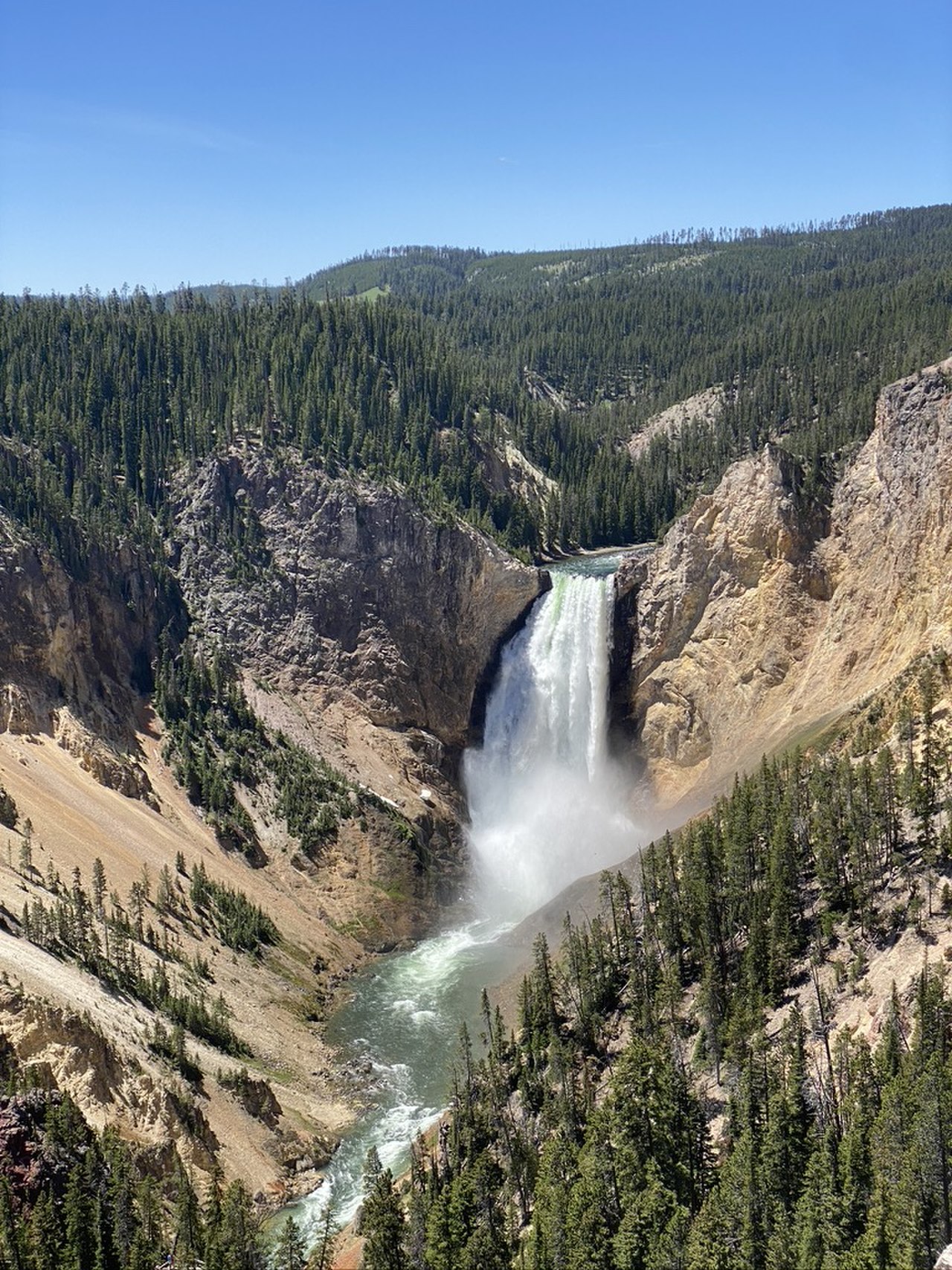
Yellowstone National Park in Wyoming, USA, established in 1872 as the world's first national park, covers 8,991 square kilometers of volcanic plateau, geysers, hot springs, and wildlife-rich valleys. It sits atop one of the world's largest active volcanic systems and contains more than half of the world's active geysers.
Introduction
The Serengeti ecosystem in Tanzania and Kenya covers approximately 30,000 square kilometers of savanna, woodlands, and grasslands. It hosts the Great Migration, in which roughly 1.5 million wildebeest, 200,000 zebras, and 350,000 gazelles circle the ecosystem in an annual cycle that is the largest mass movement of land animals on Earth.

Size & Geography
- Yellowstone Area: 8,991 km²
- Serengeti Area: ~30,000 km² (entire ecosystem)
- Yellowstone Location: Wyoming/Montana/Idaho, USA (44.6°N, 110.5°W)
- Serengeti Location: Tanzania/Kenya (2.3°S, 34.8°E)
- Yellowstone Elevation: 1,600-3,462 m
- Serengeti Elevation: 920-1,850 m
The Serengeti ecosystem is more than three times larger than Yellowstone, encompassing Serengeti National Park (14,763 km²), the Ngorongoro Conservation Area, Masai Mara in Kenya, and surrounding game reserves. Yellowstone, while smaller, sits atop a volcanic caldera that measures roughly 72 by 55 kilometers and last erupted catastrophically 640,000 years ago.
Both ecosystems are defined by their seasons. Yellowstone experiences harsh winters with deep snow and temperatures dropping to -40°C, while summers bring wildflowers and wildlife to the valleys. The Serengeti alternates between wet and dry seasons, with the Great Migration driven by the search for fresh grazing in a continuous clockwise circuit.
Yellowstone Profile
- Established: 1872 (world's first national park)
- Geysers: Over 500 (more than half the world's total)
- Key Species: Grizzly bear, wolf, bison, elk, moose
- Annual Visitors: ~4.9 million
Yellowstone's geothermal features are unique on Earth. Old Faithful erupts approximately every 90 minutes, but the park contains over 10,000 thermal features including the Grand Prismatic Spring (the largest hot spring in the US at 113 meters across), mud pots, fumaroles, and travertine terraces at Mammoth Hot Springs.
The reintroduction of gray wolves to Yellowstone in 1995 is one of the most celebrated conservation success stories. The wolves triggered a trophic cascade that changed the behavior of elk, allowing streamside vegetation to recover, which in turn stabilized riverbanks and improved habitat for birds, fish, and beavers. Yellowstone now supports roughly 100 wolves in about 10 packs.
Serengeti Profile
- Established: 1951 (national park)
- Great Migration: ~1.5 million wildebeest, 200,000 zebras, 350,000 gazelles
- Key Species: Lion, leopard, elephant, buffalo, rhino (Big Five)
- Annual Visitors: ~350,000
The Serengeti's Great Migration is the most spectacular wildlife event on Earth. Each year, roughly 2 million animals follow the rains in a clockwise circuit from the southern Serengeti plains (calving season, January-March) north to the Masai Mara in Kenya (July-October), crossing crocodile-infested rivers along the way. An estimated 250,000 wildebeest die annually from predation, drowning, and exhaustion.
The Serengeti supports one of the highest concentrations of large predators anywhere on Earth. Approximately 3,000 lions, 1,000 leopards, 8,000 spotted hyenas, and 500 cheetahs depend on the migrating herds. The Ngorongoro Crater, at the ecosystem's southeastern edge, is a 19-kilometer-wide caldera containing roughly 25,000 large animals in a self-contained ecosystem.
Key Differences
- Geology: Yellowstone: volcanic/geothermal; Serengeti: rift valley savanna
- Wildlife Scale: Serengeti has far more large mammals by number
- Uniqueness: Yellowstone: unmatched geothermal; Serengeti: unmatched migration
- Climate: Yellowstone: cold continental; Serengeti: tropical savanna
The fundamental difference is what defines each ecosystem. Yellowstone is defined by fire beneath the earth — its volcanic origin, geysers, and hot springs make it geologically unique. The Serengeti is defined by movement across the earth — the Great Migration is a spectacle of life that has no parallel.
Both face significant conservation challenges. Yellowstone contends with the threat of the supervolcano (scientists estimate a major eruption is statistically unlikely for tens of thousands of years), chronic wasting disease in elk and deer, and managing the interface between park wildlife and surrounding ranches. The Serengeti faces poaching, habitat fragmentation, climate change, and controversial proposals for roads and development.
Which Is More Impressive?
- Yellowstone Advantage: Unique geothermal wonders, wolf reintroduction success, winter drama
- Serengeti Advantage: Greatest wildlife spectacle on Earth, Big Five, vast savanna
Yellowstone is a place where the Earth itself feels alive. Standing beside a geyser as it erupts, watching colored bacteria paint hot springs in rainbow hues, and knowing that a massive magma chamber lies just kilometers below creates a visceral connection to the planet's internal forces. Add grizzly bears, wolves, and bison roaming against a backdrop of snow-capped peaks, and Yellowstone is unforgettable.
The Serengeti is where life itself feels overwhelming. Watching a million wildebeest stream across the plains, hearing lions roar at dawn, or witnessing a river crossing where crocodiles wait among thousands of swimming animals is a primal experience that connects visitors to the raw drama of the natural world. For sheer abundance and diversity of large wildlife, nothing on Earth compares to the Serengeti.
Key Facts
- Yellowstone covers 8,991 km² and sits atop a supervolcano; the Serengeti ecosystem spans ~30,000 km².
- Yellowstone contains over 500 geysers — more than half the world's total.
- The Serengeti's Great Migration involves roughly 2 million animals in an annual circuit.
- Yellowstone was the world's first national park (1872); the Serengeti became a park in 1951.
- Both are UNESCO World Heritage Sites recognized for outstanding natural value.
Fun Facts
- Yellowstone's last supervolcanic eruption 640,000 years ago ejected roughly 1,000 km³ of material.
- Approximately 250,000 wildebeest die during the Great Migration each year from predation, drowning, and exhaustion.
- Grand Prismatic Spring in Yellowstone gets its rainbow colors from heat-loving bacteria called thermophiles.
- The Ngorongoro Crater is the world's largest intact volcanic caldera at 19 km wide.
Final Thoughts
Yellowstone and the Serengeti represent two fundamentally different expressions of natural grandeur. Yellowstone reveals the Earth's internal forces through geysers, hot springs, and volcanic landscapes, while the Serengeti showcases life at its most abundant through the Great Migration and unmatched predator-prey dynamics. Both are irreplaceable, and both remind us why wilderness preservation matters.
Test Your Knowledge!
Think you can tell geographic features apart? Test your knowledge!
Play Geography Games →