
Introduction
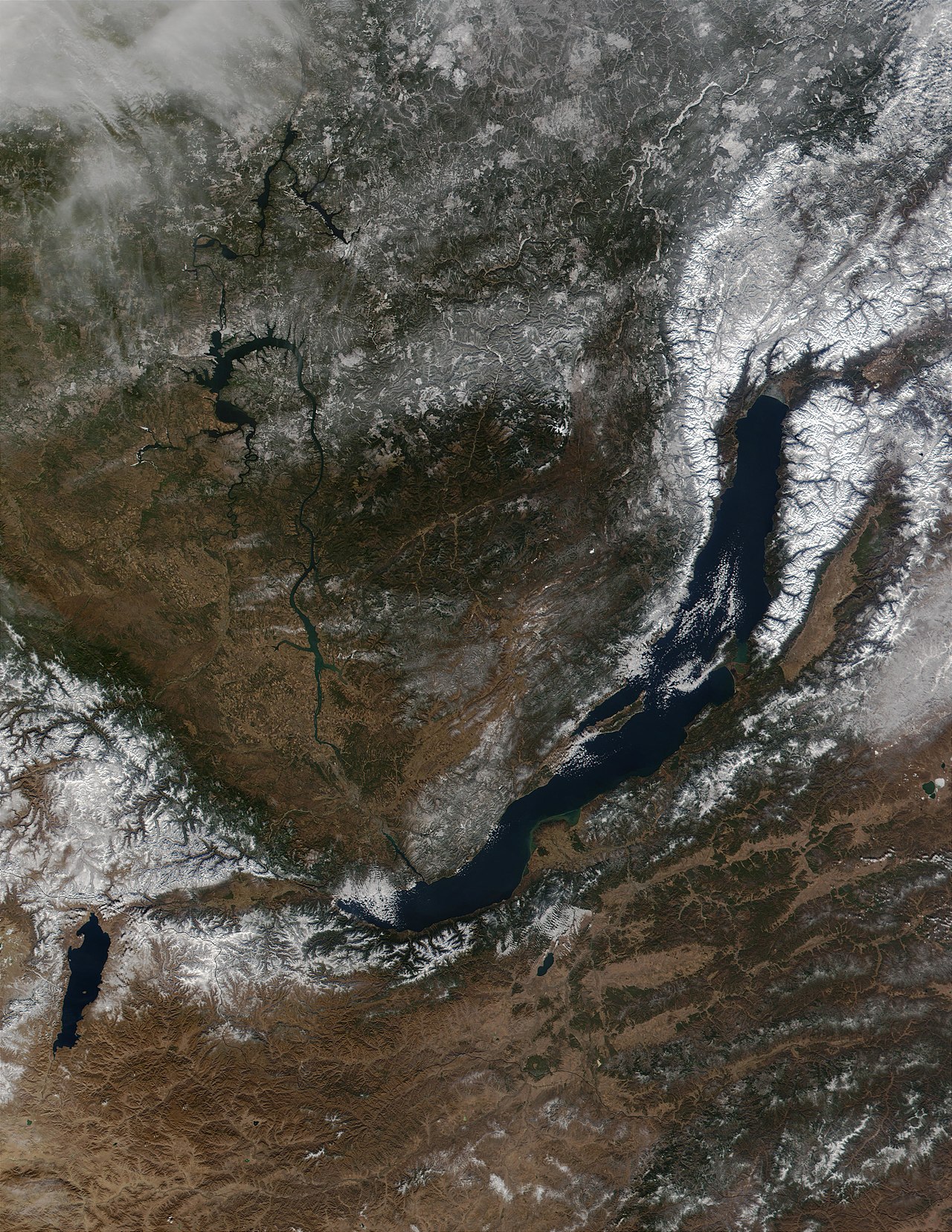
Lake Baikal in southern Siberia is the deepest, oldest, and most voluminous freshwater lake on Earth. Reaching a maximum depth of 1,642 meters and holding approximately 23,615 cubic kilometers of water, Baikal contains roughly 20 percent of the world's unfrozen surface freshwater — more than all five Great Lakes combined. The lake is estimated to be 25 to 30 million years old, making it the oldest lake in the world.
Shaped like a crescent moon and stretching 636 kilometers from southwest to northeast, Baikal sits within a continental rift zone that continues to widen by about 2 centimeters per year. The lake's extreme age and isolation have produced an extraordinary array of endemic species, with over 2,500 plant and animal species found nowhere else on Earth. UNESCO designated Lake Baikal a World Heritage Site in 1996, calling it the most outstanding example of a freshwater ecosystem.

Geography & Formation
- Surface Area: 31,722 km²
- Max Depth: 1,642 m
- Length: 636 km
- Age: 25-30 million years
Lake Baikal occupies a rift valley created by tectonic forces pulling the Earth's crust apart in central Asia. The rift is part of the Baikal Rift Zone, which extends over 2,000 kilometers and is characterized by frequent seismic activity — the region experiences about 2,000 earthquakes per year, most too small to feel. The ongoing rifting means Baikal is gradually getting deeper and wider, and scientists believe it may eventually become an ocean basin millions of years from now.
The lake's bed sits 1,186 meters below sea level, making it the deepest continental rift on Earth. Below the lake floor lie an additional 7 kilometers of sediment accumulated over millions of years, meaning the total depth of the rift approaches 9 kilometers. The lake is surrounded by mountains reaching 2,000 meters above its surface, with the Barguzin Range on the eastern shore and the Baikal Mountains to the northwest.
Water & Hydrology
- Volume: 23,615 km³
- Average Depth: 744 m
- Retention Time: ~330 years
- Tributaries: Over 330 rivers
Lake Baikal receives water from over 330 rivers and streams, with the Selenga River from Mongolia providing about half of all inflow. The lake's single outlet is the Angara River, which flows north to eventually join the Yenisei River and reach the Arctic Ocean. The water is exceptionally pure and transparent, with visibility sometimes exceeding 40 meters in winter, thanks to the filtering action of endemic zooplankton and the lake's low nutrient levels.
The lake's water is among the most oxygenated of any deep lake, with dissolved oxygen present even at the greatest depths. This is due to deep convective circulation driven by temperature differences and the unique physical properties of the lake's cold, fresh water. The deep oxygenation is critical to supporting life at extreme depths, including unique amphipod crustaceans that live on the lake floor.
Ecology & Biodiversity
- Endemic Species: Over 2,500
- Signature Species: Nerpa (Baikal seal)
- Unique Organism: Epischura baikalensis (copepod filter-feeder)
Lake Baikal's biodiversity is unparalleled among freshwater ecosystems. The nerpa, or Baikal seal, is the world's only exclusively freshwater seal species, with a population of about 100,000. How the nerpa's ancestors reached this landlocked lake remains debated, but they likely migrated through river systems connected to the Arctic Ocean during the Ice Ages. The seals are one of the lake's most beloved features and can be observed at Ushkany Islands.
The tiny copepod Epischura baikalensis, measuring just 1.5 millimeters, is arguably the most important organism in the lake. These endemic crustaceans consume algae and bacteria, effectively filtering the entire volume of the lake's upper water layer multiple times per year and maintaining its legendary clarity. Baikal also hosts over 350 species of endemic amphipod crustaceans, including giant species reaching 7 centimeters, and over 50 species of endemic fish including the golomyanka, a translucent fish that lives at extreme depths.
Cultural Significance
- UNESCO Status: World Heritage Site (1996)
- Local Name: Sacred Sea
- Indigenous Peoples: Buryat, Evenki
Lake Baikal holds deep spiritual significance for the Buryat and Evenki peoples who have lived in the region for centuries. The Buryats call it the Sacred Sea and consider Shamanka Rock on Olkhon Island to be one of the most sacred sites in all of Siberia. Shamanism has deep roots in the Baikal region, and many traditional practices and beliefs are connected to the lake and its surrounding landscapes.
The lake has been a focus of scientific research since the 18th century. In 1993, the Baikal Deep Underwater Neutrino Telescope was deployed on the lake bottom to detect neutrinos from deep space. The lake's sediments provide a continuous climate record spanning 25 million years, making it one of the most important sites for understanding long-term climate change on Earth.
Visitor Experience
- Best Season: January-March (ice), June-September (summer)
- Key Destinations: Olkhon Island, Listvyanka, Ushkany Islands
- Activities: Ice walking, hiking, seal watching, Trans-Siberian stops
Olkhon Island, the largest island in the lake, is the spiritual heart of Baikal and the most popular destination for visitors. Accessible by ferry in summer and ice road in winter, the island offers dramatic cliffs, sandy beaches, and Buryat cultural sites. Listvyanka, the most accessible town on the lake from Irkutsk, has a Baikal museum, fish market, and boat excursions.
Winter is arguably the most spectacular time to visit Lake Baikal. From January to March, the lake freezes to a thickness of up to 2 meters, creating transparent ice that reveals the depths below. The ice surface develops cracks, bubbles, and turquoise hummocks that attract photographers from around the world. Visitors can walk, drive, or skate on the frozen surface, and the Trans-Siberian Railway provides convenient access to the lake from Moscow or Vladivostok.
Key Facts
- Lake Baikal is the deepest lake in the world at 1,642 meters
- It is the oldest lake on Earth at 25-30 million years
- The lake contains 20% of the world's unfrozen surface freshwater
- Over 2,500 species are endemic to the lake, found nowhere else on Earth
- The Baikal seal (nerpa) is the world's only exclusively freshwater seal
Fun Facts
- Lake Baikal holds more water than all five North American Great Lakes combined
- The lake is home to a translucent fish called the golomyanka that is 35% body fat and can dissolve in the sun
- If emptied, it would take all the rivers in the world about one year to refill Lake Baikal
- The lake experiences about 2,000 earthquakes per year as the rift zone continues to widen
Final Thoughts
Lake Baikal is simply the superlative lake — the deepest, oldest, and most voluminous on Earth, with more endemic species than any other freshwater body. Its crystal-clear waters, unique wildlife, and dramatic seasonal transformations make it one of the natural world's greatest treasures. As climate change and development pressures mount, protecting this irreplaceable 25-million-year-old ecosystem is a responsibility that extends far beyond Russia's borders.
