
The Netherlands is a Northwestern European country, 41,850 km² with population of 17.6 million — one of the world's most densely populated countries. The country sits along the North Sea coast, bordered by Germany (east) and Belgium (south). The Netherlands has the distinctive geographic feature of being 26% below sea level — the famous "Polder" reclaimed land system has been creating new land from the sea for 800+ years, with the famous Delta Works and Afsluitdijk being among the world's largest hydraulic engineering achievements. Amsterdam, the famous capital, is one of Europe's most-visited cities. The country has been historically known as "Holland" — though Holland technically refers only to the two western provinces (North Holland and South Holland) containing Amsterdam and Rotterdam. The famous Dutch Golden Age (17th century) produced extensive global trade dominance, with the famous Vereenigde Oostindische Compagnie (Dutch East India Company) being the world's first multinational corporation. The Netherlands has been a constitutional monarchy under the House of Orange-Nassau since 1815.
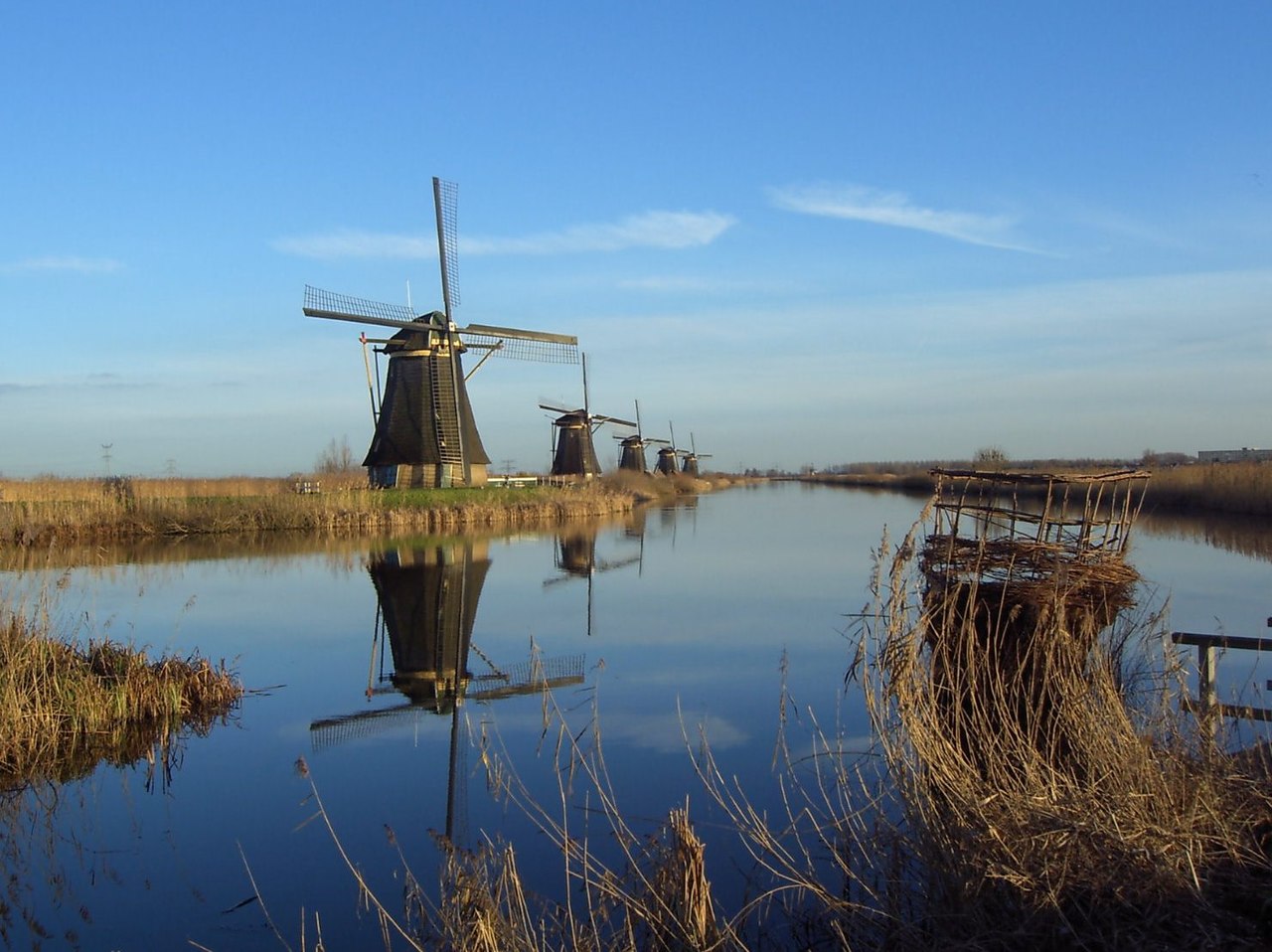
Major destinations include Amsterdam (the famous capital — 870,000 city, 2.5 million metropolitan, with the famous canal system — UNESCO World Heritage with extensive 17th-century canal-house architecture, the famous Anne Frank House and Anne Frank Museum, the famous Van Gogh Museum, the famous Rijksmuseum (housing Rembrandt's "The Night Watch" and Vermeer's "The Milkmaid"), the famous Stedelijk Museum modern art, the famous Vondelpark, the famous Royal Palace on Dam Square, the famous Red Light District De Wallen, the famous Bloemenmarkt floating flower market, and extensive Dutch café culture), the famous Keukenhof gardens (the famous "Garden of Europe" with 7 million tulip bulbs blooming across 32 hectares — open mid-March to mid-May annually), the famous Bollenstreek (the bulb-growing region between Haarlem and Leiden with extensive commercial flower fields), Rotterdam (the famous modern architecture city — devastated by 1940 German bombing and rebuilt as Europe's premier modernist showcase with the famous Cube Houses, Markthal, Erasmus Bridge), The Hague (the famous government seat — with the famous Mauritshuis housing Vermeer's "Girl with a Pearl Earring," the famous International Criminal Court, the famous Peace Palace, and the famous Scheveningen beach district), Utrecht (the famous historic university city), Delft (the famous blue-and-white pottery city and Vermeer's hometown), Maastricht (the famous southernmost Limburg city), Giethoorn (the famous "Venice of the Netherlands" — a car-free village with only canal access), the famous Wadden Sea Islands (Texel, Vlieland, Terschelling, Ameland, Schiermonnikoog — UNESCO World Heritage), the famous Zaanse Schans windmills near Amsterdam, the famous Kinderdijk windmills (UNESCO World Heritage 19 historic windmills), and the famous Anne Frank House.
The country has a Dutch maritime climate — mild and wet, with limited extremes — but the country's biggest tourist draw is decidedly seasonal: tulips bloom for roughly six weeks each spring, and the famous Keukenhof gardens open only during that window. Outside tulip season, the country has a different rhythm built around city life, canal culture, and the long Dutch summer.
Quick verdict
Best for tulips: Mid-April through early May. Keukenhof is open mid-March to mid-May.
Best for Amsterdam: May, June, and September.
Best for King's Day (Koningsdag): April 27. Book accommodation 4+ months ahead.
Best for budget travelers: October-November and late February. Lower prices, manageable weather.
Best for cycling: May-September. Long days, mild temperatures.
Avoid if you can: Amsterdam in mid-December through New Year unless you specifically want the Christmas markets (prices spike).
Spring (March to May): tulip season
March is variable but improving. Amsterdam averages 4-10 °C with frequent rain. The famous Keukenhof gardens open in late March. The first hardy tulips, hyacinths, and daffodils bloom from mid-to-late March. Crowds are still light.
April is the country's most photographed month. The full tulip bloom typically peaks in the third week of April. The famous bulb fields in Lisse, Hillegom, and Noordwijkerhout are at their absolute best — vast carpets of red, yellow, orange, and purple stretching to horizons. The Keukenhof gardens, the Bollenstreek (bulb region), and the country's commercial flower fields all peak.
April 27 is King's Day (Koningsdag) — the national celebration of the Dutch monarchy. The entire country dresses in orange and pours into the streets. Amsterdam becomes one massive orange-themed party. Hotel rates triple. Book 4-6 months ahead. King's Day is genuinely worth experiencing if you can plan around it.
May is excellent. Tulip season ends by mid-month, but the country remains beautiful — fresh greenery, comfortable temperatures (12-18 °C), all attractions open. The Bloemencorso (flower parade in late April-early May) extends the floral atmosphere.
Summer (June to August): long days, comfortable weather
June is the Netherlands at its most pleasant. Daytime 17-22 °C, daylight stretching to 16+ hours, comfortable evenings. The famous Dutch café culture comes alive. Amsterdam's canal-side terraces are in full operation. Crowds are building but not yet at peak.
July sees European school holidays. Amsterdam becomes genuinely crowded — the famous Anne Frank House and Van Gogh Museum require reservations months ahead. Hotel prices climb 30-50%. The famous canals are at their busiest with boat traffic.
August continues full summer. Weather can be variable — some days reach 30 °C (rare but happens), others stay cool and wet. Festivals fill the calendar. The famous Pride Amsterdam Canal Parade (first weekend of August) is one of Europe's biggest LGBTQ+ celebrations.
Autumn (September to November): the underrated shoulder
September is one of Amsterdam's best months. Crowds drop sharply after the first week as European school holidays end. Daytime 14-19 °C, comfortable evenings, fewer rainy days than spring. Hotel prices ease from peak.
October is excellent for atmosphere. The famous canal-side architecture is at its photogenic best in golden autumn light. Crowds are at off-peak levels. Outdoor cycling remains pleasant through the first half of the month.
November sees days shortening rapidly. Daytime 7-11 °C, regular rain, daylight 9 hours by month's end. This is one of the cheapest months. The famous Sinterklaas celebrations begin in mid-November (December 5 is the actual celebration) — the Dutch Saint Nicholas Day predates Christmas.
Winter (December to February): atmospheric and cheap
December brings Sinterklaas (December 5) and Christmas. Amsterdam's Light Festival runs through December and January. The famous canals look magical with festive illumination. Hotel rates spike around Christmas-New Year. The week between Christmas and New Year is significantly more crowded and expensive than typical winter weeks.
January and February are deep winter. Amsterdam averages 3-7 °C. Snow is occasional. The famous canals occasionally freeze over enough for ice skating — when this happens, the city embraces the rare "Elfstedentocht" potential, but actual frozen canal skating is increasingly rare.
These are the cheapest months. Hotel rates drop to 40-50% of summer peaks. Museums are walkable without lines. The famous Rijksmuseum, Van Gogh Museum, and Anne Frank House are accessible with minimal waiting.
Regional notes
Amsterdam: Year-round but best May-September. Tulip season April. Christmas atmosphere December.
Keukenhof and Bollenstreek (bulb region): Open mid-March through mid-May only.
Utrecht: Best May-September. Christmas market December.
Rotterdam: Year-round modern architecture destination.
The Hague and Scheveningen: Beach season June-August.
Giethoorn (the "Dutch Venice"): Best May-September.
Wadden Islands (Texel, Vlieland, Terschelling, Ameland, Schiermonnikoog): Best May-September.
Tulip timing specifics
Tulip bloom dates vary year to year based on spring weather. Generally:
Mid-to-late March: First crocuses, early daffodils, some hyacinths.
Early April: Hyacinths and early tulips peak.
Mid-April through early May: Peak tulip bloom in fields.
Keukenhof: Open mid-March through mid-May. Best mid-to-late April.
The famous flower fields require advance planning — book Keukenhof tickets online for popular weekends. Many fields are private but visible from public roads. The Bollenstreek bike route is excellent in peak bloom.
Festivals worth timing around
King's Day / Koningsdag (April 27) — country's biggest party. Keukenhof open (mid-March to mid-May). Amsterdam Pride (first weekend of August). Sinterklaas (December 5). Amsterdam Light Festival (December-January). Bloemencorso flower parade (late April-early May).
Cultural and practical notes
Dutch (Nederlands) is the official language with extensive English — the Netherlands ranks as the world's most English-proficient non-English-speaking country (EF EPI). Frisian is co-official in Friesland province. Euro (€) is the currency. Tipping not customary but appreciated (round up or 5-10%). The famous Dutch cycling culture is unique — 22 million bicycles for 17 million residents; the Netherlands has more bikes than people. The famous "fietspad" (bike lanes) network is extensive — 35,000 km of dedicated bike paths nationwide. The famous Dutch tolerance reflects extensive progressive policies (the world's first country to legalize same-sex marriage in 2001, the famous "coffeeshop" cannabis tolerance policy, the famous legal sex work in regulated districts).
Practical considerations
Amsterdam Schiphol Airport (AMS) is one of Europe's busiest airports — extensive global connections. The famous Dutch trains (NS) provide excellent national coverage. The famous "OV-chipkaart" works across all public transit. The famous Thalys, Eurostar, and ICE trains connect Amsterdam to Paris (3h20m), Brussels (1h50m), London (4 hours via Eurostar), and Frankfurt (4 hours). Internal travel is extensively bicycle-based — visitors can rent bikes nearly everywhere. The famous canals of Amsterdam (UNESCO World Heritage) provide both transit (small boats) and the famous canal-cruise tourist experiences. Driving on the right side.
Verdict by traveler type
First-time visitors focused on tulips: Mid-to-late April. Book accommodation early.
First-time visitors doing Amsterdam: May-June or September.
King's Day travelers: April 27. Book months ahead.
Cyclists: May-September.
Photographers: Mid-April for tulip fields; October for golden Amsterdam.
Budget travelers: November or late February.
Family travelers: April-September.
Cultural travelers (Rijksmuseum, Van Gogh Museum, Anne Frank House): Year-round; January-February for fewest crowds.
LGBTQ+ travelers: First weekend of August for Amsterdam Pride.
Bottom line
The Netherlands has two distinct tourism rhythms — the tulip rush in April and the broader summer city break season. Outside these, the country is quieter and significantly cheaper. May and September stand out as universally good months. October is the photographer's secret. February delivers Amsterdam at its quietest and cheapest.