
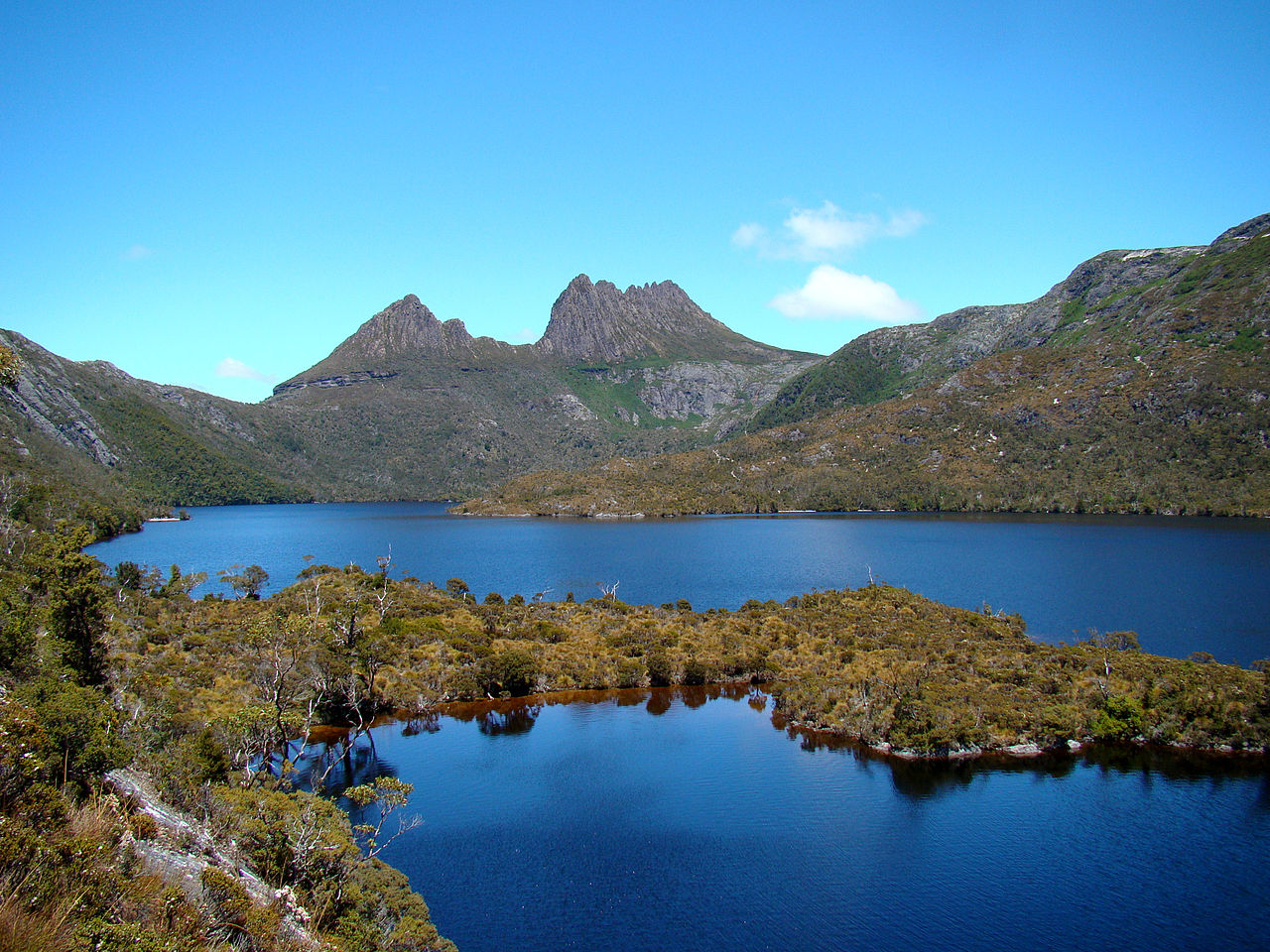
Tasmania is Australia's only island state — a 68,401 km² island 240 km south of mainland Australia across the famous Bass Strait, with a population of 569,000. Often nicknamed "the Apple Isle" (from its traditional apple-growing heritage) and "Tassie" by Australians, Tasmania has an extraordinary geographic position as the famous southernmost Australian jurisdiction (closer to Antarctica than to Darwin), with its southwestern wilderness areas receiving the strongest, cleanest Southern Ocean winds of any inhabited area on Earth (the famous "Roaring Forties" — measured for air purity, Tasmania's southwestern air is among the cleanest on the planet). The state has the famous "Tasmanian Wilderness World Heritage Area" — covering 1.5 million hectares (20% of Tasmania, making it one of the largest wilderness areas in the Southern Hemisphere), this UNESCO World Heritage region includes the famous Cradle Mountain-Lake St Clair National Park, the famous Franklin-Gordon Wild Rivers National Park, the famous Southwest National Park, and others. Tasmania has the famous distinct ecology — the famous "Tasmanian Devil" (Sarcophilus harrisii — the world's largest carnivorous marsupial, endangered by the famous "Devil Facial Tumour Disease" that has reduced wild populations 80% since 1996; conservation programs are working to recover the species), the famous Tasmanian Tiger / Thylacine (the apex marsupial predator that was extinct on mainland Australia 3,000 years ago and on Tasmania since 1936 — though sporadic "sightings" continue), the famous wallabies, wombats, echidnas, platypus, and the famous "Tasmanian devil's whiskers" (the famous expression for Tasmania's unique heritage). The island has 40% of Tasmania protected as national park or reserve — the highest proportion of any Australian jurisdiction. Tasmania has the famous Hobart (the capital with population 240,000 — Australia's southernmost and second-oldest capital city after Sydney, founded 1804; with the famous Mount Wellington/kunanyi rising 1,271 m directly behind the city, the famous Salamanca Market — Australia's most famous outdoor market every Saturday since 1972, the famous Battery Point heritage neighborhood, and the famous MONA — Museum of Old and New Art), the famous MONA (the famous "Museum of Old and New Art" opened 2011 by professional gambler David Walsh on his Berriedale wine estate — Australia's largest privately funded museum and consistently ranked among the world's most interesting art museums, with the famous "Sex and Death" thematic focus and the famous "Cloaca Professional" digestive machine art piece), the famous Cradle Mountain-Lake St Clair National Park (Tasmania's most famous national park, with the famous Cradle Mountain — the famous distinctive peak that's the symbol of Tasmanian wilderness, the famous Dove Lake, and the famous Overland Track — Australia's most famous long-distance trek), the famous Overland Track (the famous 65 km wilderness trek between Cradle Mountain and Lake St Clair, requiring 5-6 days and considered Australia's premier multi-day trek), the famous Wineglass Bay (in Freycinet National Park — consistently ranked among the world's 10 best beaches with the famous distinctive crescent shape and the famous granite Hazards mountains as backdrop), the famous Bay of Fires (along the famous east coast — named for the famous bright orange lichen on granite boulders, with the famous white sand beaches), the famous Port Arthur Historic Site (UNESCO World Heritage, the famous 1830-1877 penal colony with extensive preserved buildings — Tasmania's history as a "convict society" is well-preserved here), the famous Tasman Peninsula (with the famous Three Capes Track — a multi-day cliff-edge trek with extraordinary Tasman Sea views), the famous Bruny Island (the famous wildlife sanctuary off Hobart's coast), the famous Strahan (the famous west coast town with the famous Gordon River cruises), the famous "Tasmania's wine country" (the famous Tamar Valley near Launceston produces world-class Pinot Noir, Chardonnay, and sparkling wines — Tasmania's cool climate makes it Australia's premier cool-climate wine region), the famous Mount Field National Park (with the famous Russell Falls and the famous "Tall Trees" — the world's tallest hardwood trees), the famous Salamanca Market (every Saturday in Hobart's Salamanca Place), and the famous "Dark Mofo" winter festival (the famous winter cultural festival by MONA that has transformed Tasmania's winter tourism). Climate is temperate maritime (Cfb in Köppen) — similar to New Zealand's South Island, with four mild seasons and famous Southern Ocean weather patterns.
Quick verdict
Best overall: November-April (Southern Hemisphere summer-autumn).
Best for the famous Overland Track multi-day trek (Cradle Mountain to Lake St Clair): December-March (booking required well in advance).
Best for the famous Cradle Mountain day visits: November-April (winter snow can affect access).
Best for the famous Wineglass Bay and Freycinet National Park: November-April.
Best for the famous Bay of Fires: November-April.
Best for the famous Three Capes Track: November-April (book months ahead).
Best for the famous Port Arthur Historic Site: Year-round (cultural site); November-April for outdoor walking.
Best for the famous Hobart city break and MONA: November-April; year-round for indoor MONA.
Best for the famous Mount Wellington/kunanyi summit: November-April (winter snow common).
Best for the famous Salamanca Market: Year-round (every Saturday).
Best for the famous Tamar Valley wine region: Year-round; February-April for harvest.
Best for the famous Bruny Island: November-April for wildlife and seafood; year-round for wineries and cheese.
Best for the famous Strahan and Gordon River: November-April (boat tour operations).
Best for the famous Mount Field National Park: Year-round; spring (October-November) for wildflowers.
Best for the famous "Dark Mofo" winter festival: Mid-late June (typically June 14-22).
Best for the famous "Mona Foma" summer festival: Mid-January.
Best for the famous Sydney to Hobart Yacht Race finish: December 26-31 (the famous race starts in Sydney on Boxing Day).
Best for the famous Targa Tasmania classic car rally: Late April-early May.
Best for the famous "Taste of Tasmania" festival: Late December-early January.
Best for the famous "Festival of Voices" (Hobart): Early July.
Best for the famous Wynyard Tulip Festival: October.
Best for the famous Bothwell International Highland Spin-In (Scottish heritage): March.
Best for Tasmanian wildlife viewing (devils, wombats, echidnas): Year-round; October-March for active wildlife.
Best for whale watching: May-July (Southern Right whales) and September-October (humpback returns).
Best for the famous "Aurora Australis" (Southern Lights — Tasmania is one of few accessible viewing locations): May-September.
Best for budget travelers: May and August-September.
Avoid if you can: The famous Overland Track without permits booked 6+ months ahead (peak January-February sells out within hours of bookings opening); peak Christmas-New Year (December 20-January 10) without booking accommodation 6-12 months ahead (Tasmania becomes Australia's premier domestic summer destination); the famous Tasmanian winter (June-August) for outdoor hiking without serious cold-weather preparation (snow common, even at sea level occasionally); driving Mount Wellington/kunanyi in winter without verifying road status (closed during storms); the famous "Roaring Forties" winds at exposed locations (can reach 100+ km/h, particularly affecting the west coast).
Summer (December-February) — Tasmania's tourism peak
Tasmania at its tourism peak quality. The famous "Tasmanian summer" — long daylight (sunset at 9:00 pm at the December solstice), warm sunny days, cool nights, and full access to wilderness areas — provides the only consistent extended window for the famous Overland Track and other multi-day treks. Daytime in Hobart 18-23 °C with occasional 28-32 °C heatwaves; daytime at Cradle Mountain (900 m elevation) 12-18 °C; daytime at higher trekking elevations 6-14 °C with overnight lows commonly below freezing year-round. The famous Tasmanian temperature variability — afternoon thunderstorms and rapid weather changes — requires comprehensive preparation for hiking. The famous "Tasmania summer" averages 75-100 mm/month rainfall on the west coast and 50-75 mm on the east coast — significantly drier than winter.
The famous Overland Track — Australia's premier multi-day wilderness trek, 65 km between Cradle Mountain and Lake St Clair — is at peak. Daily booking limits (60 walkers per day during peak season October 1-May 31) require permits booked 6+ months ahead through Tasmania Parks. The famous 5-6 day trek crosses the famous Cradle Plateau, the famous Pelion Plains, the famous Mount Pelion East (with the famous side trip to Mount Ossa — Tasmania's highest peak at 1,617 m), the famous Du Cane Range, the famous Bert Nichols hut, and the famous Lake St Clair (Australia's deepest natural lake at 167 m). The famous "Cradle Mountain Hotel" and the famous "Cradle Mountain Lodge" provide upscale base accommodation; the famous "Lemonthyme Wilderness Retreat" and the famous "Pumphouse Point" (the famous boutique property on Lake St Clair) provide alternatives.
The famous Cradle Mountain — Tasmania's most iconic peak, with the famous distinctive jagged silhouette featured on Tasmania's tourism marketing — at peak day-trip conditions. The famous Dove Lake Circuit (a 6 km loop around Dove Lake with extraordinary Cradle Mountain photography), the famous Marion's Lookout (climbing 230 m via boardwalks and chains for panoramic views), the famous Cradle Mountain Summit (a 5-7 hour return hike via Marion's Lookout requiring scrambling on the famous "Plateau"), and the famous Enchanted Walk (an easy 1 km loop suitable for families) provide day-visit options.
The famous Wineglass Bay and Freycinet National Park — on Tasmania's east coast 2.5 hours from Hobart — at peak. The famous Wineglass Bay (consistently ranked among the world's 10 best beaches, with the famous perfect crescent shape and the famous granite "Hazards" mountains backdrop) is reached via a 1.5-hour return hike from the Wineglass Bay car park (with the famous "Wineglass Bay Lookout" providing photography access in 1 hour return). The famous "Freycinet Lodge" provides upscale accommodation; the famous "Saffire Freycinet" is widely ranked among Australia's premier luxury resorts.
The famous Bay of Fires — along Tasmania's northeast coast — provides extraordinary white-sand beach and orange-lichen photography. The famous orange color isn't actually from fire but from the famous Caloplaca lichen growing on the granite boulders. The famous Binalong Bay, the famous Cosy Corner, and the famous Eddystone Point Lighthouse provide depth.
The famous Hobart city — at peak walking weather. The famous Salamanca Market (every Saturday since 1972 — Australia's most famous outdoor market with 300+ stalls of food, craft, and produce), the famous Salamanca Place (the famous restored 1830s sandstone warehouses), the famous Battery Point heritage neighborhood, the famous Constitution Dock (with the famous fish punts serving fresh fish and chips, the finish line of the famous Sydney to Hobart Yacht Race), the famous Mount Wellington/kunanyi summit (1,271 m, reached by car via the famous "Pinnacle Road" — providing extraordinary city panorama; the famous wuda-tang-kunanyi/Mount Wellington pipeline track provides hiking alternative), the famous Cascade Brewery (Australia's oldest continuously operating brewery, since 1824), and the famous Hobart Convict Penitentiary Chapel provide depth.
The famous MONA — the Museum of Old and New Art — is Tasmania's defining cultural attraction. Opened January 2011 by professional gambler-turned-collector David Walsh on his Berriedale wine estate (12 km from Hobart, reached by car or the famous "Mona Roma" ferry departing Brooke Street Pier), MONA is Australia's largest privately funded museum and has been described as a "subversive adult Disneyland." The famous collection focuses on themes of sex, death, and the human condition, with the famous "Cloaca Professional" (Wim Delvoye's famous artificial digestive system that produces actual waste daily), the famous "Snake" (the famous Sidney Nolan installation), and the famous "Pulse Room" (Rafael Lozano-Hemmer's lightbulb art piece). The famous "O" device — provided to visitors instead of labels — allows phone-based exhibit information.
The famous Port Arthur Historic Site — UNESCO World Heritage, 90 minutes southeast of Hobart on the Tasman Peninsula — provides Australia's most extensive convict-era heritage. The famous 1830-1877 penal colony preserved buildings include the famous Penitentiary, the famous Separate Prison (modeled on the famous Pennsylvania system of solitary silent confinement), the famous Church, and the famous Commandant's House. The famous "Isle of the Dead" boat tour visits the convict cemetery. The famous "Ghost Tour" provides evening atmospheric experiences. The site also commemorates the famous 1996 Port Arthur Massacre (when 35 people were killed in Australia's deadliest mass shooting, which directly led to Australia's transformative gun control legislation).
The famous Tamar Valley wine country — north of Launceston — at peak. The famous Pipers Brook, the famous Jansz Tasmania (sparkling wine specialists), the famous Bay of Fires Wines, the famous Holm Oak, and the famous Tamar Ridge produce world-class Pinot Noir, Chardonnay, Riesling, and traditional-method sparkling wines. Tasmania's cool climate provides extraordinary wine conditions — Tasmanian sparkling wine consistently wins international medals competing with Champagne.
Winter (June-August) and Dark Mofo
Tasmania at its most challenging climatically but with extraordinary cultural depth. Daytime in Hobart 8-13 °C with overnight lows 2-5 °C; daytime at higher elevations -2 to 5 °C with overnight lows -10 to -5 °C; snow common at higher elevations and occasionally at sea level. The famous Mount Wellington/kunanyi receives regular winter snow making the famous "Snowflake views" of Hobart's mountain backdrop iconic.
The famous "Dark Mofo" festival — held mid-late June by MONA — transformed Tasmania's winter tourism. The famous winter solstice celebration (the longest night of the year in Southern Hemisphere) includes the famous "Nude Solstice Swim" (1,000+ participants swim naked in the freezing Derwent River at dawn — June 21), the famous "Winter Feast" (extensive food market in Princes Wharf 1), the famous "Festival of Voices" performances, the famous "Red Light" installations across the city, dramatic music performances, and the famous "Burning of the Ogoh-Ogoh" (Indonesian-inspired effigy burning ceremony). The famous "Tasmania is the only place in Australia where you can experience genuine cultural winter" — Dark Mofo is the famous reason. Hobart accommodation books out 6-12 months ahead for Dark Mofo dates.
The famous "Mona Foma" — Dark Mofo's summer counterpart in mid-January — provides equivalent summer cultural experience with classical music, dance, and visual art across Hobart and Launceston.
The famous "Aurora Australis" (Southern Lights) — Tasmania is one of few accessible viewing locations — peaks during winter darkness May-September. The famous southern coastal locations (South Arm Peninsula, Bruny Island, Cockle Creek) provide the famous viewing opportunities.
Festivals & cultural events
Dark Mofo (mid-late June): Major winter solstice arts festival by MONA.
Mona Foma (mid-January): Summer counterpart to Dark Mofo.
Taste of Tasmania (late December-early January): Major Hobart food festival.
Sydney to Hobart Yacht Race Finish (December 26-31): Major sailing event finish.
Festival of Voices (early July): Hobart's major choral festival.
Targa Tasmania Classic Car Rally (late April-early May): Major motorsport event.
Salamanca Market (every Saturday): Australia's most famous outdoor market.
Wynyard Tulip Festival (October): Spring flower celebration.
Tasmanian International Arts Festival: Major regional arts celebration.
Tassal Salmon Run: Annual sporting event.
Royal Hobart Show (October): Major Tasmanian agricultural show.
Australian Wooden Boat Festival (Hobart, February every odd year): Major maritime heritage event.
Cradle Mountain Marathon (varies): Major running event.
Cuisine and cultural notes
Tasmanian cuisine emphasizes premium seafood, dairy, and cool-climate produce. The famous Tasmanian salmon (the famous Atlantic salmon farmed in Tasmanian coastal waters, considered among the world's best), the famous Tasmanian oysters (the famous Pacific and Sydney Rock varieties from clean Tasmanian waters), the famous Tasmanian crayfish/lobster, the famous Bruny Island Cheese, the famous Pyengana Cheddar, the famous Tasmanian leatherwood honey (the famous distinctive flavor from leatherwood trees only in Tasmania's wilderness), the famous Tasmanian truffles (black perigord truffles are increasingly produced in Tasmania), and the famous "scallops" (the famous Tasmanian scallop pie tradition). The famous Tasmanian whisky industry (Sullivan's Cove, Lark Distillery, Hellyers Road, Belgrove — Tasmania has won the famous "World's Best Single Malt" multiple times since 2014 with Sullivan's Cove). The famous Tamar Valley wines (particularly sparkling and Pinot Noir) and the famous craft beer scene (Cascade Brewery 1824, Moo Brew, Hobart Brewing Co.) provide depth.
English is the primary language. Australian Dollar (AUD) is the currency. Tipping 10% (not strictly expected). Driving on the left side. Visa-free or eVisitor for most Western nationalities. Tasmania has the famous "Australian Eastern Daylight Time" — observes daylight saving time (unlike Queensland).
Practical considerations
Hobart International Airport (HBA) is the main airport — limited international flights, but extensive Australian domestic connections. Launceston Airport (LST) and Devonport Airport (DPO) provide regional alternatives. The famous "Spirit of Tasmania" ferry (Melbourne to Devonport, 9-11 hours overnight) provides scenic alternative for those bringing cars. Internal travel by rental car — Tasmania's compact size makes it accessible by car (Hobart to Cradle Mountain 4-5 hours; Hobart to Launceston 2.5 hours). The famous "Lap of Tasmania" road trip (typically 10-14 days clockwise from Hobart) is a classic Australian itinerary.
Traveler-type advice
Wilderness travelers (Overland Track, Three Capes, Frenchmans Cap): December-March; book Overland Track 6+ months ahead.
Day hikers (Cradle Mountain, Wineglass Bay): November-April.
Cultural travelers (MONA, Port Arthur, Hobart historic sites): Year-round; November-April for combined outdoor walking.
Wine travelers (Tamar Valley, East Coast Wine Route): Year-round; February-April for harvest.
Food travelers (oysters, salmon, whisky, cheese): Year-round.
Photographers: November-April for landscapes; June for Dark Mofo; year-round for MONA.
Family travelers: November-April for outdoor activities.
Honeymooners: December-March; the famous Saffire Freycinet, MACq 01, Pumphouse Point.
Dark Mofo culture travelers: Mid-late June (book 6-12 months ahead).
Aurora Australis viewers: May-September.
Whale watchers: May-October.
Tasmanian Devil enthusiasts: Year-round at Bonorong Wildlife Sanctuary, Devils @ Cradle, and Trowunna Wildlife Park.
Budget travelers: May and August-September; outside Dark Mofo and summer peak.
Solo travelers: November-April for ideal outdoor culture combined with strong food/wine scene.
Combined Australia travelers: Tasmania is a separate trip from mainland Australia given travel time; combine with Melbourne (1-hour flight) for 10-14 day southern Australia experience.
Bottom line
Tasmania rewards November-April visits decisively for the famous "Apple Isle" combination of wilderness hiking, world-class wine and cuisine, MONA art experience, and dramatic natural beauty. The Overland Track and similar multi-day treks are the famous defining Tasmanian wilderness experience (December-March optimal). Dark Mofo in mid-late June provides Tasmania's most distinctive winter cultural moment, justifying winter visits for cultural travelers. The famous "Tassie" combination — Australia's wildest landscapes (UNESCO World Heritage wilderness), the famous distinctive marsupial wildlife (Tasmanian devils, wombats, wallabies), the famous southernmost Australian wine region (Tamar Valley), the famous Salamanca Market culture, and the famous MONA art experience — makes Tasmania one of Australia's most rewarding extended-stay destinations. For a full Tasmania circuit, allow 10-14 days for the famous "Lap of Tasmania" (Hobart-Port Arthur-Bay of Fires-Bicheno-Cradle Mountain-Strahan-Hobart). For shorter visits, focus on Hobart-MONA-Wineglass Bay (4-5 days) or Hobart-Cradle Mountain (3-4 days). The famous "Tasmanian time" — the unhurried, distinctly cooler-climate Australian experience — provides a remarkable contrast to mainland Australian sun-and-sand tourism.