
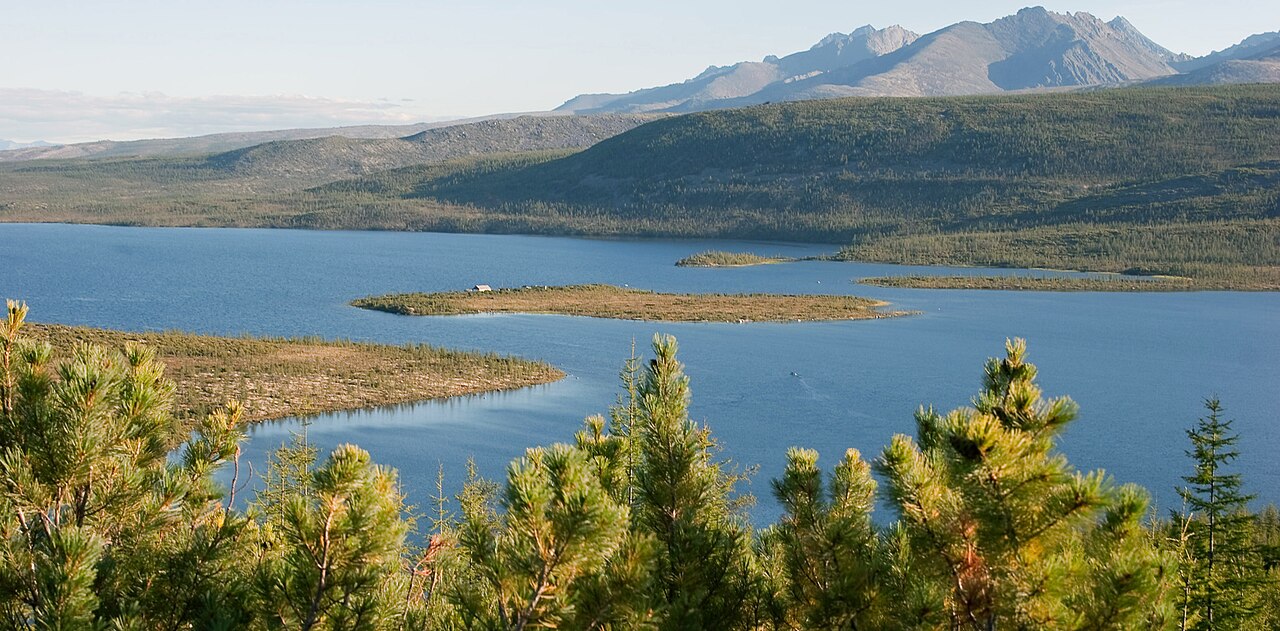
The boreal forest, or taiga, is the largest terrestrial biome on Earth, stretching in a nearly continuous band across northern Canada, Scandinavia, Russia, and Alaska. Covering roughly 17 million square kilometers — about 29% of the world's total forest area — it endures some of the harshest conditions faced by any forest ecosystem: winter temperatures below -50°C, seven months of snow cover, and just a few hours of winter daylight.
Introduction
Despite these extremes, the taiga supports a remarkable array of wildlife. Its vast, roadless expanses provide the last great refuges for species that have been extirpated from more southerly regions: wolves roam in packs, brown bears fatten on salmon, lynx stalk snowshoe hares through the spruce, and billions of migratory birds arrive each spring to breed in the taiga's countless bogs and lakes.

Large Mammals
- Key Predators: Gray wolf, brown bear, wolverine, Eurasian lynx, Canada lynx
- Key Herbivores: Moose, caribou/reindeer, wood bison, musk deer
- Moose Population: ~2 million across the boreal zone
- Wolf Territory: Pack territories of 200-1,000 km²
The moose is the largest animal in the boreal forest, with bulls weighing up to 700 kilograms and standing 2 meters at the shoulder. Moose are superbly adapted to the taiga, with long legs for wading through deep snow and a diet of aquatic plants, willow, and birch browse. In summer, moose may spend hours submerged in lakes to escape biting insects and feed on aquatic vegetation.
Gray wolves are the apex predators of the boreal ecosystem, living in packs of 5-12 individuals that hunt moose, caribou, and deer across territories spanning hundreds of square kilometers. The boreal forest's vast, undeveloped landscapes support the largest remaining wolf populations in Europe and North America. In Russia's taiga, wolf populations number in the tens of thousands — the largest continuous wolf population in the world.
Furbearers & Small Mammals
- Key Species: Wolverine, American marten, fisher, ermine, beaver
- Wolverine Range: Circumpolar, declining in southern boreal
- Beaver Impact: Creates wetland habitat; ~15 million in North America
- Snowshoe Hare Cycle: 10-year population boom-and-bust cycle
The wolverine, a muscular member of the weasel family weighing up to 18 kilograms, is one of the taiga's most elusive and formidable predators. Wolverines are strong enough to drive wolves and bears off kills and can travel 40 kilometers in a single day across rugged terrain. They depend on deep spring snowpack for denning, making them vulnerable to climate change.
The snowshoe hare is a keystone species of the boreal forest, cycling through dramatic population booms and crashes on a roughly 10-year cycle. During peak years, hare densities can exceed 1,500 per square kilometer. These cycles drive parallel fluctuations in the populations of their predators — Canada lynx, great horned owls, and goshawks — creating one of ecology's most studied predator-prey dynamics.
Birds of the Boreal
- Breeding Bird Species: Over 300 species
- Total Breeding Individuals: 1-3 billion in North America's boreal alone
- Key Species: Great gray owl, boreal owl, gray jay, spruce grouse, white-tailed eagle
- Migratory Species: Billions of warblers, thrushes, waterfowl, and shorebirds
The boreal forest is one of the world's great bird nurseries. Each spring, billions of migratory birds — warblers, thrushes, sparrows, waterfowl, and shorebirds — travel from wintering grounds in Central and South America, Africa, and southern Asia to breed in the taiga's endless spruce forests, bogs, and lakes. North America's boreal alone is estimated to host 1-3 billion breeding birds each summer.
Resident boreal birds have evolved remarkable adaptations for surviving winter. The great gray owl can hear voles moving under 45 centimeters of snow and plunge through the crust to catch them. The boreal chickadee caches tens of thousands of food items each autumn and can lower its body temperature by 10°C at night to conserve energy. The spruce grouse switches to an almost exclusive diet of spruce needles in winter, relying on an enlarged cecum to digest the tough, resinous foliage.
Aquatic & Semi-Aquatic Species
- Salmon Species: 5 Pacific species + Atlantic salmon in boreal rivers
- Freshwater Fish: ~200 species (lake trout, pike, grayling, whitefish)
- Amphibians: Wood frog can survive being frozen solid
- Beaver Ponds: Millions of ponds across the boreal, creating wetland habitat
Boreal rivers and lakes support diverse fish communities, including all five species of Pacific salmon in Alaska and British Columbia, Atlantic salmon in Scandinavia, and freshwater species like lake trout, northern pike, and Arctic grayling throughout the biome. The spring salmon runs in boreal rivers are massive ecological events, providing food for bears, wolves, eagles, and dozens of other species.
The wood frog is the boreal forest's most remarkable amphibian. It survives winter by literally freezing solid — up to 65% of its body water turns to ice, its heart stops beating, and it shows no brain activity. Special cryoprotectant chemicals prevent ice crystals from damaging cells. When spring arrives, the frog thaws and resumes normal activity within hours. This adaptation allows it to range further north than any other North American amphibian.
Conservation Challenges
- Caribou Decline: Many herds declining 50-90% due to habitat loss and predation
- Climate Change: Taiga warming 2x faster than global average
- Industrial Threats: Logging, oil/gas, mining, hydroelectric development
- Intact Forest: ~40% of boreal forest remains free of industrial disturbance
Woodland caribou, once abundant across the boreal, are declining across much of their range. In Canada, many herds have lost 50-90% of their numbers over the past few decades. The primary cause is habitat fragmentation from logging and oil/gas development, which creates roads and clearings that allow wolves easier access to caribou habitat. The Canadian government has identified boreal caribou recovery as a national conservation priority.
The boreal forest is warming roughly twice as fast as the global average, with profound consequences for its wildlife. Permafrost thawing is turning forests into bogs, spruce bark beetle outbreaks are expanding northward, and wildfire seasons are intensifying. Species adapted to extreme cold, like the wolverine and caribou, are losing habitat as the tree line shifts northward. Meanwhile, southern species like white-tailed deer and coyotes are expanding into the boreal, altering predator-prey dynamics.
Key Facts
- The boreal forest covers 17 million km² — roughly 29% of the world's total forest area.
- North America's boreal forest hosts 1-3 billion breeding birds each summer.
- The snowshoe hare undergoes 10-year population cycles that drive predator populations up and down.
- Woodland caribou herds across Canada have declined 50-90% due to habitat fragmentation.
- The boreal forest is warming roughly twice as fast as the global average.
Fun Facts
- The wood frog survives winter by freezing solid — its heart stops and 65% of its body water becomes ice.
- A great gray owl can detect a vole moving under 45 centimeters of snow and plunge through to catch it.
- Wolverines have been documented traveling over 40 kilometers in a single day across mountainous terrain.
- Boreal chickadees can cache up to 100,000 food items each autumn and remember where they hid most of them.
Final Thoughts
The boreal forest is the last great wilderness on Earth — a vast, continuous landscape where wolves still howl, caribou still migrate, and billions of birds still breed each spring. Its wildlife has evolved extraordinary strategies to survive conditions that would defeat most organisms. Yet the taiga is changing faster than at any time in thousands of years as climate change, industrial development, and shifting species ranges transform the world's largest forest. Protecting boreal wildlife means protecting the forest itself, in all its immensity and wildness.
Test Your Knowledge!
Think you know the world's forests? Try our interactive geography quiz!
Play Geographic Features Quiz →