
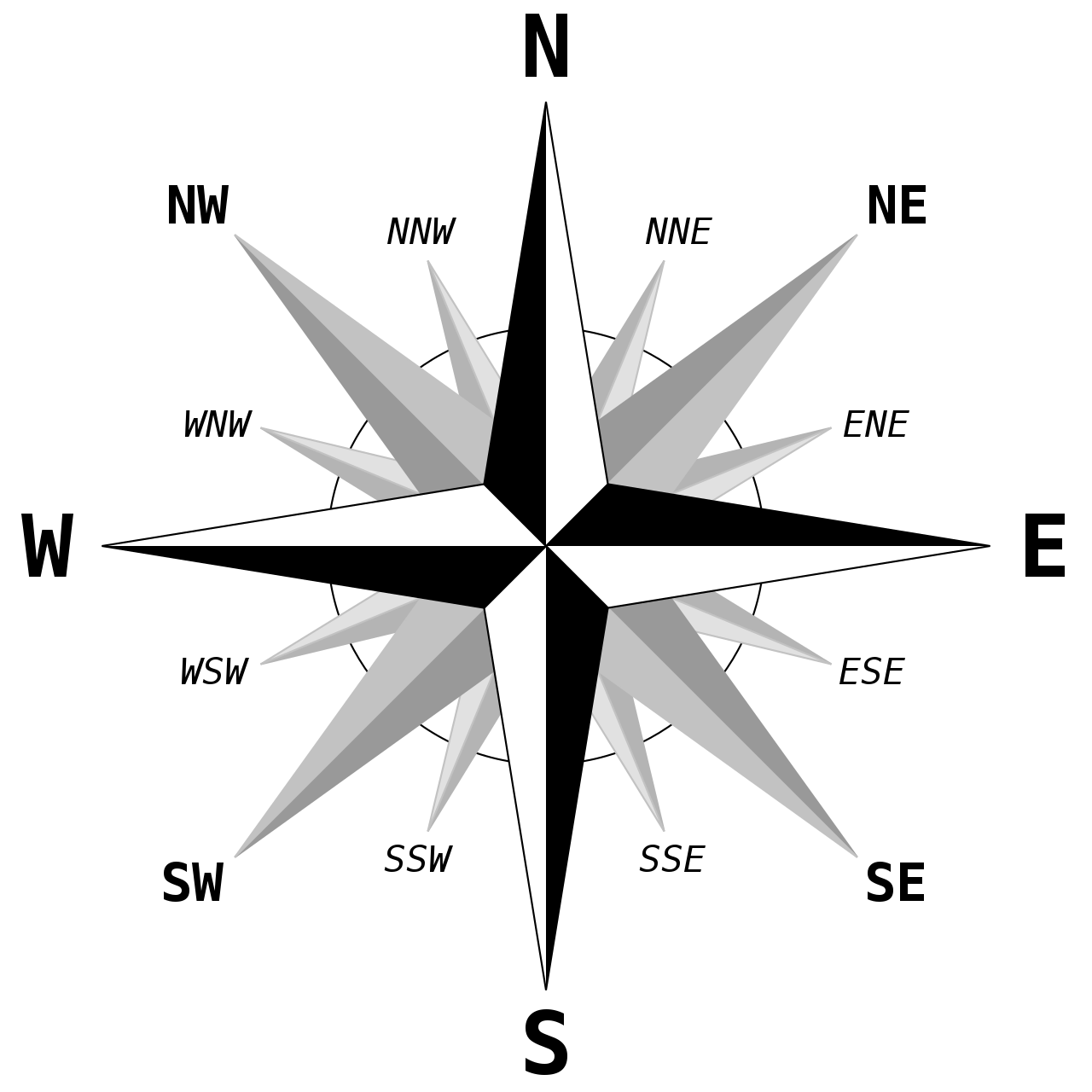
Compass directions for kids: The four main compass directions are North, South, East, and West. North points toward the North Pole, South points toward the South Pole, East is where the sun rises, and West is where the sun sets. A compass uses a magnetic needle that always points north!
Introduction
Knowing directions helps you find your way, read maps, and understand where places are in relation to each other. Once you know the four main directions, you can always figure out where you need to go!
Let's learn how to find our way!

The 4 Main Directions
- North (N): Points toward the North Pole and the Arctic. On most maps, north is at the top.
- South (S): Points toward the South Pole and Antarctica. On most maps, south is at the bottom.
- East (E): The direction where the sun rises each morning. On maps, east is to the right.
- West (W): The direction where the sun sets each evening. On maps, west is to the left.
There are also four in-between directions: Northeast (NE), Southeast (SE), Southwest (SW), and Northwest (NW). Together, all eight directions are called the compass rose.
How Does a Compass Work?
A compass has a tiny magnetic needle that is attracted to Earth's magnetic field. Since the Earth acts like a giant magnet, one end of the needle always points toward magnetic north. People have been using compasses to navigate for over 1,000 years!
You can find north without a compass too! In the Northern Hemisphere, the North Star (Polaris) always appears in the north part of the sky. During the day, the sun rises in the east and sets in the west, so you can figure out north and south from there.
Try This!
Remember the directions with this phrase: "Never Eat Soggy Waffles" — the first letter of each word matches North, East, South, West going clockwise. Or make up your own silly sentence! Then go outside and figure out which direction is north using the sun.
Cool Facts
- The compass was invented in China over 2,000 years ago
- Earth's magnetic north pole is not in the exact same spot as the geographic North Pole
- The magnetic north pole moves about 55 km per year!
- Compass roses are called that because the design looks like an opening flower
- Pigeons, sea turtles, and some other animals have a built-in compass — they can sense Earth's magnetic field!
Did You Know?
- If you stand at the North Pole, every direction you look is south!
- The Chinese originally used compasses for spiritual purposes, not navigation
- Your phone has a digital compass inside it that uses a tiny electronic sensor called a magnetometer
Wrap Up
Compass directions are one of the most basic and useful geography skills. Once you know north, south, east, and west, you can read any map, give directions, and find your way almost anywhere. It is a skill that people have relied on for thousands of years!
Test What You Learned!
Think you remember everything? Try our fun geography games and quizzes!
Play Geography Games →