
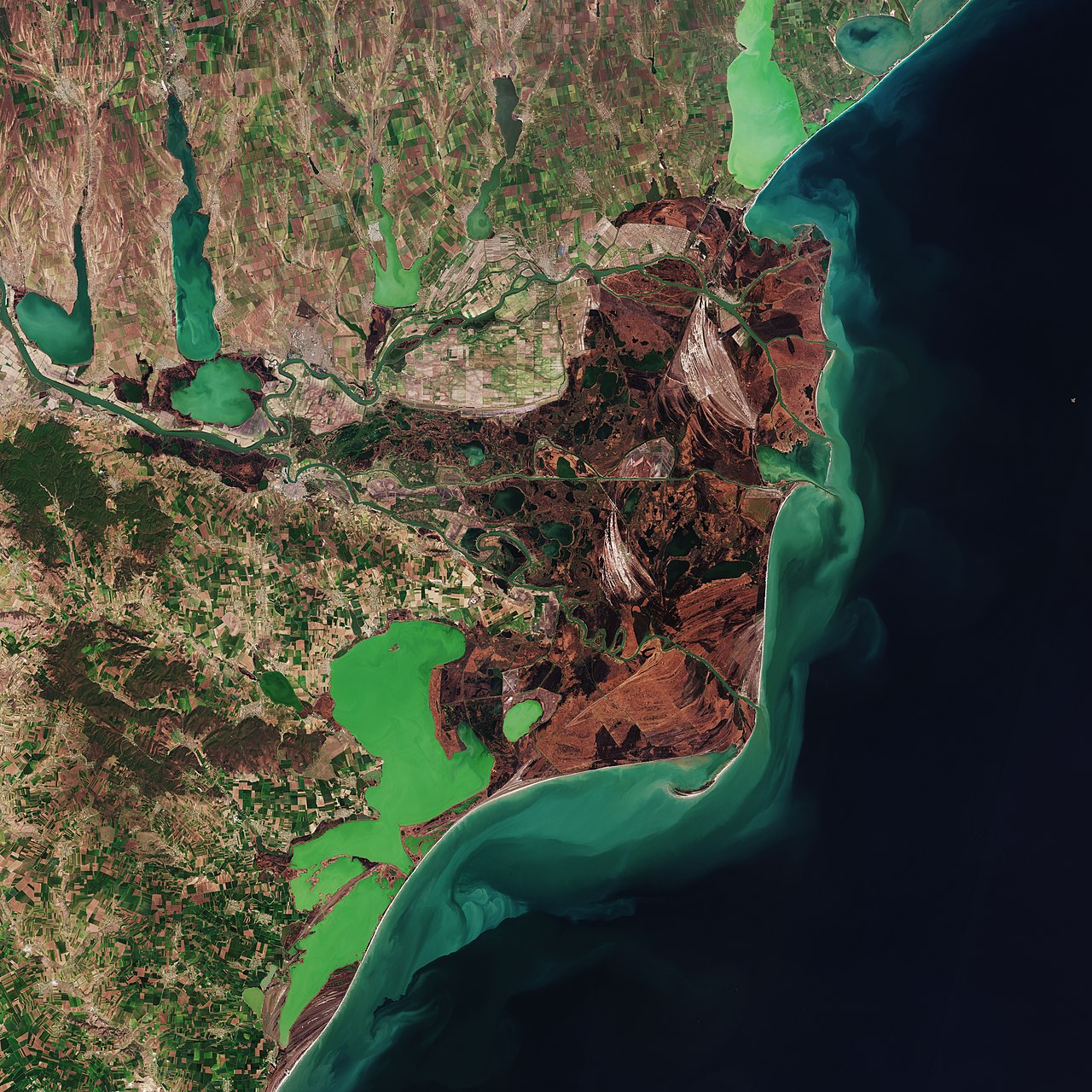
The Danube Delta is a vast wetland at the mouth of the Danube River, Europe's second-longest river, where it empties into the Black Sea. Spanning approximately 5,165 square kilometers — of which roughly 82 percent lies in Romania and 18 percent in Ukraine — it is the largest and best-preserved river delta in Europe and a UNESCO World Heritage Site and Biosphere Reserve.
Introduction
The delta is a labyrinth of channels, floating reed islands, lakes, and forests that supports one of the highest concentrations of bird life in the temperate world. Over 300 bird species breed, winter, or pass through the delta, including Europe's largest colonies of white pelicans and Dalmatian pelicans. The delta is also one of the few places in Europe where wilderness still dominates the landscape.
Geographic Setting
- Location: Romania and Ukraine, Black Sea coast
- Area: 5,165 km²
- Type: River- and wave-dominated delta
- Channels: Three main: Chilia, Sulina, Sfantu Gheorghe
The Danube River splits into three main channels as it crosses the delta. The Chilia branch to the north, forming the Romania-Ukraine border, carries roughly 60 percent of the flow. The Sulina branch in the center is the main navigation channel, maintained for ocean-going ships. The Sfantu Gheorghe (St. George) branch to the south is the oldest and most natural.
The delta's landscape is dominated by Europe's largest continuous reed bed, covering over 2,400 square kilometers. Within this vast reedscape are hundreds of lakes, some connected to the channel system and others isolated. Floating reed islands called "plaur" drift across lakes and channels, creating a constantly shifting landscape.
Ecology & Wildlife
- Bird Species: Over 320
- White Pelicans: ~3,500 breeding pairs
- Dalmatian Pelicans: ~120 breeding pairs (significant global population)
- Fish Species: Over 160
The Danube Delta is one of the most important wetland habitats in Europe. It supports the world's largest colony of white pelicans outside of Africa, with approximately 3,500 breeding pairs. The globally threatened Dalmatian pelican also breeds here, with roughly 120 pairs — one of the largest colonies in Europe. Pygmy cormorants, red-breasted geese, and ferruginous ducks are among other notable species.
Over 160 fish species inhabit the delta's waters, including sturgeon, pike, and catfish. The delta was historically one of the most important sturgeon fishing grounds in the world, but overfishing and dam construction have devastated populations. The Danube's beluga sturgeon, which can reach 6 meters in length and live for over a century, is now critically endangered.
Hydrology & Climate
- River Discharge: ~6,500 m³/s average
- Flood Season: April to June (spring snowmelt)
- Delta Growth: Advancing into Black Sea at ~40 m/year
- Climate: Temperate continental with Black Sea influence
The Danube drains an area of 817,000 square kilometers, collecting water from 19 countries — more than any other river basin on Earth. Spring snowmelt in the Alps and Carpathian Mountains drives the annual flood pulse, with peak flows typically arriving at the delta in April to June. This flood brings nutrients and sediment that sustain the delta's productivity.
The delta continues to grow, advancing into the Black Sea at roughly 40 meters per year at the Chilia and Sfantu Gheorghe mouths. However, upstream dams, particularly the Iron Gates I and II on the Serbia-Romania border, trap significant amounts of sediment, slowing the delta's growth rate compared to historical levels.
Conservation & Threats
- UNESCO Status: World Heritage Site since 1991, Biosphere Reserve
- Main Threats: Agricultural drainage, pollution, invasive species, climate change
- Soviet Legacy: 1,000+ km² drained for agriculture in the 1980s
- Restoration: Some drained areas being reflooded
During the 1980s, the Romanian communist regime drained over 1,000 square kilometers of the delta for agriculture and fish farming, destroying some of the most valuable wetland habitat. Since the 1989 revolution, Romania has committed to delta conservation, and some drained areas have been reflooded. However, the scars of the drainage era remain visible.
Pollution from the Danube's vast catchment remains a serious issue. Agricultural runoff, industrial waste, and municipal sewage from 19 upstream countries contribute nutrients and pollutants that cause eutrophication and algal blooms. Invasive species, particularly the Chinese mitten crab and several non-native fish species, threaten native biodiversity. Tourism, while providing economic benefits, requires careful management to avoid disturbing sensitive nesting colonies.
Key Facts
- The Danube Delta is Europe's largest and best-preserved delta at 5,165 km².
- It supports the world's largest white pelican colony outside Africa.
- Over 320 bird species have been recorded in the delta.
- The Danube basin drains 19 countries — more than any other river.
- Over 1,000 km² were drained for agriculture in the 1980s under the communist regime.
Fun Facts
- The Danube Delta is still growing, advancing into the Black Sea at about 40 meters per year.
- Floating reed islands called "plaur" are thick enough to support trees and can be mistaken for solid ground.
- The delta is one of the few places in Europe where you can hear absolute silence — no roads, no industry, just water, wind, and birds.
Final Thoughts
The Danube Delta is Europe's last great wetland wilderness — a vast reedscape where pelicans soar, sturgeon glide through ancient channels, and the continent's second-longest river completes its journey to the sea. Protecting it from the accumulated pollution of an entire continent is both an enormous challenge and a powerful symbol of Europe's environmental future.
Test Your Knowledge!
Think you know the world's great wetlands and deltas? Try our geography quiz games!
Play Geography Games →