
Few national emblems manage to feel both bold and quietly dignified at the same time, but Romania's three vertical bands of blue, yellow, and red strike exactly that balance. Snap a glance at it on a stadium railing or a government building in Bucharest and the message lands instantly: confident, unfussy, and rooted in a long Romanian story. Yet behind its clean geometry lies a flag that was reborn through revolution, that shares a near-identical look with a country thousands of kilometres away, and that carries meanings ordinary Romanians can recite from memory. This article unpacks where the design comes from, what each colour stands for, and why this tricolour means so much to the nation that flies it.
A Tricolour at First Glance
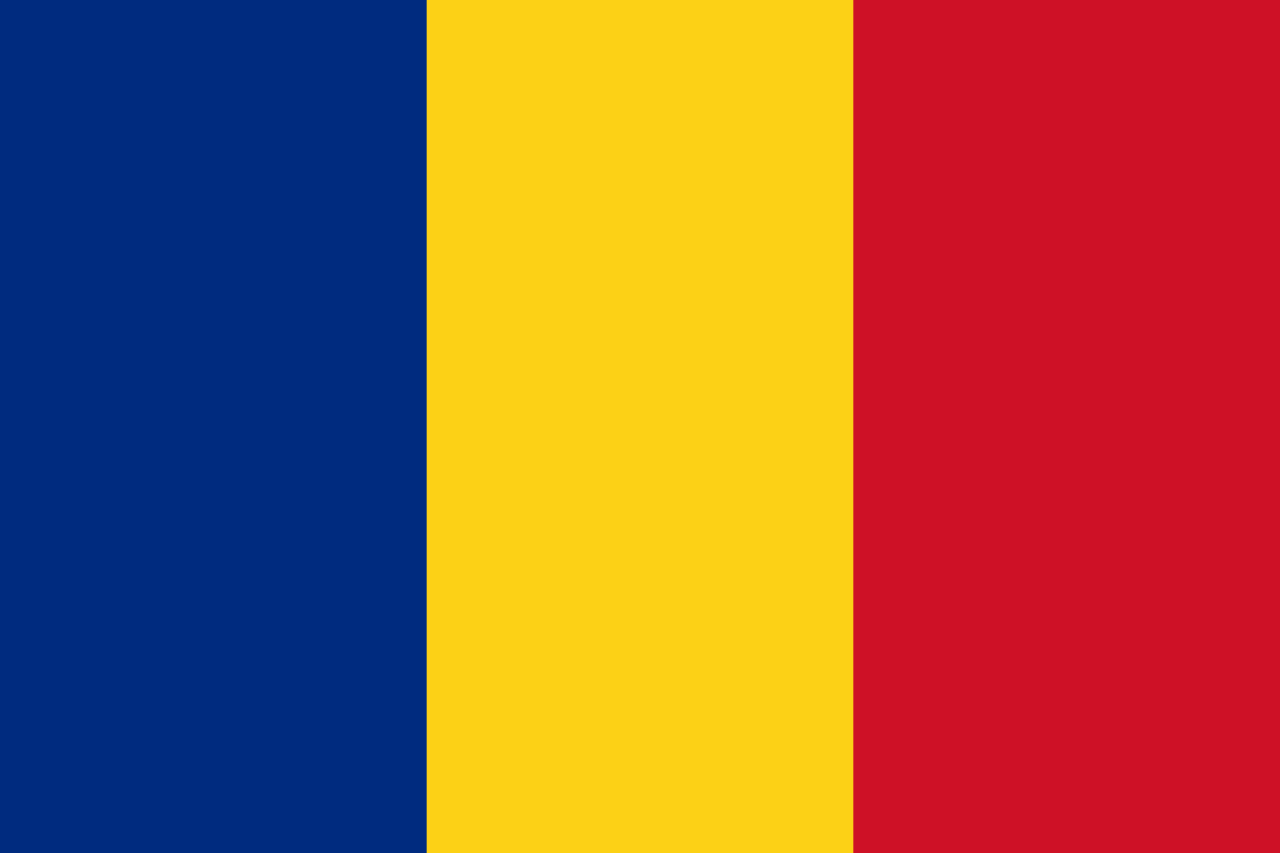
The Romanian flag is a vertical triband, divided into three equal stripes running top to bottom. From the hoist side, the order reads blue, then yellow, then red. There are no stars, no crests, and in its current civil form no central emblem at all, just three confident columns of colour of identical width. That simplicity is deliberate. A clean tricolour scales beautifully, reading the same on a lapel pin as it does on an enormous flag draped down the side of a building, and it ties Romania visually to a wider European family of tricolour banners that emerged from the age of nationalism. The proportions used are typically two by three, giving the flag a compact, balanced rectangle rather than a long banner.
What the Blue, Yellow, and Red Mean
Each stripe carries a value that Romanians have long associated with the national character. Blue stands for liberty, the freedom that the nation has fought repeatedly to secure and defend. Yellow, the golden middle band, represents justice, the fair ordering of society and the rule of law. Red, placed at the fly, signifies fraternity, the bonds of brotherhood and solidarity that hold a people together. Liberty, justice, and fraternity form a trio of ideals that echo the broader currents of nineteenth century European thought, and seeing them arranged side by side gives the flag a sense of moral weight beyond its plain geometry. The colours themselves were not invented in a vacuum either, they draw on heraldic traditions of the historic Romanian principalities that eventually united into the modern state.
How the Flag Took Its Modern Shape
The blue, yellow, and red combination has deep roots in Romanian history, appearing during the revolutionary ferment of the mid nineteenth century and accompanying the union of the principalities that formed the nation. Across the decades that followed, the tricolour endured through monarchy and republic, but its details shifted with the politics of the moment. During the communist era, the flag's yellow band carried a socialist coat of arms in its centre, an emblem stamped with the imagery of the one party state. That changed dramatically in December 1989, when the Romanian Revolution swept away the communist government. Protesters famously cut the emblem out of their flags, leaving a ragged hole where the symbol of the regime had been, and that holed flag became one of the most powerful images of the uprising. When the dust settled, the plain tricolour without any emblem was confirmed as the national flag, and that emblem-free design is what Romania has flown ever since. In other words, the modern flag is defined as much by what was removed as by what remains.
The Romania and Chad Look-Alike Puzzle
Here is the fact that surprises almost everyone who learns it: Romania's flag is nearly identical to the flag of Chad, a country on the other side of the Mediterranean in central Africa. Both are vertical tribands of blue, yellow, and red in the same left to right order. The only meaningful difference is a subtle one in the shade of blue, with Chad's typically rendered as a darker indigo and Romania's as a brighter cobalt, though even that varies between renderings. The two flags are so close that the resemblance has occasionally caused diplomatic grumbling, since neither nation wishes to be mistaken for the other. The flags developed independently, drawing on different traditions, which makes the convergence a genuine coincidence rather than a borrowing. Romania's tricolour also invites comparison with other European banners. It is sometimes confused with the flag of Andorra and Moldova, both of which use the same vertical blue, yellow, and red palette, but those carry central coats of arms that immediately set them apart. Strip away the emblems, though, and the family resemblance is striking, a reminder of how a shared colour vocabulary spread across nineteenth century nationhood. For more context on the country itself, see our romania country guide.
A Banner Woven Into National Identity
For Romanians, the tricolour is not merely an administrative symbol but a fixture of everyday patriotism. It flies over schools, ministries, and town halls, it drapes the shoulders of athletes, and it appears in homes and shop windows during moments of national pride. The image of the holed 1989 flag in particular gave the tricolour an emotional charge that few national symbols carry, transforming it into a living reminder of hard won freedom. That history means the flag is treated with real reverence. Citizens display it on national days, and the colours turn up everywhere from football kits to folk costumes, knitting the modern republic to its longer past. Because the design is so legible, it works equally well as a solemn state emblem and as a joyful expression of belonging in a crowd.
The Tricolour in Modern Life
Today the Romanian flag is a constant presence in public life. It is hoisted on official buildings and used at international summits, where Romania takes its place among the nations of Europe. On the country's national holidays, including the Great Union Day celebrated on the first of December, the streets fill with the blue, yellow, and red. Sporting events are another stage for the flag, where supporters wave it in the stands and athletes wrap themselves in it on the podium. The tricolour also features on the civil ensign at sea and serves as the basis for various state and military variants that add the national coat of arms for official use. Across all these settings the core design stays the same, ensuring the flag is recognised instantly whether it is flying over a quiet village school or a packed arena.
Quick Facts Worth Knowing
- Romania sits in southeastern Europe, and its flag is a member of the broad European tricolour tradition.
- The three colours, blue, yellow, and red, are equal in width and run vertically.
- The current emblem-free design was confirmed in 1989, after the revolution removed the communist coat of arms.
- The flag is famously almost identical to Chad's flag, differing mainly in the shade of blue.
- Liberty, justice, and fraternity are the values assigned to the blue, yellow, and red stripes respectively.
- The image of protesters cutting the communist emblem out of their flags became an enduring symbol of 1989.
Frequently Asked Questions
When was the current Romanian flag adopted?
The modern plain tricolour was confirmed in 1989, in the wake of the Romanian Revolution. The blue, yellow, and red combination itself is much older, dating back to the nineteenth century, but the emblem-free version flown today took hold once the communist coat of arms was removed from the central yellow band during the upheaval of that year.
What do the colours of the Romanian flag mean?
Each colour represents a national value. Blue stands for liberty, yellow for justice, and red for fraternity. Read together, the three stripes express the ideals of freedom, fairness, and brotherhood that Romanians associate with their nation, ideals that echo the broader currents of nineteenth century European political thought.
Why does the Romanian flag look like the flag of Chad?
Romania and Chad both use a vertical triband of blue, yellow, and red in the same order, making the two flags almost indistinguishable at a glance. The main difference is the shade of blue, which tends to be darker on Chad's flag. The similarity is a coincidence, as the two designs emerged independently from separate national traditions.
What continent is Romania on?
Romania is located in Europe, specifically in the southeastern part of the continent. Its flag belongs to the wide family of European tricolours that arose during the era of national awakening, sharing a visual language with several neighbouring countries while keeping its own distinct meaning.