
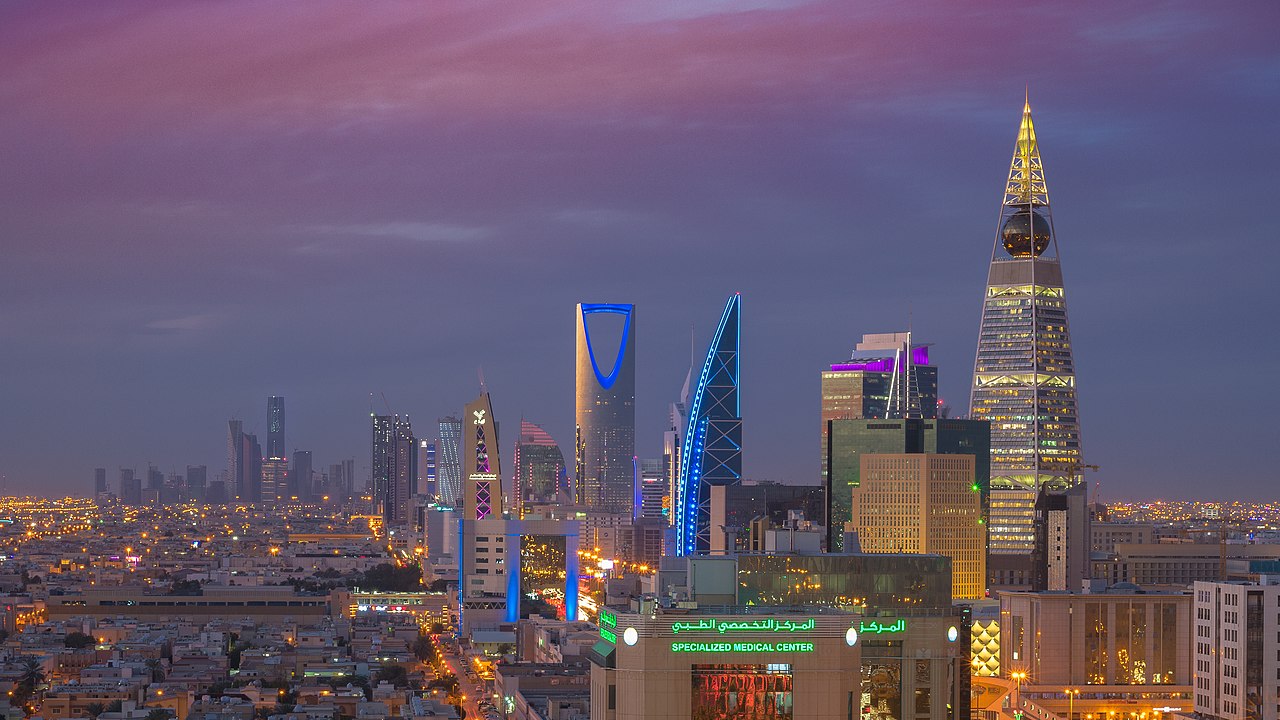
Here are some of the most interesting facts about Saudi Arabia: it is the largest country in the Middle East at 2.15 million km², it has no permanent rivers or lakes, it is home to Islam's two holiest cities (Mecca and Medina), and it is building The Line, a 170-kilometer linear city in the desert. The kingdom has a population of around 36 million, a capital at Riyadh, and is reinventing itself through the sweeping reforms of Vision 2030.
A Land Without Rivers
Perhaps the single most surprising fact about Saudi Arabia is that it has no permanent rivers or natural lakes anywhere in the country. With most of its territory blanketed by desert and almost no year-round rainfall, the kingdom relies on three water sources: deep underground aquifers, scarce seasonal flash floods, and desalination. Saudi Arabia is the world's largest producer of desalinated water, with dozens of plants converting Red Sea and Gulf seawater into drinking water for its cities.
The terrain that surrounds this water scarcity is dramatic. The Rub al Khali, or Empty Quarter, in the south is the largest continuous sand desert on Earth, sprawling across roughly 650,000 km² with dunes that can rise more than 250 meters. Yet the country is far from uniformly flat sand. The Asir Mountains in the southwest climb above 3,000 meters and catch enough rain to support terraced farms, juniper forests, and cool highland villages, a green Saudi Arabia most outsiders never imagine.
The Heart of the Islamic World
Saudi Arabia is the custodian of Islam's two holiest cities, Mecca and Medina, a role that shapes the kingdom's identity and global standing. The Hajj pilgrimage to Mecca is one of the Five Pillars of Islam, and each year roughly two million Muslims from every corner of the world travel there to perform it. The Great Mosque (Masjid al-Haram), which surrounds the Kaaba, is the largest mosque on Earth and can hold up to four million worshippers during peak Hajj days.
Beyond its religious sites, the country guards remarkable ancient heritage. Hegra (Madain Salih) in the AlUla region is Saudi Arabia's first UNESCO World Heritage Site: a 2,000-year-old Nabataean city of monumental tombs carved into sandstone cliffs, often described as a quieter cousin of Petra in Jordan. The kingdom itself is relatively young as a modern state, founded in 1932 by King Abdulaziz ibn Saud, who unified the tribes and regions of the Arabian Peninsula. The nation takes its name from the ruling Al Saud family.
Food, Culture, and Rapid Social Change
Saudi culture revolves around hospitality. Welcoming guests with Arabic coffee (qahwa) and fresh dates is a deeply rooted tradition, and declining such an offer can be seen as a social slight. The national dish is kabsa, a fragrant platter of spiced rice with meat that appears at nearly every large gathering, with recipes passed down and fiercely defended within families.
The pace of recent social change has been striking. Saudi Arabia lifted a 35-year ban on public cinemas in 2018, with the superhero film Black Panther among the first screenings. That same year it became the last country in the world to allow women to drive, and hundreds of thousands have since obtained licenses. Other rhythms remain firmly traditional: alcohol is banned entirely, and shops and restaurants pause five times a day for prayer, so the call to prayer still structures daily life across the kingdom.
Oil Wealth and Vision 2030
Saudi Arabia sits on some of the planet's largest proven oil reserves and is the world's biggest oil exporter. Its state energy giant, Saudi Aramco, briefly became the most valuable company in the world after its 2019 listing, with a valuation exceeding two trillion dollars. That wealth funds an ambitious attempt to move beyond oil.
Vision 2030, launched in 2016, is the blueprint for that diversification. Its flagship is NEOM, a futuristic mega-project on the Red Sea coast, which includes The Line, a planned 170-kilometer-long linear city designed to run on renewable energy with no cars. The kingdom is also pouring billions into tourism, entertainment, and sport. Its Public Investment Fund (PIF), with assets well over 700 billion dollars, has taken stakes in companies and ventures around the globe, from electric carmakers and ride-hailing apps to international football clubs.
Surprising Facts You Probably Did Not Know
- Roughly 60% of Saudi citizens are under 30, making it one of the youngest populations in the region and a powerful engine for reform.
- The kingdom is a major camel milk producer, and one brand even sells it in chocolate flavor.
- Despite being mostly desert, Saudi Arabia briefly exported wheat in the 1980s and 1990s by tapping ancient aquifers, a practice later wound down as the water depleted.
- At the King Abdulaziz Camel Festival, camels compete in beauty pageants worth millions, and some have been disqualified for receiving Botox injections.
- Al-Ahsa, in the east, is one of the world's largest oases, with more than three million date palms across roughly 85 km², and is itself a UNESCO World Heritage Site.
For a fuller picture of the kingdom's geography, economy, and travel highlights, see our saudi-arabia country guide.
Frequently Asked Questions
What is Saudi Arabia best known for?
Saudi Arabia is best known as the birthplace of Islam and home to its two holiest cities, Mecca and Medina, and as the world's largest oil exporter. It is increasingly recognized for its Vision 2030 mega-projects such as NEOM and The Line.
Why does Saudi Arabia have no rivers?
Its territory is dominated by desert with minimal year-round rainfall, so water flows only briefly after rare storms rather than forming permanent rivers. The country relies on aquifers and is the world's largest producer of desalinated seawater.
How big is Saudi Arabia?
Saudi Arabia covers about 2.15 million km², making it the largest country in the Middle East and occupying most of the Arabian Peninsula, an area roughly comparable to Western Europe.
When were women allowed to drive in Saudi Arabia?
Women gained the legal right to drive in June 2018, making Saudi Arabia the last country in the world to grant it. Hundreds of thousands of women have obtained licenses since then.