

The best-known people from Israel are David Ben-Gurion, who proclaimed the state in 1948 and became its first prime minister; Golda Meir, its only woman prime minister; Yitzhak Rabin, who shared the 1994 Nobel Peace Prize; the psychologist Daniel Kahneman, winner of the 2002 Nobel economics prize; the chemist Ada Yonath, the first Israeli woman to win a Nobel; and the actresses Natalie Portman and Gal Gadot. Behind those internationally recognised names sits a second list that most Israelis would put first, of songwriters, poets and athletes who are household names at home and little known abroad, and a third made up of Israeli-born musicians and scholars whose careers were built overseas. This guide takes the three groups in turn.
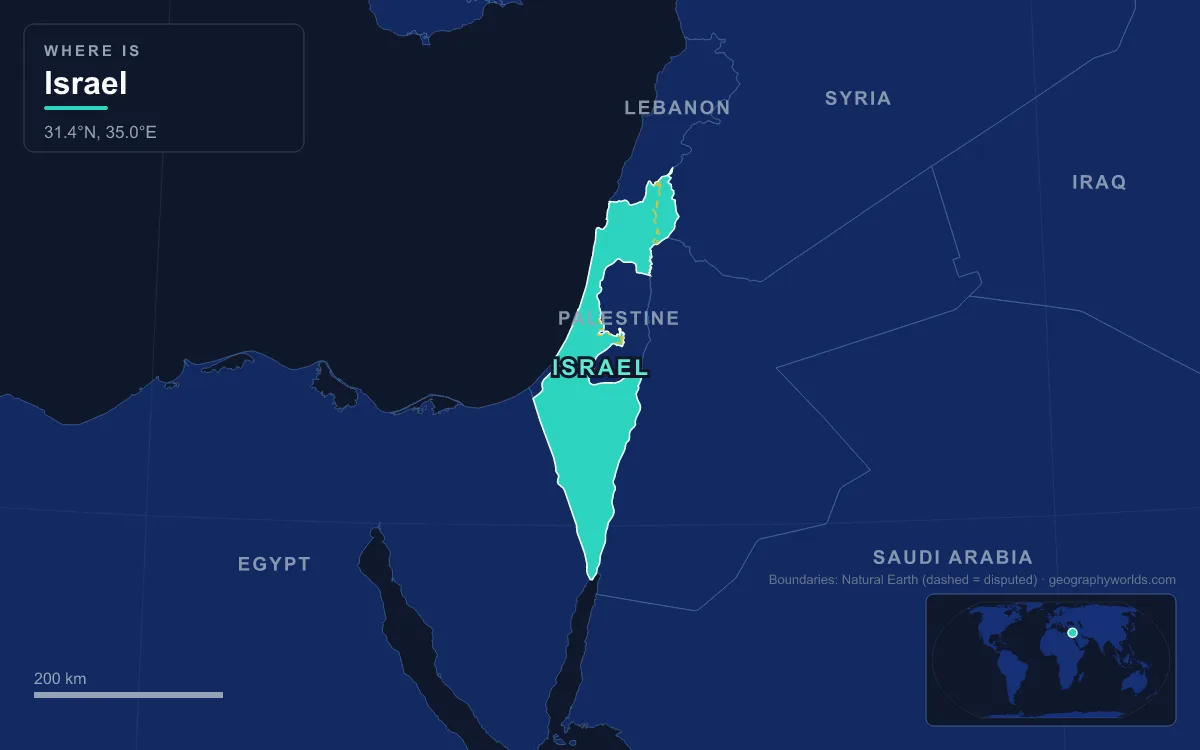
Ben-Gurion, Meir and Rabin: the founding generation known worldwide
David Ben-Gurion (1886–1973) was born David Grün in Płońsk, then in the Russian-ruled Congress Poland, and moved to Ottoman-ruled Palestine in 1906. By 1935 he headed the Jewish Agency, and on 14 May 1948, hours before the British Mandate ended, he read the declaration of independence at a ceremony in Tel Aviv and was the first to sign it. He led the new state as prime minister until 1963, with one short break, and the country's main airport and a university in the Negev carry his name.
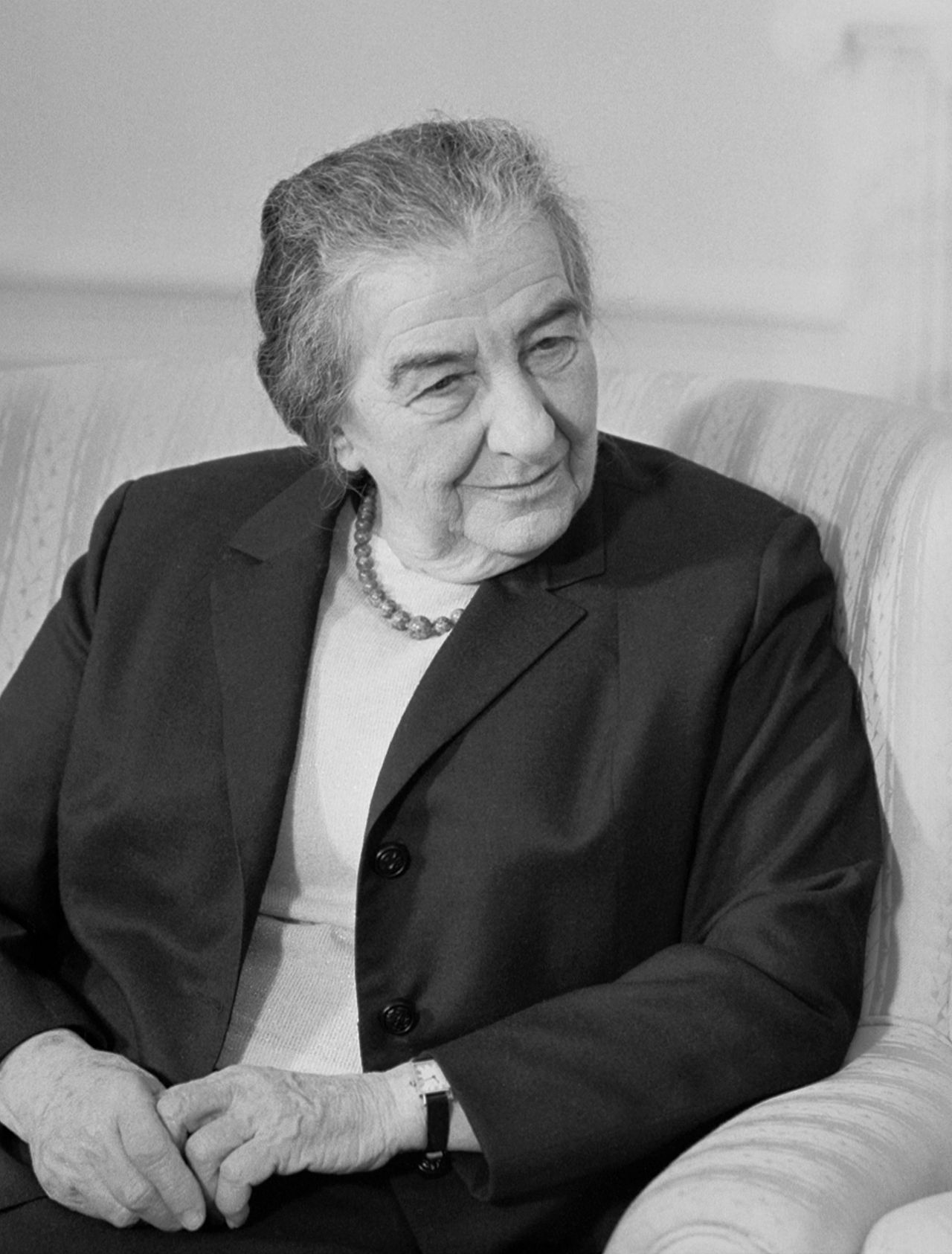
Golda Meir (1898–1978) had one of the most international biographies of any Israeli leader. She was born Golda Mabovitch in Kyiv, emigrated with her family to the United States in 1906, trained as a teacher in Milwaukee, and moved to Mandatory Palestine in 1921, where she lived at first on the kibbutz of Merhavia. She signed the 1948 declaration of independence and served as prime minister from 1969 to 1974, the only woman to hold the office so far. The surprise outbreak of the Yom Kippur War in October 1973 dominated her final year, and she resigned in 1974.
Her successor was Yitzhak Rabin (1922–1995), born in Jerusalem and the first prime minister born in the region. Rabin spent 27 years as a soldier, rising from the Palmach commando force to chief of staff, then served as prime minister in 1974–1977 and again from 1992. For the Oslo Accords he shared the 1994 Nobel Peace Prize with Shimon Peres and the Palestinian leader Yasser Arafat. On 4 November 1995 he was assassinated by Yigal Amir, an Israeli extremist who opposed the terms of the accords. The way these three offices work is covered in our guide to the government of Israel.
Nobel laureates from Tel Aviv and Jerusalem
Fourteen Israelis have been awarded Nobel Prizes since 1948, in chemistry, economics, literature and peace. Four of them are good examples of how the prizes spread across fields.
- S. Y. Agnon (1887–1970), born in Galicia in the Austro-Hungarian Empire, settled in Mandatory Palestine and is buried on the Mount of Olives in Jerusalem. In 1966 he shared the Nobel Prize in Literature with the German-Jewish poet Nelly Sachs, and at the award ceremony he introduced himself in Hebrew.
- Daniel Kahneman (1934–2024) was born in Tel Aviv while his mother was visiting family, grew up in Paris, and spent his later career at Princeton. His work with Amos Tversky on heuristics and biases, and their prospect theory, earned him the 2002 Nobel Memorial Prize in Economic Sciences. His 2011 book Thinking, Fast and Slow summarised that research for a general audience.
- Ada Yonath (1939–2026) was born in the Geula quarter of Jerusalem and worked at the Weizmann Institute of Science in Rehovot. She shared the 2009 Nobel Prize in Chemistry for mapping the structure of the ribosome, the cell's protein factory, and was the first Israeli woman to win a Nobel.
- Dan Shechtman (born 1941, Tel Aviv) discovered quasicrystals on 8 April 1982 while on sabbatical in Washington. The finding was doubted for years, and it won him the 2011 Nobel Prize in Chemistry. He spent his career at the Technion in Haifa.
Portman, Gadot, Oz and Harari: Israeli names on screens and shelves
Natalie Portman (born 1981) was born Natalie Hershlag in Jerusalem and moved to the United States at the age of three, and she holds dual Israeli and American citizenship. After starting out in Léon: The Professional (1994) she played Padmé Amidala in the Star Wars prequels and won the Academy Award for Best Actress for Black Swan (2010). She has kept close ties to Israel: she took graduate courses at the Hebrew University of Jerusalem in 2004 and in 2015 directed, in Hebrew, a film of Amos Oz's memoir.
Gal Gadot (born 1985 in Petah Tikva) grew up in Rosh HaAyin, won Miss Israel in 2004 and served two years in the Israel Defense Forces as a combat trainer before acting. Playing Wonder Woman in the DC films from 2016 made her a global name, and in 2025 she became the first Israeli actor to receive a star on the Hollywood Walk of Fame.
On the page, Amos Oz (1939–2018), born Amos Klausner in Jerusalem, wrote 40 books published in 45 languages, more than any other Israeli writer. His memoir A Tale of Love and Darkness (2002) describes his Jerusalem childhood. Yuval Noah Harari (born 1976), a historian at the Hebrew University of Jerusalem, reached a far bigger readership with Sapiens: A Brief History of Humankind (2011), which grew out of an undergraduate world-history course, and followed it with Homo Deus (2016) and Nexus (2024).
Naomi Shemer, Arik Einstein and Ofra Haza: the voices Israel sings along to
Ask Israelis whose work they know by heart and the answers are rarely politicians. Naomi Shemer (1930–2004) was born on Kvutzat Kinneret, a kibbutz her parents helped found on the shore of the Sea of Galilee. Over several decades she wrote songs for adults and children, and one of them, "Yerushalayim Shel Zahav" ("Jerusalem of Gold"), became so closely tied to the Six-Day War of June 1967 that it is often called Israel's second anthem. Outside Israel she is almost unknown.

Arik Einstein (1939–2013), born and raised in Tel Aviv, is the singer most often called "the voice of Israel". Over more than 50 years he recorded upwards of 500 songs and appeared on 34 albums, more than any other Israeli musician, with groups such as The High Windows and on solo records that helped create Israeli rock.
Ofra Haza (1957–2000) bridged the two worlds. She grew up in the Hatikva Quarter of Tel Aviv, the daughter of Yemenite Jewish parents who had arrived in 1949 with eight children, and learned traditional Yemenite songs from her mother. She came second at the 1983 Eurovision Song Contest with "Chai", Her international breakthrough came with Shirei Teiman (Yemenite Songs, 1984), built on songs she had heard in childhood, and the single "Im Nin'alu", from her 1988 album Shaday, topped the Eurochart for two weeks in June 1988; Shaday won the New Music Award for best international album. In Israel she is remembered first as the working-class girl from Hatikva.
Ben-Yehuda, Szenes, Amichai and two Olympic champions: household names inside Israel
Ben-Yehuda Street runs through the centres of both Jerusalem and Tel Aviv, yet few visitors know who Eliezer Ben-Yehuda (1858–1922) was. Born in what is now Belarus, he moved to Ottoman-ruled Jerusalem in 1881 and became the driving force behind reviving Hebrew as a spoken, everyday language. He compiled the first modern Hebrew dictionary and edited HaZvi, one of the early Hebrew newspapers. The result of his campaign is described in our article on the languages spoken in Israel.
Hannah Szenes (1921–1944), born in Budapest, moved to Mandatory Palestine in 1939 to study at the girls' agricultural school at Nahalal and later joined Kibbutz Sdot Yam. In 1944 she was one of 37 Jewish volunteers from Palestine who parachuted into occupied Europe with British Special Operations Executive backing. She was captured after crossing into Hungary and executed in Budapest at 23. Her short poem "A Walk to Caesarea", known by its opening words "Eli, Eli", is recited at memorial ceremonies across the country.
Yehuda Amichai (1924–2000) was born Ludwig Pfeuffer in Würzburg, Germany, and reached Petah Tikva with his family in 1935 before settling in Jerusalem. He was one of the first poets to write in colloquial Hebrew, his 17 books have been translated into more than 20 languages, and he received the Israel Prize in 1982.
Sport gave Israel two late but celebrated firsts. Gal Fridman (born 1975 in Karkur) won windsurfing bronze in Atlanta in 1996 and then, at Athens in 2004, Israel's first Olympic gold medal. Linoy Ashram (born 1999) became the first Israeli woman to win Olympic gold, taking the rhythmic gymnastics all-around title at the Tokyo Games of 2021, the first rhythmic gymnast from outside the former Soviet republics to win it when they were competing.
Perlman, Simmons and the Israeli-born careers built abroad
A third group was born in Israel but made its name elsewhere, and is claimed by both places. Itzhak Perlman (born 1945 in Tel Aviv) contracted polio at four and has played the violin seated ever since. At 13 he appeared twice on The Ed Sullivan Show in 1958 and moved to New York to study at the Juilliard School. He has won 16 Grammy Awards and four Emmys and received the US Presidential Medal of Freedom in 2015. He is usually described as Israeli-American, and he has taught at Juilliard, where he succeeded his own teacher, Dorothy DeLay.
Gene Simmons (born 1949) was born Chaim Witz in Haifa to Jewish refugees from Hungary. At eight he moved with his mother to Queens, New York. In 1973 he co-founded the hard rock band Kiss, playing bass and singing as "the Demon", and the band entered the Rock and Roll Hall of Fame in 2014.
Portman and Kahneman also belong partly to this group: one left Jerusalem as a toddler, the other did much of his prize-winning work in North America. The pattern of Israeli-born scientists, musicians and actors whose working lives run between Israel and the United States is one of the more visible results of the country's close ties with its diaspora. For the country behind all these biographies, from its coastal plain to the Negev, see our Israel country guide.