

José Rizal, the novelist executed by Spain in 1896 and widely regarded as the national hero; Corazon Aquino, the country's first woman president; Manny Pacquiao, the only boxer to win world titles in eight weight divisions; Maria Ressa, the journalist who shared the 2021 Nobel Peace Prize; Lea Salonga, the first Asian actress to win a Tony Award; and Hidilyn Diaz, who won the first Olympic gold medal in the country's history, are the people most often named when Filipinos list their best-known compatriots. What links many of them is a verifiable first or a record. This article goes through those firsts, prize by prize and record by record, with the people who set them.
From Yldefonso’s 1928 bronze to Yulo’s two golds in Paris
The Philippines was the first Southeast Asian country to win an Olympic medal, and it did so in the pool. Teófilo Yldefonso (1903–1942), born in Piddig, Ilocos Norte, took bronze in the 200 metres breaststroke at Amsterdam in 1928 and again at Los Angeles in 1932. During the Second World War he fought in Bataan as a lieutenant in the Philippine Scouts, survived the Bataan Death March and died in Japanese captivity at Camp O'Donnell in Capas, Tarlac.
Gold took another 93 years. Hidilyn Diaz (born 1991) trained as a schoolgirl in Zamboanga City under a cousin who coached weightlifting. At the 2008 Beijing Games she was the first woman weightlifter to represent the Philippines at an Olympics. In Rio in 2016 she won silver in the 53 kg class, the country's first medal outside boxing since 1936 and the end of a 20-year Olympic medal drought. Then, on 26 July 2021 at the delayed Tokyo Games, she won the women's 55 kg title, lifting 127 kg in the clean and jerk and 224 kg in total, both Olympic records.
Carlos Yulo (born 2000 in Manila) had already made history in artistic gymnastics before Paris. His floor bronze at the 2018 World Championships made him the first Filipino gymnast to win a world medal, and he became the first Filipino world champion on floor in 2019. At the 2024 Olympics in Paris he won both the floor exercise and the vault, the first Filipino, and the first Southeast Asian, to win more than one Olympic gold. He is also a three-time world champion and an eleven-time Asian champion. By the end of those Games the Philippines had won eighteen Olympic medals in total, with boxing the most productive sport.
Eight divisions, two pool disciplines and a bowling title at 19
Outside the Olympics, Filipino athletes hold some of the most unusual records in professional sport.
- Manny Pacquiao (born 1978 in Kibawe, Bukidnon, on Mindanao) is the only boxer to win world championships in eight weight divisions, from flyweight up to super welterweight. He won twelve major world titles and was the first boxer to take major titles in four of the traditional "glamour divisions": flyweight, featherweight, lightweight and welterweight. Guinness also credits him with the most consecutive world-title fight wins at different weights, 15 between 2005 and 2011, and when he took the WBA welterweight belt on 20 July 2019 at 40 years and 215 days he became the oldest welterweight world champion. Between fights he sat in the Philippine Senate from 2016 to 2022.
- Efren Reyes (born 1954 in Pampanga), nicknamed "the Magician", was the first player to win world championships in two different pool disciplines. His titles include the 1999 WPA World Nine-ball Championship and four World Eight-ball titles, and with Francisco Bustamante he won the World Cup of Pool for the Philippines in 2006 and 2009. He has won more than 100 international events.
- Paeng Nepomuceno (born 1957) won the 1976 Bowling World Cup in Tehran at 19, a result Guinness World Records lists as the youngest tenpin bowling world champion. He won the same event again in 1980, 1992 and 1996, another Guinness record, and on 13 July 2019 in Quezon City he took his tally of tenpin titles to 133, a third entry. He is also the only bowler to receive the International Olympic Committee President's Trophy, and in 1999 the sport's world federation, the FIQ, named him its International Bowling Athlete of the Millennium.
Rizal’s novels and Romulo’s Pulitzer: firsts written in Spanish and English
José Rizal (1861–1896) was born in Calamba, Laguna, trained as an ophthalmologist and wrote mostly in Spanish. In the 1880s he was a leading member of the Propaganda Movement, Filipino reformers in Europe who campaigned for political change in the colony rather than independence at first. His novels Noli Me Tángere (1887) and El filibusterismo (1891) depicted abuses under Spanish colonial rule and are read together as a national epic. After founding La Liga Filipina in Manila in 1892 he was arrested and banished to Dapitan in Mindanao, and in December 1896 a military court convicted him of rebellion and he was executed. The anniversary of his death, 30 December, is Rizal Day. How Spanish gave way to Filipino and English is told in our guide to the languages spoken in the Philippines.

Carlos P. Romulo (1899–1985), born in Intramuros, the walled old city of Manila, collected firsts in two careers. As a journalist he became, in 1942, the first non-American to win the Pulitzer Prize for Correspondence, and in the same war he served as an aide to General Douglas MacArthur, one of the last men evacuated from the Philippines before US forces surrendered to Japan. As a diplomat he was president of the fourth session of the UN General Assembly in 1949–1950, the first Asian to hold the post, and later presided over the UN Security Council four times. A year earlier, in Paris, he had answered a Soviet delegate who dismissed him as a little man from a little country with a reply about small Davids flinging pebbles at Goliaths. In 1982 he was proclaimed a National Artist for Literature.
Aquino, del Mundo and Ressa: firsts for Filipino women
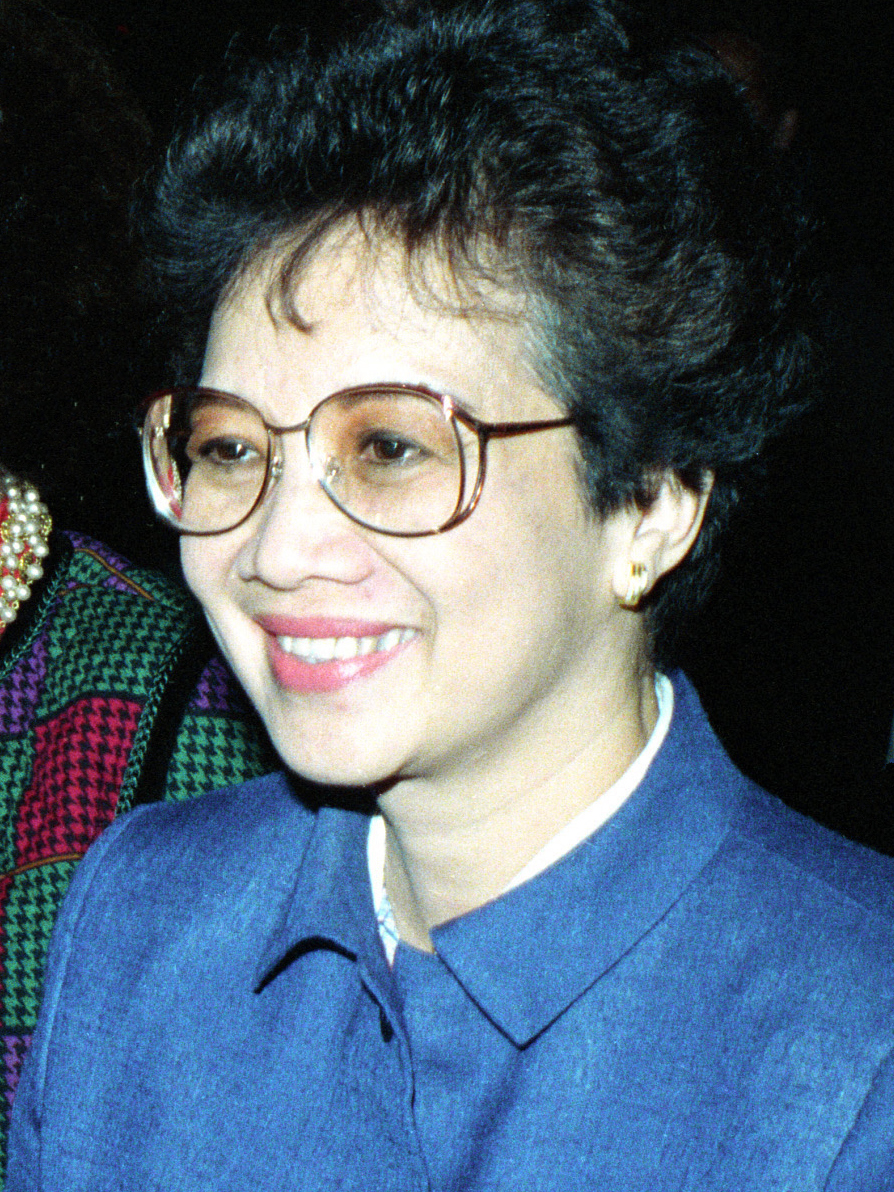
Corazon Aquino (1933–2009), born in Paniqui, Tarlac, had never given a political speech before campaigning for her husband, the opposition senator Benigno "Ninoy" Aquino, who was imprisoned under martial law and assassinated in 1983. In February 1986 the non-violent People Power Revolution ended Ferdinand Marcos's two decades in power and made her the first woman president of the Philippines. She served until 1992, oversaw the 1987 Constitution, which limited the powers of the presidency, and was Time magazine's Woman of the Year for 1986.
Fe del Mundo (1911–2011) earned her medical degree from the University of the Philippines in 1933, did further paediatric work in Boston, and returned to found the first paediatric hospital in the Philippines. She practised for eight decades, won the Ramon Magsaysay Award for Public Service in 1977, and in 1980 became the first woman named a National Scientist of the Philippines. She was also the first woman to lead the Philippine Pediatric Society, and in 2010, the year before her death at 99, she received the Order of Lakandula. A popular story says she was Harvard Medical School's first woman student; an archivist at Harvard's Center for the History of Medicine found that claim anecdotal and could not confirm she was ever enrolled, which makes her documented record the better one to cite.
Maria Ressa (born 1963) was born in Manila, raised in Toms River, New Jersey, and holds Filipino and American citizenship. After nearly two decades as CNN's lead investigative reporter in Southeast Asia she co-founded the news site Rappler in the Philippines. Time included her among the journalists it named Person of the Year for 2018. She was arrested in February 2019 and convicted of cyberlibel by a Manila court in June 2020 under the Anti-Cybercrime law, a verdict condemned by human rights groups, and in 2021 she shared the Nobel Peace Prize with the Russian editor Dmitry Muratov for defending freedom of expression. They were the first journalists to receive the peace prize since 1935.
Salonga’s 1991 Tony and the four Miss Universe crowns since Gloria Diaz
Lea Salonga (born 1971) made her professional stage debut in Manila at seven. In 1989 she created the role of Kim in Miss Saigon in London's West End, winning a Laurence Olivier Award in 1990, and when she repeated it on Broadway in 1991 she won the Tony Award for Best Actress in a Musical, the first actress of Asian descent to do so and the second-youngest winner of that award. She then provided the singing voice of Princess Jasmine in Disney's Aladdin (1992) and of Mulan (1998), and earned Grammy nominations in 2004 and 2019. In 2026 she became the first Filipino to receive a star on the Hollywood Walk of Fame.
Beauty pageants are followed closely in the Philippines, and the country's record there began with Gloria Diaz (born 1951). A student at St. Scholastica's College in Manila, she won Miss Universe on 19 July 1969 in Miami Beach, Florida, the first Filipina to take the title; her final-round answer to a question about the "men in the moon" won over the audience and judges. Three more Filipinas have won since: Margie Moran (born 1953) in Athens in 1973, Pia Wurtzbach (born 1989, Filipino-German) in Las Vegas in 2015, and Catriona Gray (born 1994) in 2018. For more records and oddities about the archipelago these people come from, see our list of facts about the Philippines.