
Introduction to the Brazilian Flag
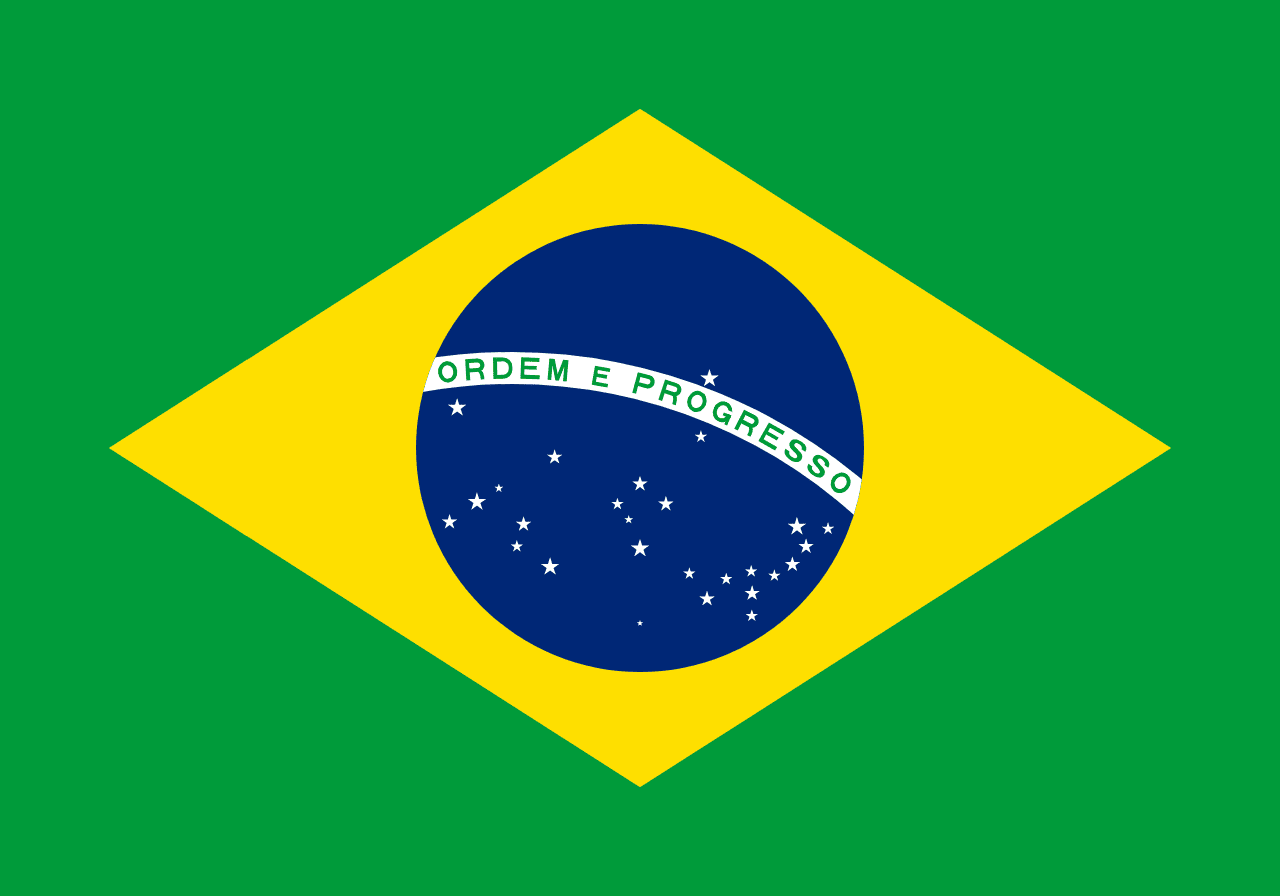
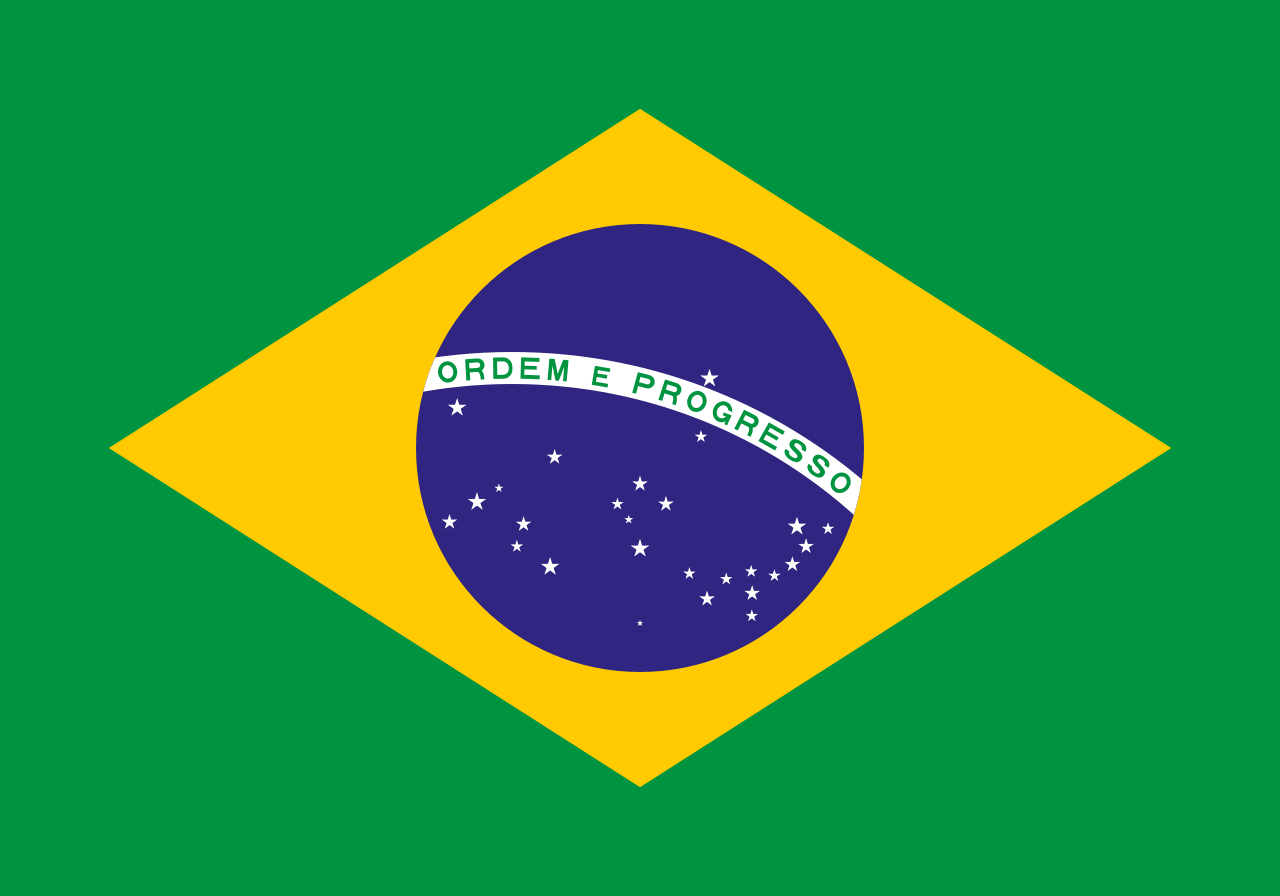
The flag of Brazil is one of the most visually striking and symbolically rich national flags in the world. Unlike many flags that use simple stripes or geometric patterns, Brazil's flag features a complex design with multiple elements: a green field, a large yellow diamond, a dark blue circle depicting the night sky, and a curved white band bearing the national motto. Each element carries deep meaning connected to Brazil's history, geography, and aspirations as a nation.
Adopted just four days after Brazil became a republic in 1889, the flag has become an enduring symbol of Brazilian identity, recognized worldwide and beloved by the nation's more than 200 million citizens.
Historical Background
Understanding Brazil's flag requires knowledge of its historical context and evolution:
Imperial Origins
Before the republic, Brazil was an empire ruled by the House of Braganza. The imperial flag, adopted in 1822 when Brazil declared independence from Portugal, featured the same green and yellow colors but with an imperial coat of arms at the center. The green represented the House of Braganza (the ruling dynasty), while the yellow represented the House of Habsburg (the family of Empress Maria Leopoldina).
Birth of the Republic
On November 15, 1889, a military coup led by Marshal Deodoro da Fonseca overthrew the monarchy and established the Republic of Brazil. A new flag was urgently needed to represent the new government. The task of designing it fell to a group that included philosopher Raimundo Teixeira Mendes, astronomer Manuel Pereira Reis, and artist Décio Villares.
Design Philosophy
The designers chose to retain the green and yellow of the imperial flag, colors that had become associated with Brazil itself rather than just the ruling family. However, they replaced the imperial coat of arms with elements that reflected republican ideals, particularly the influence of positivist philosophy, which was popular among Brazil's intellectual and military elite at the time.
Elements of the Flag
Each component of Brazil's flag carries specific symbolic meaning:
The Green Field
The dominant green background is often interpreted today as representing Brazil's lush forests, particularly the Amazon rainforest. While this was not the original intention (the green initially represented the House of Braganza), this naturalistic interpretation has become widely accepted and helps connect the flag to Brazil's environmental heritage.
The Yellow Diamond
The large yellow rhombus (diamond shape) centered on the green field originally represented the wealth of Brazil and the House of Habsburg. In modern interpretation, it is often associated with Brazil's gold reserves and mineral wealth. The diamond shape is distinctive among world flags and makes Brazil's flag immediately recognizable.

The Blue Globe
At the center of the yellow diamond lies a dark blue circle representing the night sky as seen from Rio de Janeiro at 8:30 AM on November 15, 1889—the exact moment when the constellation of the Southern Cross was on the local meridian, coinciding with the proclamation of the republic.
The Stars
Twenty-seven white stars are depicted on the blue globe, each representing one of Brazil's 26 states and the Federal District. The stars are arranged to show actual constellations as they would appear to an observer looking at the sky from outside the celestial sphere. The constellations include:
- Southern Cross (Crux): The most prominent constellation, symbolizing Brazil's location in the Southern Hemisphere.
- Scorpius: Partially visible with several stars.
- Canis Major: Including Sirius, the brightest star in the night sky.
- Canis Minor, Hydra, and others: Contributing additional stars to the design.
One star, representing the state of Pará, appears above the white band, while all others appear below it. This arrangement reflects the geographic position of Pará, which straddles the equator.
The National Motto
A curved white band crosses the blue globe, bearing the national motto "Ordem e Progresso" (Order and Progress) in green letters. This phrase is derived from the positivist motto "Love as a principle and order as the basis; progress as the goal," coined by French philosopher Auguste Comte. The positivist philosophy significantly influenced Brazil's republican founders, who believed in progress through science and order.
Rules and Protocol
Brazil has specific regulations governing the use of its national flag:
Display Regulations
The flag must be raised at sunrise and lowered at sunset. If displayed at night, it must be illuminated. When the flag is worn or damaged, it should be ceremonially burned on November 19th, Flag Day (Dia da Bandeira), a civic holiday established in 1889. Federal law (Lei 5.700/1971) prescribes specific protocols: the flag must never touch the ground, must always occupy the position of honor when displayed alongside other flags, and permanent hoisting is required at the Praça dos Três Poderes in Brasilia, where a massive 286-square-meter flag flies from a 100-meter flagpole.
Modifications
The flag's design has been modified several times to add stars representing new states. The original 1889 design featured 21 stars. Stars were added in 1960 (22nd star for Acre, then the 23rd for Guanabara when Brasilia became the capital), and the most recent change occurred in 1992, when four stars were added to represent the states of Amapá, Roraima, Rondônia, and Tocantins, bringing the total to 27. Any future state created by constitutional amendment would require adding a new star to the flag.
Cultural Impact
The Brazilian flag holds a special place in the national consciousness:
National Identity
Brazilians display strong attachment to their flag, often using it in celebrations, sports events, and daily life. The flag's colors—green and yellow—have become synonymous with Brazil itself and are widely used in contexts ranging from sports uniforms to commercial branding.
International Recognition
The flag is instantly recognizable worldwide, helped by Brazil's prominent role in international football (soccer) and its hosting of major events like the 2014 FIFA World Cup and 2016 Olympic Games. The Brazilian national football team's iconic yellow jersey (the "canarinho") directly echoes the flag's yellow diamond, and the green-and-yellow color combination has become so synonymous with Brazil that it serves as an unofficial national brand recognized across all six inhabited continents.
Artistic Influence
The flag's unique design has influenced Brazilian art, fashion, and design for over a century. The combination of green, yellow, and blue has become a distinctive Brazilian color palette used in contexts ranging from Carnival costumes and samba school uniforms to corporate logos and product packaging. Brazilian pop art frequently references the flag, and during events like the World Cup, entire streets and neighborhoods are painted in the flag's colors. The flag's geometric design, unusual among world flags for its layered shapes, has also inspired architectural elements in Brasilia, the planned capital city designed by Oscar Niemeyer and Lucio Costa.
Conclusion
Brazil's flag is far more than a national banner—it is a sophisticated symbol that encodes the nation's history, geography, philosophy, and aspirations. From the imperial colors retained to honor historical continuity, to the precisely positioned stars representing the federal states, to the positivist motto expressing hopes for national progress, every element tells part of Brazil's story. As Brazil continues to evolve as a nation, its flag remains a powerful symbol of unity for one of the world's most diverse and vibrant countries.
