
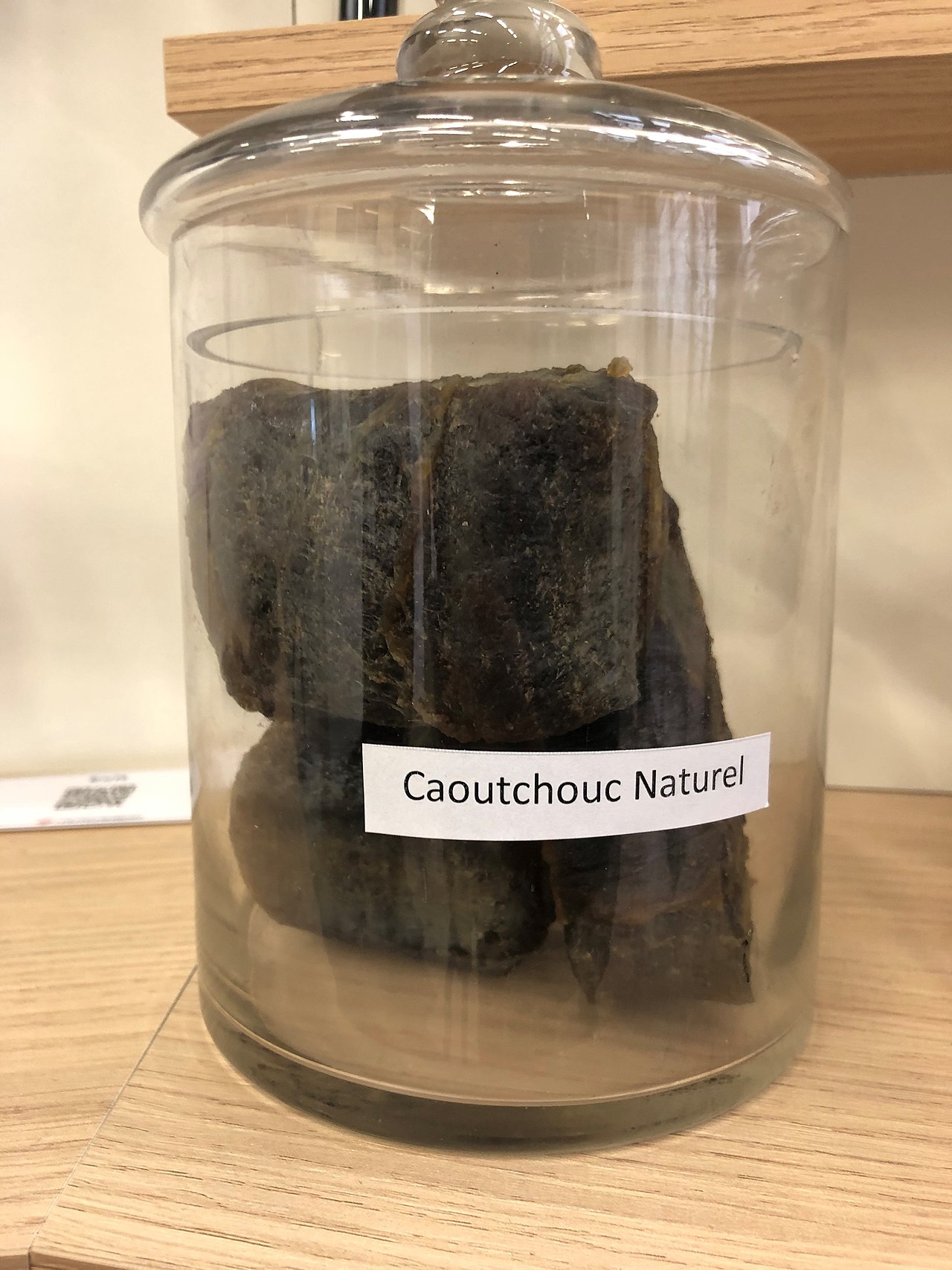
Natural rubber is one of the most important and geographically concentrated commodities on Earth. Over 14 million tonnes are produced annually, with Thailand, Indonesia, and Vietnam alone accounting for roughly 70% of global supply. Yet the rubber tree (Hevea brasiliensis) is native to the Amazon Basin — its current Southeast Asian dominance is the result of one of history's most consequential acts of biopiracy, when Henry Wickham smuggled 70,000 rubber seeds out of Brazil in 1876.
Introduction
The geography of rubber shaped the 20th century. Rubber tires enabled the automobile revolution. Japan's need for rubber resources drove its conquest of Southeast Asia in World War II. The synthetic rubber industry, developed in wartime desperation, created petrochemical complexes that anchor industrial economies. Today, natural rubber remains irreplaceable for aircraft tires, surgical gloves, and heavy-duty applications — and its geographic concentration in Southeast Asia represents one of the global economy's most significant supply chain vulnerabilities.

Southeast Asia: The Rubber Belt
- Thailand: ~4.8 million tonnes/year (world's largest)
- Indonesia: ~3.1 million tonnes
- Vietnam: ~1.3 million tonnes
- Total SE Asia: ~90% of global natural rubber
- Ideal Conditions: 25-28°C, 2,000-3,000 mm rainfall, below 600 m altitude
Natural rubber trees require specific tropical conditions: temperatures of 25-28°C year-round, 2,000-3,000 millimeters of rainfall distributed evenly without prolonged dry periods, and altitudes below 600 meters. These conditions are found in a relatively narrow equatorial belt, and Southeast Asia provides them in abundance. Thailand's southern provinces of Surat Thani, Nakhon Si Thammarat, and Songkhla form the world's largest rubber-growing region, with over 3 million hectares under cultivation.
Indonesia's rubber production is concentrated in Sumatra (particularly North Sumatra, Riau, and South Sumatra) and Kalimantan, where rubber smallholdings are often interspersed with palm oil plantations. Vietnam has rapidly expanded rubber production in the Central Highlands and southeastern provinces, becoming the world's third-largest producer. The rubber industry in these three countries supports approximately 30 million people, predominantly smallholder farmers who own plots of 1-5 hectares and tap their trees by hand every other day during the tapping season.
The Great Rubber Theft
- Year: 1876
- Actor: Henry Wickham, British adventurer
- Seeds: ~70,000 Hevea brasiliensis seeds smuggled from Brazil
- Destination: Kew Gardens, London, then British colonies in Asia
- Consequence: Destroyed Brazil's rubber monopoly within 30 years
The geographic transformation of rubber from an Amazonian monopoly to a Southeast Asian industry is one of history's most dramatic commodity stories. In the late 19th century, Brazil controlled virtually all natural rubber, extracted from wild trees by tappers (seringueiros) in the Amazon. The rubber boom made Manaus one of the wealthiest cities in the world — it built a grand opera house in the jungle and was among the first cities in the Americas to have electric streetlights.
In 1876, Henry Wickham collected approximately 70,000 Hevea brasiliensis seeds from the Santarem region of Brazil and shipped them to the Royal Botanic Gardens at Kew, London. From these seeds, British colonial authorities established rubber plantations in Malaya (now Malaysia), Ceylon (Sri Lanka), and Singapore. Plantation rubber, produced far more efficiently than wild Amazonian tapping, devastated Brazil's rubber economy. By 1920, Asian plantations produced over 90% of world rubber, and Manaus descended into decades of economic collapse.
Rubber & World History
- Automobile Age: Henry Ford's Fordlandia rubber plantation in Brazil (1928-1934), failed
- WWII: Japan conquered SE Asia partly to control rubber supply
- Synthetic Rubber: US invested $700 million in synthetic rubber after 1942
- Cold War: Rubber was classified as a strategic material by NATO
Rubber's geographic concentration has repeatedly shaped world history. When Japan conquered Malaya, the Dutch East Indies, and Indochina in 1941-1942, it seized control of over 90% of the world's natural rubber supply. The Allied powers, suddenly cut off from this essential material (needed for tires, gaskets, hoses, boots, and thousands of military applications), launched a crash program to develop synthetic rubber. The US government invested $700 million (equivalent to roughly $13 billion today) in synthetic rubber plants, producing 800,000 tonnes by 1945.
Henry Ford's attempt to create an American rubber supply chain through Fordlandia — a vast plantation carved from the Amazon jungle in 1928 — is one of industrial history's great geographic failures. The plantation was devastated by leaf blight (Microcyclus ulei), a fungal disease endemic to the Amazon that attacks rubber trees planted in close proximity. This same leaf blight is the reason rubber plantations have never succeeded in South America, and it remains a latent threat to Southeast Asian production — if the fungus reaches Asia, the consequences for the global rubber supply would be catastrophic.
Modern Industry & Future Risks
- Natural Rubber Market: ~$30 billion annually
- Synthetic Rubber: ~15 million tonnes/year (petroleum-based)
- Natural vs Synthetic: Natural rubber essential for aircraft tires, surgical gloves, heavy equipment
- Leaf Blight Risk: South American Leaf Blight (SALB) has never reached Asia — yet
The modern rubber industry splits between natural rubber (~14 million tonnes) and synthetic rubber (~15 million tonnes), with natural rubber commanding a market of approximately $30 billion annually. Despite advances in polymer chemistry, natural rubber remains irreplaceable for applications requiring extreme elasticity, heat resistance, and durability: aircraft tires, heavy-duty truck tires, surgical gloves, and earthquake-resistant building mounts all require natural rubber.
The geographic concentration of natural rubber production in Southeast Asia represents a critical vulnerability. South American Leaf Blight, which prevents rubber cultivation in the Amazon, has never crossed the Atlantic to Asia — but plant pathologists warn that in an era of global trade and travel, its arrival may be a matter of when, not if. If SALB reaches the genetically uniform rubber plantations of Thailand and Indonesia, losses could exceed 50% of global production. Research into blight-resistant varieties and alternative rubber sources (guayule, Russian dandelion) is accelerating but remains years from commercial viability.
Key Facts
- Thailand, Indonesia, and Vietnam produce ~70% of the world's natural rubber (~14 million tonnes/year).
- Henry Wickham smuggled ~70,000 rubber seeds from Brazil to London in 1876, transforming the global industry.
- Natural rubber remains irreplaceable for aircraft tires, surgical gloves, and heavy-duty applications.
- The rubber industry supports approximately 30 million smallholder farmers in Southeast Asia.
- South American Leaf Blight has never reached Asia but could devastate plantations if it does.
Fun Facts
- The Amazon rubber boom made Manaus so wealthy that it built an opera house in the jungle with Italian marble and Scottish ironwork.
- Henry Ford's Fordlandia rubber plantation in the Amazon failed spectacularly — he tried to impose Midwestern American values on Brazilian workers, banning alcohol and mandating square dancing.
- Japan's attack on Pearl Harbor was partly motivated by the need to secure Southeast Asian rubber supplies before the US could respond.
- A single rubber tree can be tapped every other day for 25-30 years, yielding about 2.5 kg of dry rubber per year.
Final Thoughts
Rubber is a commodity whose geography has repeatedly reshaped the world — from the Amazon boom towns of the 1890s to the Japanese conquest of Southeast Asia, from wartime synthetic rubber programs to today's smallholder plantations in Thailand. Its concentration in a single region remains one of the global economy's most significant geographic risks, a reminder that for all our technological sophistication, we remain dependent on the specific places where a single tropical tree species thrives.
Test Your Knowledge!
Think you know your food geography? Try our interactive quiz!
Play Geography Games →