

The total amount of money in the world depends on how you define "money." Physical coins and banknotes (M0) total roughly $8 trillion. The narrow money supply (M1), which includes physical cash plus demand deposits, is about $50 trillion. The broad money supply (M2), which adds savings accounts, money market funds, and other near-cash assets, exceeds $100 trillion. If you include all financial assets — stocks, bonds, real estate, and derivatives — the total reaches hundreds of trillions more.
Introduction
The question "how much money is in the world?" seems simple, but the answer reveals the extraordinary complexity of the modern financial system. Money exists in many forms: from the coins in your pocket to the digital balances in bank accounts, from government bonds to cryptocurrency wallets. Each layer of the financial system adds trillions more to the total, and the distinctions between these layers matter enormously for understanding economics, inflation, and global wealth. This guide breaks down every type of money and puts the mind-boggling numbers in context.
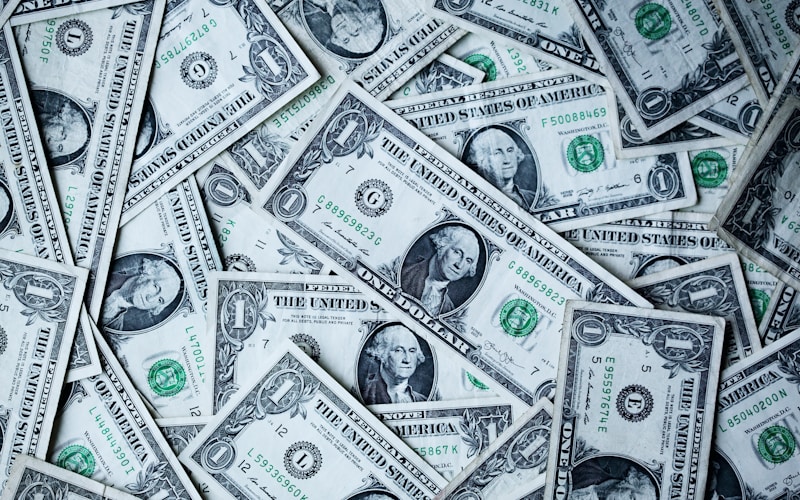
The Money Supply Breakdown
M0 (Physical Currency): ~$8 Trillion
- What It Includes: All physical coins and banknotes in circulation worldwide
- US Dollar Share: About $2.3 trillion in US banknotes circulate globally
- Euro Share: About 1.6 trillion euros in banknotes
- Fun Fact: About 80% of US $100 bills are held outside the United States
Physical money — the coins and paper bills you can hold in your hand — represents only a tiny fraction of the world's total money. Approximately $8 trillion in physical currency circulates globally. The US dollar and the euro dominate, but every country issues its own notes and coins. Remarkably, despite the rise of digital payments, the amount of physical cash in circulation has actually increased over the past decade, largely because cash serves as a store of value in uncertain economies.
M1 (Narrow Money): ~$50 Trillion
- What It Includes: M0 plus demand deposits (checking accounts) and other immediately accessible funds
- Significance: This is the money that can be spent immediately without conversion
M1 money supply includes all physical currency plus the money in checking accounts and other demand deposits that can be accessed immediately. This is the money people and businesses use for daily transactions. M1 ballooned significantly after 2020 when central banks around the world injected massive liquidity into their economies in response to the pandemic, with the US M1 supply alone increasing from about $4 trillion to over $20 trillion.
M2 (Broad Money): ~$100+ Trillion
- What It Includes: M1 plus savings accounts, money market funds, time deposits under $100,000
- Significance: This is the most commonly cited measure of "how much money exists"
- Growth: Global M2 has roughly doubled since 2010
M2 is the broadest commonly used measure of money supply and represents the total amount of "near-cash" in the global economy. This includes everything in M1 plus savings accounts, money market accounts, and small time deposits. When economists say there is "about $100 trillion" in the world, they are typically referring to M2. This figure has grown dramatically over the past two decades due to quantitative easing programs, low interest rates, and expanding global GDP.
Beyond Money: Global Financial Assets
- Global Stock Markets: ~$110 trillion total market capitalization
- Global Bond Markets: ~$130 trillion in outstanding bonds
- Global Real Estate: ~$380 trillion total value (the single largest store of wealth)
- Gold: ~$15 trillion (all gold ever mined, at current prices)
- Cryptocurrency: ~$2-3 trillion total market cap (highly volatile)
- Derivatives: ~$600+ trillion in notional value (contracts, not actual money)
If you expand the definition beyond money supply to include all financial and real assets, the numbers become staggering. Global real estate is the world's largest asset class at roughly $380 trillion — that includes every home, office building, factory, and piece of farmland on Earth. Global stock markets represent about $110 trillion, while bond markets add another $130 trillion. The derivatives market, often cited as the largest financial market, has a notional value exceeding $600 trillion, though this figure represents the value of underlying contracts rather than actual money at risk.
How Much Money Per Person?
- Physical Cash Per Person: ~$1,000 (M0 ÷ 8 billion people)
- Broad Money Per Person: ~$12,500 (M2 ÷ 8 billion people)
- Total Wealth Per Person: ~$87,000 (global net worth ÷ population)
- Reality: Distribution is extremely unequal — the top 1% hold about 46% of global wealth
Dividing the world's money equally among 8 billion people gives a theoretical average of about $12,500 per person in broad money. But wealth distribution is enormously unequal. The richest 1% of the world's population holds approximately 46% of total global wealth, while the bottom 50% holds less than 1%. This means the median person's share of global wealth is far less than the average suggests.
Which Countries Have the Most Money?
- United States: M2 of ~$21 trillion (largest single money supply)
- China: M2 of ~$42 trillion (largest by this measure due to high savings rate)
- Eurozone: M2 of ~$16 trillion
- Japan: M2 of ~$10 trillion
- United Kingdom: M2 of ~$4 trillion
China actually has the world's largest M2 money supply by some measures, exceeding even the United States. This is partly due to China's high savings rate and the rapid expansion of credit in its economy. The US dollar, however, remains the world's dominant reserve currency, held by central banks worldwide and used in the majority of international trade transactions.
Key Facts
- Physical money (coins and bills) totals about $8 trillion worldwide.
- The broad money supply (M2) exceeds $100 trillion globally.
- Global real estate (~$380 trillion) is the world's largest asset class.
- About 80% of US $100 bills circulate outside the United States.
- The top 1% of the population holds roughly 46% of global wealth.
Fun Facts
- If you stacked $100 bills to represent the US national debt ($35+ trillion), the stack would reach past the Moon.
- Over 90% of the world's money exists only as digital entries in bank computers — physical cash is less than 10% of the total.
- All the gold ever mined in human history would fit in about 3.5 Olympic-sized swimming pools.
- Bitcoin's total market cap fluctuates more in a single day than the entire GDP of many small countries.
Final Thoughts
The question "how much money is in the world" reveals how abstract and layered the modern financial system has become. From $8 trillion in physical cash to over $100 trillion in broad money to hundreds of trillions in financial assets, the answer depends entirely on what you count. What is clear is that the vast majority of the world's money is digital rather than physical, that wealth is concentrated in a small number of countries and individuals, and that the total continues to grow as economies expand and central banks create new money. Understanding these numbers is essential for making sense of inflation, inequality, and the global economy.
Test Your Knowledge!
Think you know your geography? Try our interactive quiz!
Play Geography Games →