
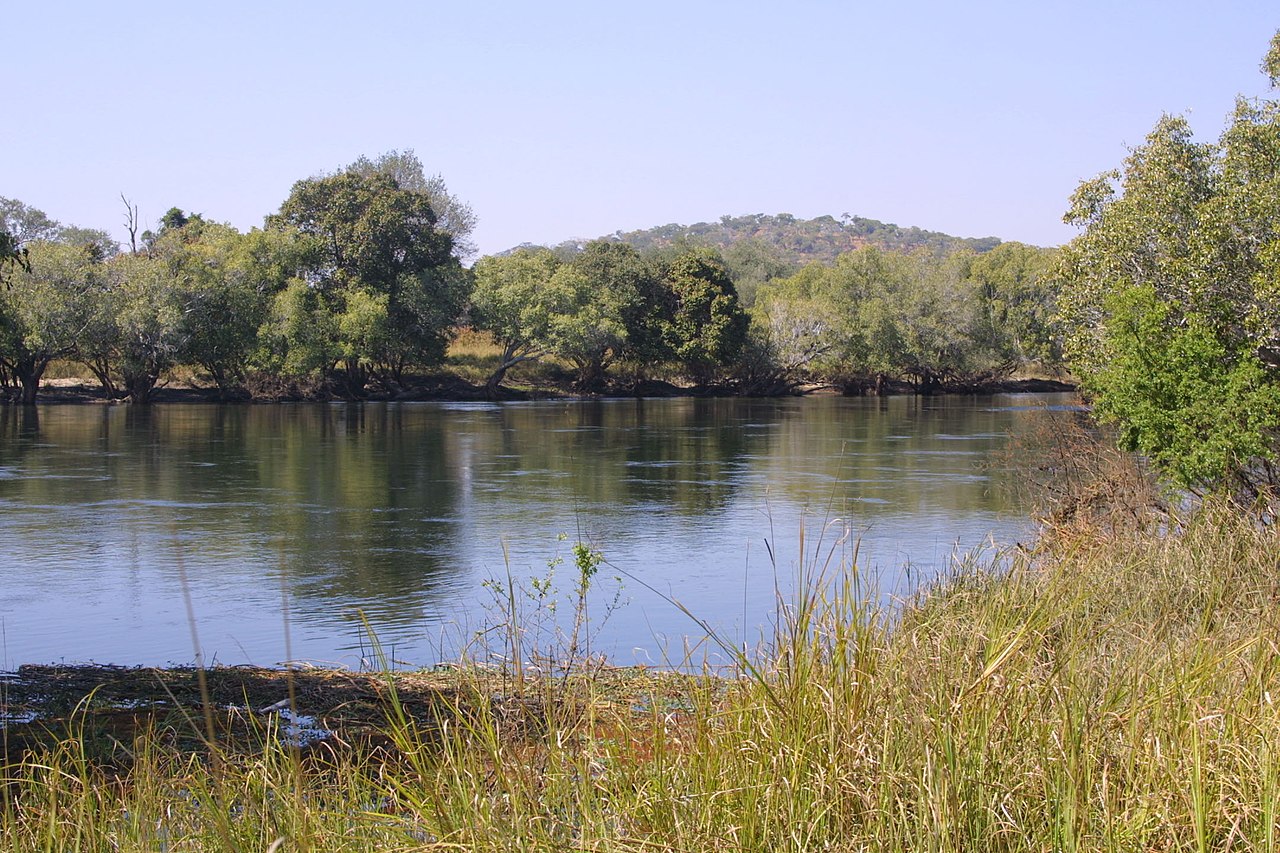
The Kafue Flats are one of Zambia's most ecologically important wetlands, a vast seasonally flooded grassland stretching approximately 250 kilometers along the Kafue River between the Itezhi-Tezhi Dam upstream and the Kafue Gorge Dam downstream. Covering roughly 6,500 square kilometers, the flats support a unique assemblage of wetland-adapted wildlife and provide vital ecosystem services to millions of Zambians.
Introduction
The Kafue Flats are characterized by their dramatic seasonal transformation. During the wet season, the floodplain is inundated by the Kafue River's overflow, creating a vast shallow lake teeming with fish and birds. As waters recede during the dry season, lush grasslands emerge, attracting large herds of Kafue lechwe and other grazers.
Geographic Setting
- Location: Central Zambia, Southern and Central provinces
- Area: ~6,500 km²
- Type: Seasonally flooded grassland
- River: Kafue River (longest river entirely within Zambia)
The Kafue Flats occupy a broad, flat depression along the middle Kafue River, Zambia's longest river at 1,576 kilometers. The floodplain is remarkably flat, with a gradient of only a few centimeters per kilometer, allowing floodwaters to spread widely across the landscape. The Kafue is a major tributary of the Zambezi River.
The flats are bounded by the Itezhi-Tezhi Dam to the west and the Kafue Gorge Dam to the east. These two dams, constructed primarily for hydroelectric power generation, have significantly altered the natural flood regime of the flats, reducing the extent and duration of flooding and changing the ecological dynamics of the entire system.
Ecology & Wildlife
- Kafue Lechwe: ~30,000–50,000 (endemic subspecies)
- Wattled Cranes: ~2,000 (significant global population)
- Bird Species: Over 400
- Fish Species: Over 60
The Kafue Flats are the primary habitat of the Kafue lechwe, an endemic subspecies of the southern lechwe found only on this floodplain. Once numbering over 250,000, the population declined dramatically due to hunting and habitat alteration by dams, and now stands at an estimated 30,000 to 50,000 individuals. Conservation efforts are focused on stabilizing and rebuilding the population.
The flats support one of the largest concentrations of wattled cranes in the world, with roughly 2,000 individuals. The wattled crane, Africa's most threatened crane species, depends on the Kafue Flats' seasonal flooding for nesting and feeding. Over 400 bird species have been recorded, including African skimmers, great white pelicans, and enormous flocks of open-billed storks.
Hydrology & Climate
- Flood Season: February to May (natural); altered by dams
- Dam Impact: Reduced flood extent by ~40%
- Climate: Tropical wet and dry
- Annual Rainfall: 800–1,000 mm
The natural flood cycle of the Kafue Flats has been significantly disrupted by the Itezhi-Tezhi and Kafue Gorge dams. The Itezhi-Tezhi Dam stores water during the wet season for release during the dry season to generate electricity at Kafue Gorge, effectively flattening the natural flood pulse. This has reduced the peak flood extent by an estimated 40 percent and shortened the flood duration.
The altered flood regime has cascading ecological effects. Reduced flooding means less fish spawning habitat, less floodplain grassland productivity, and changed vegetation composition. The timing of floods has also shifted, disrupting the breeding cycles of lechwe and wattled cranes that evolved in synchrony with the natural flood pulse. Water managers face the challenge of balancing hydropower needs with ecological flow requirements.
Conservation & Threats
- Protected Areas: Lochinvar and Blue Lagoon National Parks
- Main Threats: Dam-altered flooding, poaching, overgrazing, sugarcane expansion
- Ramsar Status: Lochinvar designated in 1991
- Conservation Partners: WWF, Zambia Wildlife Authority
Two national parks — Lochinvar and Blue Lagoon — protect portions of the Kafue Flats, though enforcement has historically been weak. Lochinvar was designated a Ramsar Wetland of International Importance in 1991. Conservation organizations, particularly WWF, have worked to establish environmental flow requirements that would restore a more natural flood pulse while maintaining hydropower generation.
Sugar cane plantations along the flats' margins are expanding, converting natural grassland and consuming water that would otherwise flow across the floodplain. Cattle grazing pressure from surrounding communities adds to the stress on the grassland ecosystem. The combination of dam-altered flooding, agricultural expansion, and inadequate protection has made the Kafue Flats one of Zambia's most threatened wetlands.
Key Facts
- The Kafue Flats cover roughly 6,500 km² of seasonally flooded grassland.
- The Kafue lechwe, found only here, has declined from 250,000 to an estimated 30,000–50,000.
- The flats support approximately 2,000 wattled cranes, a significant share of the global population.
- Upstream and downstream dams have reduced the natural flood extent by about 40 percent.
- Over 400 bird species have been recorded on the flats.
Fun Facts
- Kafue lechwe can run through knee-deep water at surprising speed, their splayed hooves acting like snowshoes.
- The Kafue Flats' hot springs at Lochinvar attract buffalo and other animals that seem to enjoy the warm water.
- The word "Kafue" may derive from a Tonga word meaning "the place where the river bends."
Final Thoughts
The Kafue Flats illustrate the profound impact that dams can have on floodplain ecosystems. Restoring a more natural flood regime is essential for the survival of the endemic Kafue lechwe, the globally important wattled crane population, and the broader ecological health of Zambia's greatest floodplain.
Test Your Knowledge!
Think you know the world's great wetlands and deltas? Try our geography quiz games!
Play Geography Games →