

Plymouth Rock is a glacial erratic boulder on the shore of Plymouth Harbor in Plymouth, Massachusetts, traditionally identified as the landing spot of the Mayflower Pilgrims when they arrived in the New World on December 21, 1620 (December 11, Old Style). Sheltered beneath a granite portico designed by McKim, Mead & White (completed 1921), the rock has become one of the most iconic symbols of American origins.
Introduction
Located at coordinates 41.9584°N, 70.6620°W on Water Street along the Plymouth waterfront, the rock sits at the edge of Plymouth Harbor, a natural anchorage on the western shore of Cape Cod Bay. The harbor's protected waters, the nearby Town Brook (a source of fresh water), and the cleared agricultural land of the Patuxet (Wampanoag) village site all contributed to the Pilgrims' decision to settle here.
Geography & Geology
- Coordinates: 41.9584°N, 70.6620°W
- Rock Type: Dedham granodiorite, ~620 million years old
- Origin: Glacial erratic deposited during last Ice Age
- Harbor: Plymouth Harbor, Cape Cod Bay
Plymouth Rock is a glacial erratic composed of Dedham granodiorite, a type of igneous rock approximately 620 million years old. The boulder was transported to its current location by glacial ice during the Wisconsinan glaciation, which ended roughly 12,000 years ago. As the Laurentide Ice Sheet retreated, it deposited the boulder on the Plymouth shoreline, where it has rested ever since.
Plymouth Harbor is a shallow, protected anchorage at the mouth of the Eel River and Town Brook. Cape Cod, the long sandy peninsula extending eastward from the Massachusetts mainland, provides a natural barrier against Atlantic storms, making the harbor relatively sheltered. The Pilgrims initially explored Cape Cod's tip (Provincetown) before sailing across Cape Cod Bay to Plymouth.
The Pilgrim Story
- Mayflower Arrival: December 21, 1620 (New Style)
- Passengers: 102 on the Mayflower
- First Winter Deaths: ~50% of colonists
- Wampanoag Contact: Spring 1621, Tisquantum (Squanto)
The 102 passengers of the Mayflower departed Plymouth, England on September 16, 1620, enduring a 66-day Atlantic crossing. After first landing at the tip of Cape Cod (present-day Provincetown) on November 21, they spent several weeks exploring the coast before selecting Plymouth as their settlement site. The Mayflower Compact, signed while anchored at Provincetown, established a framework of self-governance.
The first winter in Plymouth was devastating — approximately half the colonists died from disease, exposure, and malnutrition. In spring 1621, the surviving Pilgrims received critical assistance from Tisquantum (Squanto) of the Patuxet band of the Wampanoag, who taught them to cultivate corn, fish, and navigate the local environment. The harvest celebration in autumn 1621 is traditionally regarded as the "First Thanksgiving."
The Rock's History
- First Identified: 1741, by Elder Thomas Faunce
- Split: 1774, during attempted move
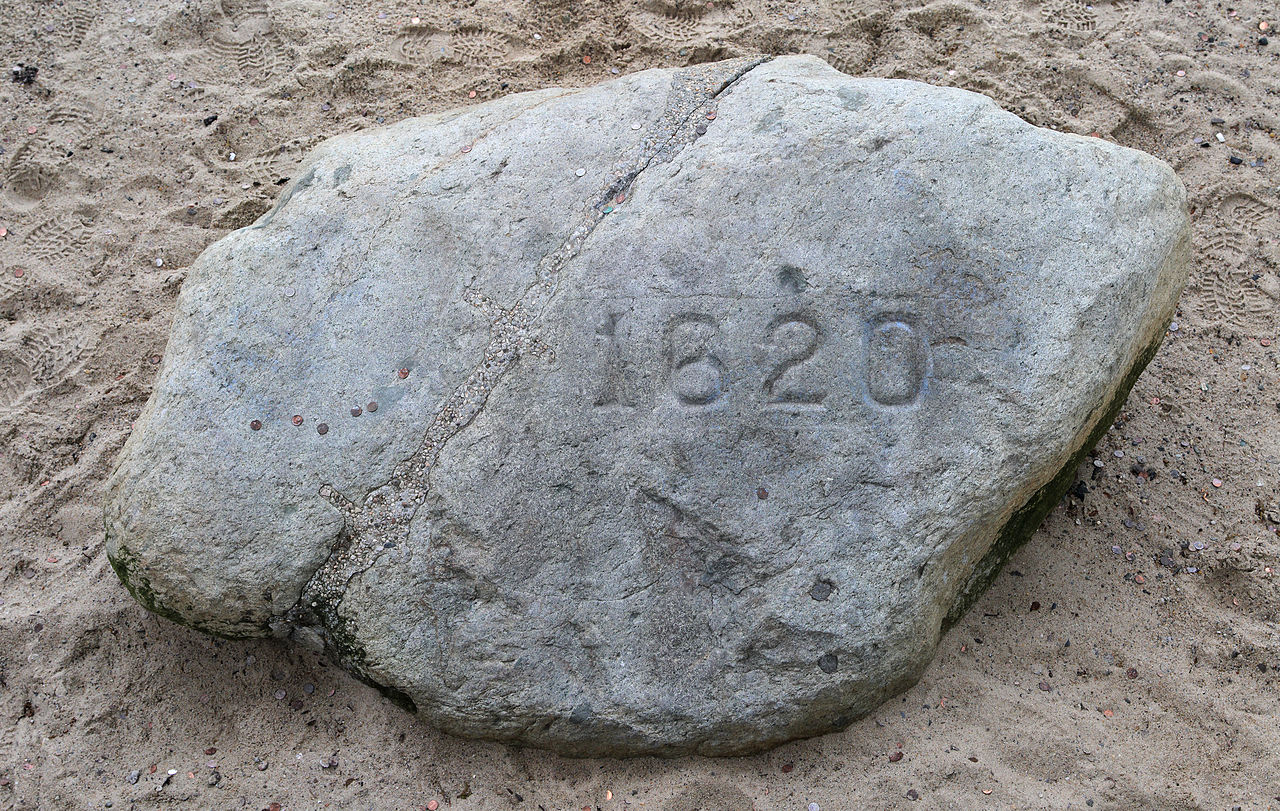
- Carved Date: "1620" carved in 1880
- Current Shelter: McKim, Mead & White portico, 1921
The identification of Plymouth Rock as the Pilgrims' landing spot dates to 1741, when 95-year-old church elder Thomas Faunce was carried to the waterfront and identified the boulder based on oral traditions passed down from his father, who had arrived in Plymouth in 1623. No contemporary 17th-century account specifically mentions the rock.
The rock has had a turbulent physical history. In 1774, an attempt to move it to the town square split it in two. The top half was moved to Pilgrim Hall and later to a canopy at the town square, while the bottom remained on the shore. The pieces were cemented back together in 1880, when "1620" was carved into the surface. It is now displayed at tide level beneath the 1921 portico.
Visitor Information
- Annual Visitors: ~1 million
- Admission: Free (viewable from street and portico)
- Pilgrim Hall Museum: 400 m away, oldest continuously operated museum in US
- Plimoth Patuxet Museums: Living history museum, 4 km south
Plymouth Rock is freely accessible year-round, visible from the street and from a viewing area within the portico. Approximately one million people visit the rock each year, though many are surprised by its modest size — the rock today is estimated to be roughly one-third its original size due to centuries of souvenir-chipping and the 1774 split.
Nearby attractions include the Pilgrim Hall Museum (founded 1824, the oldest continuously operating museum in the United States), the Mayflower II (a full-size replica of the original ship, berthed at the State Pier), and Plimoth Patuxet Museums, a living history museum 4 kilometers south that recreates both the 1627 English village and a Wampanoag homesite.
Key Facts
- Plymouth Rock is a 620-million-year-old glacial erratic of Dedham granodiorite.
- The Mayflower Pilgrims arrived at Plymouth on December 21, 1620 with 102 passengers.
- The rock was first identified as the landing spot in 1741 by a 95-year-old elder.
- It was split in 1774, moved multiple times, and reunited in 1880.
- Approximately 1 million people visit the rock each year.
Fun Facts
- Plymouth Rock is only about one-third its original size — visitors have chipped pieces off as souvenirs for centuries.
- No original Pilgrim account actually mentions landing on a rock.
- The top half of the rock spent over a century separated from the bottom half at different locations in town.
- Alexis de Tocqueville visited Plymouth Rock in 1831 and wrote that he saw fragments of it preserved "in several towns of the Union" as relics.
Final Thoughts
Plymouth Rock is one of America's most symbolic — and most debated — landmarks. Whether or not the Pilgrims actually stepped on this particular boulder in 1620, the rock's geology, its harbor geography, and its layered history of identification, fragmentation, and preservation mirror the nation's complex relationship with its founding narratives.
Test Your Knowledge!
Think you know American landmarks? Try our interactive geography games!
Play Geography Games →