
The Liberty Bell is one of the most iconic symbols of American independence, housed in the Liberty Bell Center at 526 Market Street in Philadelphia, Pennsylvania. Cast in 1752 at the Whitechapel Bell Foundry in London, the bell weighs 943 kilograms (2,080 pounds) and is inscribed with the biblical passage "Proclaim Liberty Throughout All the Land Unto All the Inhabitants Thereof" (Leviticus 25:10).
Introduction
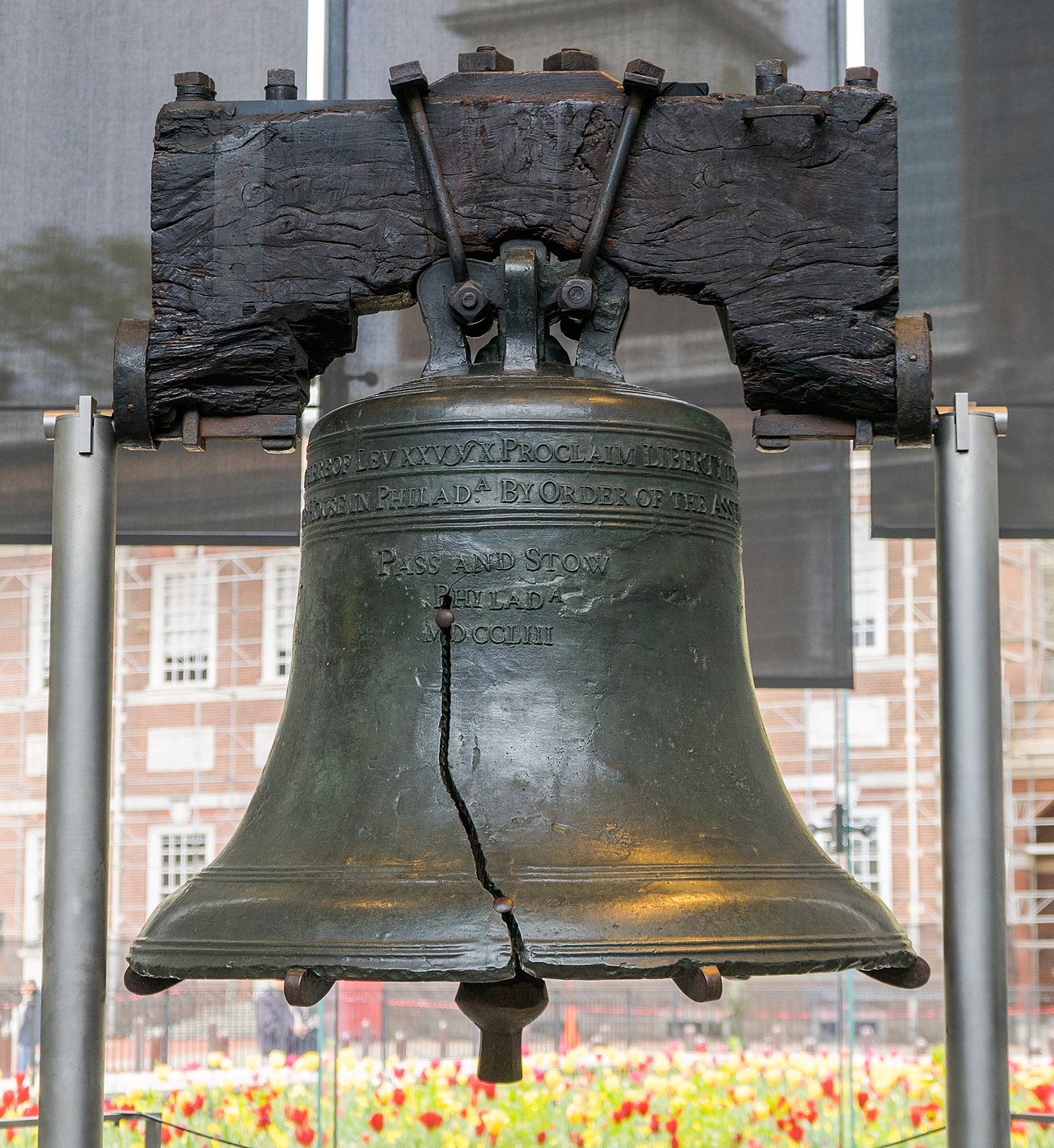
Located at coordinates 39.9496°N, 75.1503°W, the Liberty Bell Center sits on the north side of Chestnut Street, directly across from Independence Hall. The glass-walled pavilion was designed so that visitors can see Independence Hall framed behind the bell, visually connecting the symbol of liberty with the building where independence was declared.
Geography & Location
- Coordinates: 39.9496°N, 75.1503°W
- Current Home: Liberty Bell Center, 526 Market Street
- Across From: Independence Hall
- Park: Independence National Historical Park
The Liberty Bell Center was opened in 2003 on Independence Mall, the three-block landscaped park stretching north from Independence Hall. The building's glass walls allow the bell to be visible from the street 24 hours a day, and the interior is designed so that Independence Hall's tower — where the bell originally hung — is visible directly behind it.
Prior to the center's construction, the bell was displayed in a smaller glass pavilion built for the 1976 Bicentennial. Before that, it hung in the steeple of Independence Hall from 1753 until 1846, when it was moved to the Assembly Room and later to various display locations within the building.
Dimensions & Composition
- Weight: 943 kg (2,080 lbs)
- Circumference: 3.66 m (12 ft) at the lip
- Height: 0.91 m (3 ft)
- Composition: 70% copper, 25% tin, small amounts of lead, zinc, arsenic, gold, silver
The bell measures 0.91 meters from lip to crown and 3.66 meters in circumference at its widest point. It was cast with approximately 70 percent copper and 25 percent tin, with trace amounts of lead, zinc, arsenic, gold, and silver — a composition typical of 18th-century bell founding. The clapper is 1.04 meters long and weighs approximately 20 kilograms.
The famous crack extends approximately 61 centimeters (24.5 inches) up from the lip. The bell cracked on its first test ringing in 1752 and was recast twice by Philadelphia metalworkers John Pass and John Stow. The current crack is believed to have developed gradually in the early 19th century, with the bell last rung on George Washington's birthday in February 1846.
Historical Significance
- Cast: 1752 at Whitechapel Foundry, London
- Recast: 1753, twice by Pass and Stow in Philadelphia
- Last Rung: February 1846
- Symbol of Abolition: Adopted by abolitionists in 1830s
The bell was originally commissioned by the Pennsylvania Provincial Assembly to hang in the new State House (Independence Hall). While its association with the reading of the Declaration of Independence on July 8, 1776, is debated by historians, the bell was certainly used to summon legislators and citizens for public announcements and events during the Revolutionary era.
The name "Liberty Bell" was popularized in the 1830s by abolitionists who adopted it as a symbol in their campaign to end slavery, inspired by its inscription about proclaiming liberty. During the Civil War, the bell toured the country by rail to promote national unity, visiting expositions and fairs in cities from New Orleans to Chicago. These tours significantly increased the crack.
Visitor Information
- Annual Visitors: ~2 million
- Admission: Free, no ticket required
- Hours: 9 AM–5 PM daily
- Security: Airport-style screening required
Approximately 2 million people visit the Liberty Bell each year. Admission is free and no timed-entry ticket is required, though visitors must pass through airport-style security screening. The center includes interpretive exhibits on the bell's history, its role in the abolition movement, and its evolution into a global symbol of freedom.
The Liberty Bell Center is part of a broader collection of historic sites within walking distance, including Independence Hall (30 meters south), Congress Hall, the President's House site (which interprets the enslaved people who lived there), and the National Constitution Center (two blocks north).
Key Facts
- The Liberty Bell weighs 943 kilograms (2,080 pounds).
- It was cast in London in 1752 and recast twice in Philadelphia in 1753.
- The famous crack is approximately 61 cm (24.5 inches) long.
- The bell's inscription reads "Proclaim Liberty Throughout All the Land Unto All the Inhabitants Thereof."
- Approximately 2 million people visit the Liberty Bell each year.
Fun Facts
- The bell cracked on its very first test ringing after arriving from London in 1752.
- Abolitionists gave the bell its "Liberty Bell" name in the 1830s — before that, it was simply called the State House Bell.
- The bell contains trace amounts of gold and silver in its alloy.
- During World War II, the bell was tapped gently (not rung) to symbolically mark D-Day and other events, with the sound broadcast by radio nationwide.
Final Thoughts
The Liberty Bell is a small object with enormous symbolic weight. Its crack, its inscription, and its position across from the building where independence was declared make it one of the most powerful geographic markers of American freedom and the ongoing struggle for equality.
Test Your Knowledge!
Think you know American landmarks? Try our interactive geography games!
Play Geography Games →