
The Suez Canal and the Panama Canal are the two most important artificial waterways in the world, each eliminating thousands of kilometers from global shipping routes. The Suez Canal, opened in 1869, runs 193 kilometers through Egypt, connecting the Mediterranean Sea to the Red Sea. The Panama Canal, opened in 1914, stretches 82 kilometers across the Isthmus of Panama, connecting the Atlantic to the Pacific.
Introduction
Together, these canals carry roughly 15% of all global maritime trade. Their construction represented some of the greatest engineering achievements of their eras, and their strategic importance has driven wars, coups, and international treaties.
Size & Geography
- Suez Length: 193.3 km
- Panama Length: 82 km
- Suez Locks: None (sea-level canal)
- Panama Locks: 3 sets of locks (original); plus new Neopanamax locks
- Suez Transit Time: 12-16 hours
- Panama Transit Time: 8-10 hours
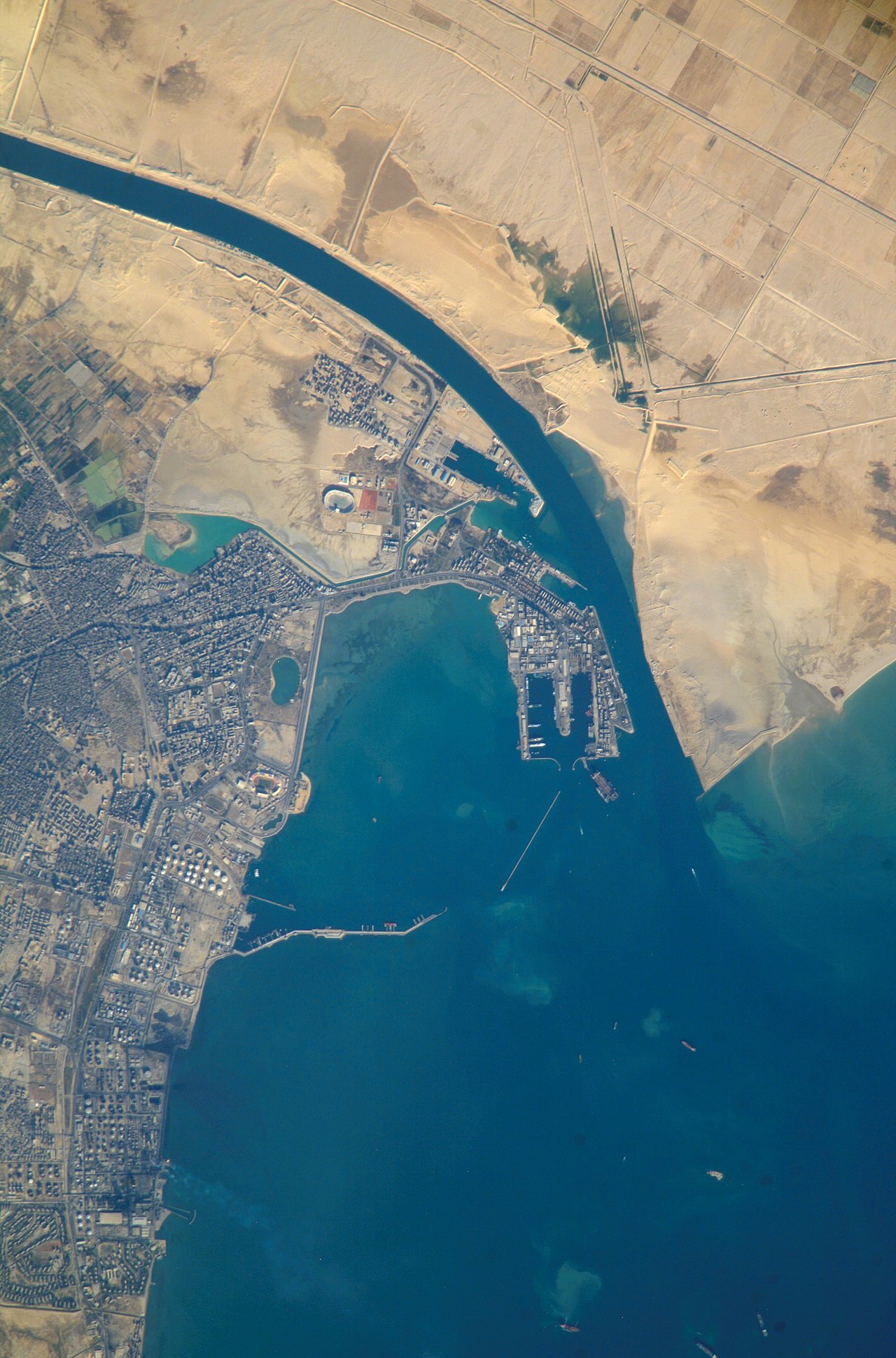
The Suez Canal is a sea-level canal with no locks, as the Mediterranean and Red Sea are at essentially the same elevation. Ships transit through a single channel cut through the sandy Egyptian desert. The canal was widened in 2015 to allow two-way traffic in a new parallel section, reducing transit times and increasing capacity.
The Panama Canal must raise ships 26 meters above sea level to cross the continental divide at Gatun Lake, then lower them back to sea level on the other side. This is accomplished through three sets of locks that act as water elevators. The expanded canal, completed in 2016, added larger Neopanamax locks capable of handling ships up to 366 meters long and 49 meters wide.
Suez Canal Profile
- Opened: 17 November 1869
- Built By: Ferdinand de Lesseps / Compagnie Universelle
- Annual Transits: ~20,000 ships
- Revenue: ~$9.4 billion (2023)
- Saves: ~7,000 km vs sailing around Africa
The Suez Canal eliminates the need to sail around Africa, saving roughly 7,000 kilometers on the route between Europe and Asia. It carries about 12% of global trade, including a significant portion of European oil imports from the Middle East. The canal's importance was dramatically demonstrated in 2021 when the container ship Ever Given ran aground, blocking traffic for six days and disrupting global supply chains.
The canal's history is inseparable from geopolitics. British and French influence over the canal led to the 1956 Suez Crisis when Egyptian President Nasser nationalized it, prompting a British-French-Israeli invasion that was reversed by US and Soviet pressure. Egypt has operated the canal since and generates nearly $10 billion annually in transit fees.
Panama Canal Profile
- Opened: 15 August 1914
- Built By: United States (after French attempt failed)
- Annual Transits: ~14,000 ships
- Revenue: ~$4.3 billion (2023)
- Saves: ~12,500 km vs sailing around South America
The Panama Canal saves approximately 12,500 kilometers compared to sailing around South America via Cape Horn, making it even more route-saving than the Suez. The canal was one of the most difficult engineering projects in history; the earlier French attempt (1881-1889) under Ferdinand de Lesseps failed with the loss of over 20,000 workers, mainly to tropical diseases.
The canal was operated by the United States from its opening until 1999, when it was transferred to Panama under the terms of the 1977 Carter-Torrijos Treaties. The 2016 expansion doubled the canal's capacity, allowing passage of Neopanamax vessels carrying up to 14,000 containers. However, recurring droughts have reduced the water level of Gatun Lake, forcing transit restrictions.
Key Differences
- Design: Suez: sea-level, no locks; Panama: lock-based with Gatun Lake
- Route Savings: Suez saves ~7,000 km; Panama saves ~12,500 km
- Capacity: Suez: larger ships; Panama: limited by lock dimensions
- Vulnerability: Suez: geopolitical disruption; Panama: drought and water supply
The fundamental engineering difference is that the Suez is a sea-level cut while the Panama uses locks and a man-made lake. This means the Suez can accommodate virtually any ship that fits its width and depth (up to 400 meters long and 24 meters draft), while the Panama is limited by its lock dimensions. The largest ships on Earth (Ultra Large Crude Carriers) can transit the Suez but not the Panama.
Their vulnerabilities differ as well. The Suez is vulnerable to geopolitical disruption, as demonstrated by the 1956 crisis, the 1967-1975 closure, and recent Houthi attacks. The Panama's main vulnerability is water supply; its lock system consumes enormous quantities of fresh water, and climate-change-driven droughts have forced traffic restrictions in recent years.
Which Is More Impressive?
- Suez Advantage: Longer, no locks, handles larger ships, higher revenue
- Panama Advantage: Greater engineering challenge, greater route savings, lock engineering marvel
The Suez Canal impresses through its simplicity and economic importance. Cutting a sea-level channel through flat desert, while a massive undertaking, avoids the complexity of locks. The result is a canal that handles the world's largest ships, generates nearly $10 billion annually, and carries 12% of global trade. Its geopolitical importance has shaped modern Middle Eastern history.
The Panama Canal impresses through its engineering audacity. Raising ships 26 meters through a tropical mountain range, creating an artificial lake, and solving the devastating tropical disease problems that killed over 20,000 French workers represent one of the greatest engineering achievements in history. The locks themselves, both original and expanded, are marvels of hydraulic engineering.
Key Facts
- The Suez Canal (193 km) is more than twice the length of the Panama Canal (82 km).
- The Suez is a sea-level canal with no locks; the Panama raises ships 26 m through lock systems.
- The Panama Canal saves more distance (~12,500 km) than the Suez (~7,000 km).
- The Suez generates roughly $9.4 billion annually; the Panama about $4.3 billion.
- Together, both canals carry approximately 15% of all global maritime trade.
Fun Facts
- The French attempt to build the Panama Canal (1881-1889) killed over 20,000 workers, mainly from malaria and yellow fever.
- The Ever Given blockage of the Suez Canal in 2021 cost global trade an estimated $9.6 billion per day.
- The Panama Canal uses 200 million liters of fresh water per ship transit through its locks.
- A ship transiting the Suez Canal pays an average toll of ~$300,000; some supertankers pay over $1 million.
Final Thoughts
The Suez and Panama Canals are the two hinges on which global trade swings. The Suez is the simpler, larger, and more profitable canal, a straight cut through the desert connecting Europe to Asia. The Panama is the more ingenious, a lock-based system that lifts ships over a continental divide connecting the world's two greatest oceans. Both are irreplaceable links in the global supply chain, and disruption to either sends shockwaves through the world economy.
Test Your Knowledge!
Think you can tell geographic features apart? Test your knowledge!
Play Geography Games →