

Introduction
The taiga, also known as the boreal forest, is the largest terrestrial biome on Earth. Stretching across approximately 17 million square kilometers of the Northern Hemisphere, it forms a vast green band circling the globe through Russia, Canada, Alaska, Scandinavia, and parts of northern Asia. If the taiga were a country, it would be the largest on Earth.
Dominated by coniferous trees — spruce, pine, fir, and larch — the taiga endures some of the harshest winter conditions of any forested biome, with temperatures plunging below -50°C. Yet this vast, quiet forest plays an outsized role in the global climate, storing more carbon in its soils and trees than all tropical forests combined.
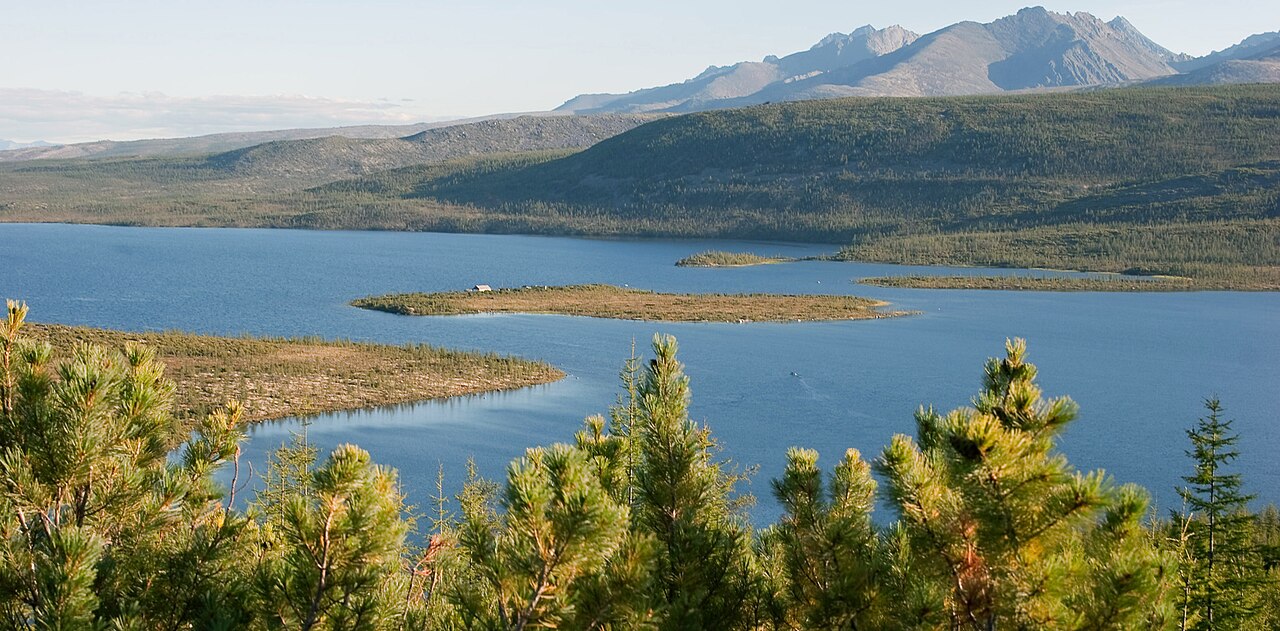
Geography & Extent
- Area: ~17 million km²
- Latitude: 50°N to 70°N approximately
- Countries: Russia (~50%), Canada (~25%), plus Scandinavia, Alaska
- Width: Up to 2,000 km north to south
The taiga spans the full width of both North America and Eurasia, making it the most extensive continuous forest on the planet. Russia's taiga alone is larger than the entire Amazon rainforest. The biome stretches from Scandinavia across Siberia to the Pacific coast, and from Alaska across Canada to the Atlantic seaboard.
The southern boundary of the taiga transitions into temperate mixed forests or grasslands, while the northern edge gradually gives way to the treeless Arctic tundra in a transition zone called the taiga-tundra ecotone. Climate change is pushing this boundary northward, with trees colonizing areas of former tundra.
Climate & Hydrology
- Winter Temperature: -50 to -30°C typical minimum
- Summer Temperature: 10-20°C
- Growing Season: 80-150 days
- Permafrost: Widespread in northern taiga
The taiga has a subarctic climate characterized by long, brutally cold winters and short, warm summers. The temperature range between winter minimum and summer maximum can exceed 80°C in continental Siberia, among the largest seasonal swings anywhere on Earth. Annual precipitation is modest, typically 200-750 millimeters, but low evaporation rates mean the landscape is often waterlogged.
Permafrost — permanently frozen ground — underlies vast areas of the northern taiga, particularly in Siberia. As permafrost thaws due to climate change, it releases stored methane and carbon dioxide, creating a dangerous feedback loop. Thawing permafrost also destabilizes the ground, causing "drunken forests" where trees lean at odd angles as the soil beneath them shifts.
Biodiversity
- Tree Species: Relatively few (spruce, pine, fir, larch, birch)
- Large Mammals: Moose, brown bear, wolf, wolverine, lynx, caribou
- Bird Species: ~300 (many migratory)
- Insects: Enormous summer populations of mosquitoes and blackflies
The taiga has low tree species diversity compared to temperate or tropical forests — often just three or four species dominate a given area. However, the sheer scale of the biome means it supports enormous populations of wildlife. The moose is the largest animal, with Alaskan bulls weighing up to 700 kilograms. Packs of wolves follow caribou herds across hundreds of kilometers of boreal forest.
The taiga is a critical breeding ground for migratory birds. Billions of warblers, sparrows, thrushes, and waterfowl nest in the boreal forest each summer, taking advantage of the long daylight hours and enormous insect hatches. When summer ends, they migrate south to temperate and tropical wintering grounds, making the taiga a linchpin of global bird migration.
Threats & Conservation
- Main Threats: Logging, mining, oil/gas extraction, climate change, fire
- Carbon Storage: Stores more carbon than all tropical forests combined
- Fire Regime: Natural fire cycle of 50-200 years, increasing in frequency
Industrial logging in the taiga, particularly in Russia and Canada, is a major threat. Russia's boreal forests are being logged at an accelerating rate, with much of the timber exported to China. In Canada, forestry companies harvest roughly 7,000 square kilometers of boreal forest annually. Much of this logging targets primary (never previously harvested) forest.
Climate change is transforming the taiga in multiple ways. Warming temperatures are increasing the frequency and severity of forest fires, with recent Siberian and Canadian fire seasons shattering records. The 2023 Canadian wildfire season burned over 180,000 square kilometers — an area larger than Greece — turning the taiga into a net carbon emitter rather than a carbon sink.
Cultural Significance
- Indigenous Peoples: Sami, Evenki, Cree, Dene, Innu, and many others
- Reindeer Herding: Traditional Sami and Evenki livelihood
- Resource Extraction: Timber, oil, gas, mining are major industries
The taiga has been home to indigenous peoples for thousands of years. The Sami of Scandinavia and Russia's Kola Peninsula practice traditional reindeer herding, migrating with their herds between summer and winter pastures. The Evenki of Siberia, the Cree and Dene of Canada, and the Innu of eastern Canada all have cultures deeply rooted in the boreal forest.
The taiga is also a major source of industrial resources. Russia's Siberian taiga contains vast oil and gas reserves, while Canada's boreal region is home to the Athabasca oil sands. Mining for diamonds, gold, nickel, and other minerals is expanding. Balancing resource extraction with conservation and indigenous rights is one of the defining challenges of boreal forest governance.
Key Facts
- The taiga is the largest terrestrial biome on Earth at approximately 17 million km².
- It stores more carbon than all tropical forests combined, mostly in soils and peat.
- Winter temperatures in the taiga can drop below -50°C in continental Siberia.
- Billions of migratory birds breed in the boreal forest each summer.
- The 2023 Canadian wildfire season burned over 180,000 km², an area larger than Greece.
Fun Facts
- If the taiga were a country, it would be the largest on Earth — bigger than Russia's total land area.
- The Siberian taiga contains the coldest inhabited place on Earth: Oymyakon, where temperatures have reached -67.7°C.
- Summer mosquito swarms in the taiga are so dense they have been documented killing caribou calves through blood loss and stress.
- Larch trees (Larix) are the only conifers that lose all their needles in winter, turning entire Siberian landscapes golden in autumn.
Final Thoughts
The taiga is the planet's great green belt — a forest so vast it shapes the global climate, stores more carbon than any other biome, and provides breeding habitat for billions of migratory birds. Yet it is threatened by accelerating logging, mining, and catastrophic wildfires driven by climate change. Protecting the boreal forest is one of the most consequential conservation priorities on Earth.