
Wedged between the Caspian Sea and the snow-capped Caucasus Mountains, Azerbaijan is a country where ancient fire-worship temples sit a short drive from glittering glass skyscrapers, and where mud volcanoes bubble across the steppe like nowhere else on Earth. It is a place that straddles continents, languages, and eras all at once. Here are ten genuinely fascinating facts that reveal why this corner of the South Caucasus is so much stranger and richer than most travel brochures suggest.
1. It is literally the "Land of Fire"
Azerbaijan's nickname, Odlar Yurdu or "Land of Fire," is no marketing slogan. At Yanar Dag, a hillside near Baku, natural gas seeping from the ground has kept a wall of flame burning continuously for centuries, possibly millennia. These eternal fires fed the region's ancient Zoroastrian fire cults, and the restored Ateshgah Fire Temple still marks where pilgrims once worshipped the flames. The fire motif runs through everything: it appears on the national emblem, inspired the capital's most famous skyline, and reflects the vast natural gas reserves beneath the soil. Few national identities are so literally fueled by geology.
2. The capital, Baku, sits below sea level
Baku is the lowest-lying national capital on Earth, perched roughly 28 metres below sea level on the shores of the landlocked Caspian. This windswept port city of more than two million people blends a UNESCO-listed walled Old City, complete with the mysterious Maiden Tower, with the futuristic curves of the Flame Towers and the Zaha Hadid-designed Heydar Aliyev Center. Oil wealth transformed Baku twice over: first during the early-1900s petroleum boom that made it one of the world's richest cities, and again in the modern era. Walking Baku means crossing a thousand years of architecture in a single afternoon.
3. It is home to nearly half the world's mud volcanoes
Of the roughly 1,000 mud volcanoes on the planet, an extraordinary share, several hundred, are found in Azerbaijan, concentrated on the Gobustan plain and the Absheron Peninsula. These bizarre formations ooze cold grey mud, gas, and occasionally erupt in dramatic bursts of flame. They are so otherworldly that scientists study them as analogues for geological activity on Mars. Nearby, the Gobustan Rock Art Cultural Landscape preserves more than 6,000 prehistoric petroglyphs, some carved over 40,000 years ago, depicting dancing figures, hunters, and reed boats. It is one of the densest concentrations of ancient rock art anywhere on Earth.
4. The country spans two continents
Geographers place Azerbaijan at the crossroads of Eastern Europe and Western Asia, a true continental hinge. The mighty Caucasus range slices through the north, the Caspian, the largest inland body of water in the world, laps its eastern edge, and the lowland Kura-Aras plain spreads through the centre. Remarkably, Azerbaijan also possesses the Nakhchivan exclave, a piece of national territory entirely separated from the main country by Armenia. This patchwork geography gives the nation an unusual range of climates, with subtropical Caspian coastlines just hours from alpine villages where snow lingers most of the year. You can read more in our country guide.
5. Azerbaijani has nine climate zones
For a country smaller than many US states, Azerbaijan packs in an astonishing variety of weather. Climatologists recognise nine of the world's eleven major climate zones within its borders, from humid subtropical and semi-desert to cold alpine tundra in the high Caucasus. This means you can find pomegranate orchards and tea plantations in the lush Lankaran lowlands, parched steppe in the centre, and glaciated peaks in the north, all in the same small nation. That ecological diversity also supports rich wildlife, including the critically endangered Caucasian leopard and flamingos that gather along the Caspian shore.
6. The language is Turkic, written in three alphabets within a century
Azerbaijani, the official language, belongs to the Turkic family and is closely related to Turkish, so speakers from Baku and Istanbul can broadly understand one another. The language has had a turbulent written history: within roughly a hundred years it shifted from the Perso-Arabic script to Latin in the 1920s, then to Cyrillic under Soviet rule, and finally back to a modified Latin alphabet after independence in 1991. Russian remains widely spoken, especially in cities, a legacy of the Soviet decades. This linguistic layering mirrors the country's broader identity as a meeting point of Persian, Turkic, and Russian cultural worlds.
7. Carpet weaving is recognised by UNESCO
The Azerbaijani carpet is far more than a floor covering, it is a coded archive of history, with regional designs from Quba, Shirvan, Ganja, and other schools each telling their own visual story. The art of weaving these intricate rugs is so culturally significant that UNESCO inscribed it on the Representative List of the Intangible Cultural Heritage of Humanity in 2010. Baku even has a dedicated Carpet Museum shaped like a rolled-up rug. Carpets here are woven at weddings, hung on walls, gifted to honoured guests, and passed between generations, embodying patience, symbolism, and a deep sense of national pride.
8. Tea and the pomegranate define the table
Hospitality in Azerbaijan revolves around tea, served strong and black in tulip-shaped armudu glasses, often accompanied by jam, sweets, and endless conversation rather than milk. The pomegranate is practically a national symbol, celebrated each autumn with a dedicated festival in the town of Goychay. Azerbaijani cuisine reflects its Silk Road position: fragrant plov (saffron rice pilaf), stuffed grape-leaf dolma, hearty kebabs, and the thin savoury pastry called qutab. Many dishes are finished with tart pomegranate sauce known as narsharab. Meals are leisurely, communal affairs, and refusing a host's offer of food is nearly unthinkable.
9. Chess and a unique mind-sport called nard run deep
Azerbaijan punches well above its weight in chess, producing world-class grandmasters such as Teimour Radjabov and Shakhriyar Mamedyarov, and the game is taught in schools as a tool for sharpening young minds. Beyond the board, the country is passionate about backgammon, known locally as nard, which you will see played in tea houses across the land. Azerbaijan has also embraced motorsport, hosting a Formula 1 Grand Prix on the tight street circuit that winds past Baku's medieval walls. Football is the most popular spectator sport, but it is the strategic games that reveal something about the national character.
10. Independence is younger than many of its skyscrapers feel
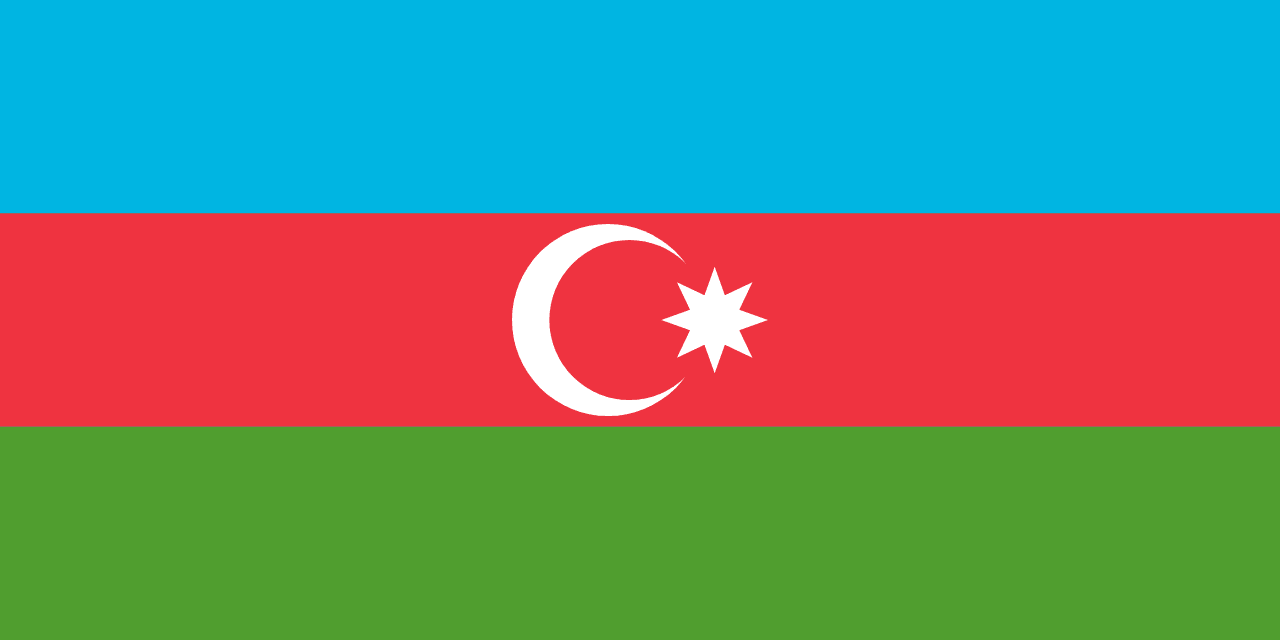
Although the region's history stretches back through Persian empires, Caucasian Albania, and powerful khanates, the modern Republic of Azerbaijan only regained full independence in 1991 with the collapse of the Soviet Union. Briefly, from 1918 to 1920, it had been the first secular democratic republic in the Muslim world, and was among the first countries anywhere to grant women the right to vote, ahead of many Western nations. That blend of deep antiquity and youthful statehood gives Azerbaijan its restless, fast-changing energy. The striking blue, red, and green national banner, explored in our flag article, captures this fusion of heritage and modern ambition.
Frequently Asked Questions
What is the capital of Azerbaijan?
The capital is Baku, a city of more than two million people on the Caspian Sea. It is famous for being the lowest-lying capital in the world, sitting about 28 metres below sea level, and for its dramatic contrast between the medieval walled Old City and ultramodern landmarks like the Flame Towers.
What is Azerbaijan famous for?
Azerbaijan is best known as the "Land of Fire" for its naturally burning gas vents and ancient fire-worship sites. It is also renowned for its oil and gas wealth, intricate UNESCO-recognised carpets, pomegranates, hospitality centred on tea, and surreal landscapes of mud volcanoes and prehistoric rock carvings.
Is Azerbaijan in Europe or Asia?
Both, depending on how you draw the line. Azerbaijan sits at the crossroads of Eastern Europe and Western Asia in the South Caucasus, with the Caucasus Mountains to the north and the Caspian Sea to the east. Culturally and politically it bridges Turkic, Persian, and Russian influences, which is part of what makes it so distinctive.
Conclusion
From eternal flames and Mars-like mud volcanoes to chessboards, carpets, and a capital below sea level, Azerbaijan defies easy categorisation. It is ancient and brand-new, European and Asian, fiery and welcoming all at once. These ten facts only hint at the depth of a nation still surprising the travellers who reach it, and there is always more to discover in this remarkable Land of Fire.
