
Tucked into the eastern Himalayas between two of the world's most populous nations, Bhutan is a kingdom that famously measures success in happiness rather than money. It is a place where traffic lights were rejected, where television only arrived in 1999, and where ancient monasteries cling to sheer cliff faces. Here are ten genuinely surprising facts about this remarkable Buddhist kingdom.
1. It Measures Progress in Gross National Happiness
Bhutan is the only country on Earth that officially prioritizes Gross National Happiness (GNH) over Gross Domestic Product. The concept was articulated by the fourth king, Jigme Singye Wangchuck, in the 1970s, and it is now woven into the constitution. GNH rests on four pillars: sustainable development, environmental conservation, cultural preservation, and good governance.
This is not merely a slogan. The government runs periodic happiness surveys and weighs policy decisions against their impact on citizen wellbeing. Proposals that might boost the economy but damage culture or the environment can be rejected on those grounds. It is a philosophy that has fascinated economists, psychologists, and policymakers around the globe, turning a tiny Himalayan kingdom into an unlikely thought leader on what national success should actually mean.
2. It Is the World's Only Carbon-Negative Country
Bhutan does not just offset its emissions, it absorbs far more carbon than it produces. Roughly 70 percent of the country remains under forest cover, and the constitution legally mandates that at least 60 percent stay forested for all time. Those vast woodlands soak up millions of tonnes of carbon dioxide each year, dwarfing the modest emissions of its small population.
The country reinforces this with clean hydroelectric power generated by its rushing mountain rivers, much of which is exported to neighboring India. Bhutan has banned export logging, given away free electricity to rural farmers to discourage firewood use, and pledged to remain carbon-neutral forever. In a world racing to cut emissions, this small nation has already crossed the finish line.
3. The Tiger's Nest Clings to a 900-Metre Cliff
Bhutan's most iconic landmark, Paro Taktsang or the Tiger's Nest Monastery, dramatically perches on a granite cliff some 900 metres above the Paro Valley. According to legend, the great Buddhist master Guru Rinpoche flew here on the back of a tigress in the 8th century and meditated in a cave for three years.
The monastery complex visible today was largely built in 1692 around that sacred cave. Reaching it requires a steep two to three hour hike through pine forest fluttering with prayer flags, but the reward is one of the most spectacular sights in the Himalayas. After a 1998 fire severely damaged the structure, it was painstakingly restored. Today it remains an active place of worship and the enduring symbol of the kingdom itself.
4. Television and Internet Arrived Only in 1999
Bhutan was one of the last countries on Earth to embrace television. The government only lifted its ban and permitted both TV and the internet in 1999, making the kingdom remarkably late to the global media age. The decision was framed as a careful step that would let Bhutan modernize on its own terms while protecting its distinct culture.
This caution reflects a broader theme. Bhutan opened to foreign tourists only in 1974, and even today visitors pay a daily Sustainable Development Fee designed to keep tourism "high value, low impact." The kingdom deliberately resists the rush of unchecked development, choosing instead to filter outside influences slowly so that traditions survive the encounter with modernity.
5. Dzongkha and a Living Fortress Architecture
The national language is Dzongkha, which literally means "the language of the dzong." Dzongs are the massive whitewashed fortress-monasteries that dominate Bhutanese towns, serving simultaneously as religious centers, administrative headquarters, and historic strongholds. Their towering walls, intricate woodwork, and inward-sloping facades make them among the most striking buildings in Asia.
Many Bhutanese also speak Nepali, Tshangla, and other regional tongues, while English is the medium of instruction in schools. To explore the kingdom's broader story, see our country guide. Notably, dzongs are still built without nails or formal architectural drawings, relying instead on knowledge passed down through generations of master craftsmen.
6. A Chili-and-Cheese Stew Is the National Dish
Bhutanese cuisine is fiery, and nothing captures it better than ema datshi, the unofficial national dish. Unlike most cuisines where chili is a seasoning, here it is treated as a vegetable in its own right. Ema datshi combines whole chilies, sometimes by the handful, with melted local cheese into a stew that ranges from warming to genuinely tear-inducing.
It is typically served over Bhutan's distinctive nutty red rice, which grows in the high-altitude paddies of the Paro Valley. Other favorites include momos, the steamed dumplings shared across the Himalayas, and variations such as kewa datshi made with potatoes. Meals are deeply communal affairs, and a Bhutanese host will rarely let a guest leave the table hungry or, for that matter, without a fierce chili kick.
7. The Takin Is One of the World's Strangest Animals
Bhutan's national animal is the takin, a bizarre creature that looks as though a goat, a cow, and a moose were assembled by committee. Local legend says a 15th-century saint known as the Divine Madman created it by sticking a goat's head onto a cow's skeleton during a feast. Scientists place it in its own genus, and it grazes the high alpine meadows above 3,000 metres.
The takin shares its mountain home with some of Asia's rarest wildlife, including snow leopards, red pandas, Bengal tigers found at surprisingly high elevations, and the revered black-necked cranes that winter in the Phobjikha Valley. Bhutan's network of protected areas and biological corridors covers more than half the country, making it one of the planet's great strongholds of biodiversity.
8. There Are No Traffic Lights in the Capital
Thimphu holds a quirky distinction: it is one of the only national capitals in the world without a single traffic light. The city did install one once, but residents disliked it so much that it was promptly removed in favor of a white-gloved policeman directing cars from an ornate booth with theatrical hand gestures.
Thimphu itself is unusual in other ways. Home to roughly 100,000 people, it became the permanent capital only in the 1960s and remains a city where strict building codes require traditional Bhutanese architecture, even on banks and offices. There are no skyscrapers, no fast-food chains of the global kind, and a giant golden Buddha Dordenma statue gazes serenely over the valley from a hillside throne.
9. Archery Is the National Sport and a Joyful Spectacle
Archery, or datse, is far more than a pastime in Bhutan, it is the national sport and a beloved social ritual. Traditional competitions take place over astonishing distances, with targets set around 145 metres apart, far longer than Olympic ranges. Hitting one is met with singing, dancing, and good-natured taunting from the opposing team.
Matches are festive, all-day events accompanied by food, drink, and elaborate teasing designed to throw off the archer's aim. Teammates perform victory dances around successful shooters, while rivals heckle from the sidelines. Although modern compound bows now appear alongside traditional bamboo ones, the spirit remains unchanged: a celebration of skill, community, and Bhutanese identity played out across a windy mountain field.
10. A Young, Peaceful Democracy With a Beloved King
For most of its history Bhutan was an absolute monarchy, yet in 2008 the king voluntarily handed power to the people, transforming the country into a constitutional democratic monarchy. Remarkably, many citizens initially resisted the change, so attached were they to royal rule. The current king, Jigme Khesar Namgyel Wangchuck, remains immensely popular.
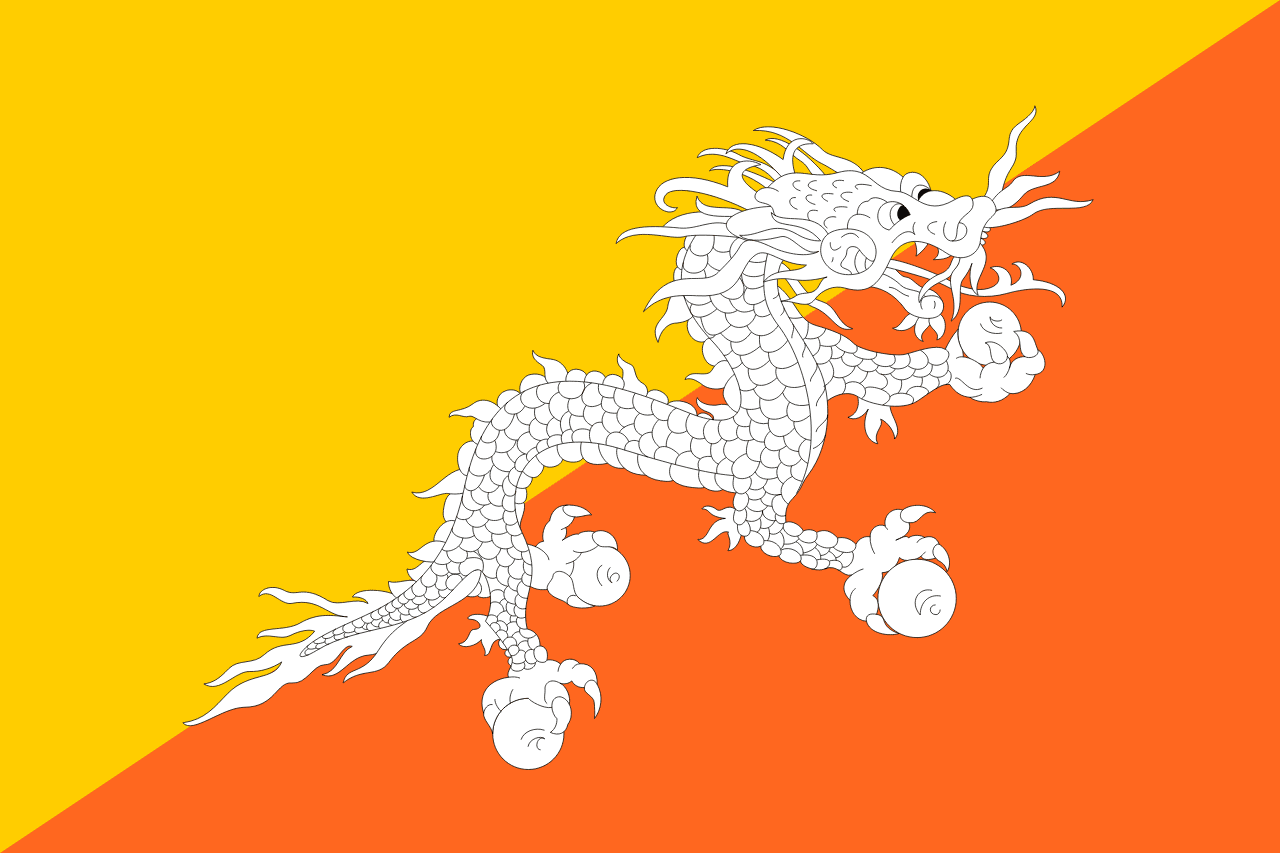
Bhutan has the proud distinction of never having been colonized, preserving an unbroken thread of Buddhist culture stretching back centuries. Its striking national flag features a white dragon, the "Druk," clutching jewels across a diagonal field of yellow and orange. Indeed, the Bhutanese call their land Druk Yul, the "Land of the Thunder Dragon," a name as poetic as the kingdom itself.
Frequently Asked Questions
What is the capital of Bhutan?
The capital of Bhutan is Thimphu, a city of roughly 100,000 people nestled in a Himalayan valley. It became the permanent capital in the 1960s and is famous for having no traffic lights and for strict rules requiring traditional Bhutanese architecture throughout the city.
What is Bhutan most famous for?
Bhutan is best known for measuring Gross National Happiness instead of GDP, for being the world's only carbon-negative country, and for the breathtaking Tiger's Nest Monastery clinging to a cliff above the Paro Valley. It is also celebrated for its pristine Himalayan landscapes and deeply preserved Buddhist culture.
Why are there no traffic lights in Bhutan's capital?
Thimphu briefly installed a traffic light but residents found it too impersonal and disliked it, so it was removed. Instead, a white-gloved policeman directs traffic with elegant hand movements from a decorative booth, a charming detail that perfectly captures Bhutan's preference for tradition over modern convenience.
Conclusion
Bhutan proves that a nation does not need to be large, wealthy, or fast-moving to capture the world's imagination. From happiness as official policy to carbon-negative forests, fiery chili stews, and flying-tiger monasteries, this Himalayan kingdom charts its own quietly radical course. These ten facts only hint at the depth of a country that continues to remind us there are many ways to define a life, and a nation, well lived.
