
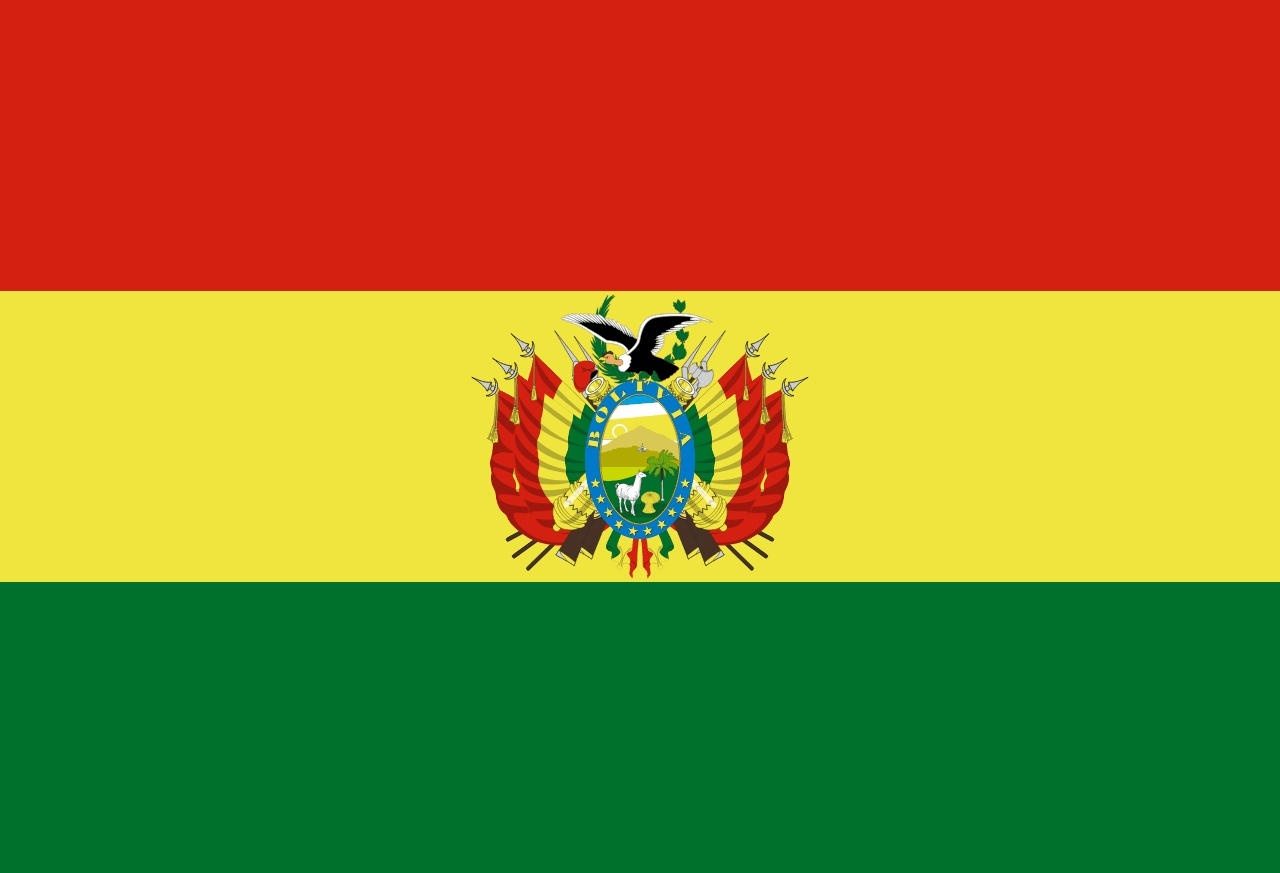
Landlocked in the heart of South America, Bolivia is a country that defies easy description: it has two capitals, a city floating higher than most mountains, and a salt flat so vast it doubles as a mirror to the sky. It is a place where ancient Andean cultures, dense Amazon rainforest, and one of the planet's most valuable mineral stashes all share the same borders. Here are ten facts that reveal just how extraordinary this nation really is.
1. It Has Two Capitals (and the Government Sits in Neither)
Bolivia is famous for its constitutional puzzle: it has two capitals. Sucre is the official, constitutional capital and home to the Supreme Court, while La Paz serves as the seat of the executive and legislative branches, making it the de facto center of government. The arrangement dates back to a bitter civil war in the late 1800s between the two cities. To this day, locals will happily debate which is the "real" capital. For travelers, the practical answer is that most embassies, ministries, and political action are concentrated in La Paz, while Sucre keeps its judicial prestige and a beautifully preserved colonial old town nicknamed "the White City."
2. La Paz Is the World's Highest Administrative Capital
Sprawling across a dramatic canyon at roughly 3,640 meters (11,900 feet) above sea level, La Paz is the highest administrative capital city on Earth. Arriving by air can leave visitors lightheaded as their bodies adjust to the thin atmosphere. The city is famous for its sprawling cable-car network, Mi Teleférico, the longest urban aerial system in the world, which glides residents over the rooftops and connects La Paz to neighboring El Alto. Locals chew coca leaves or sip coca tea to ease altitude sickness, a centuries-old Andean remedy. The higher you climb the canyon walls, the poorer the neighborhoods historically became, inverting the usual logic of city geography.
3. The Salar de Uyuni Is the World's Largest Salt Flat
Covering more than 10,000 square kilometers, the Salar de Uyuni is the planet's largest salt flat, a blindingly white expanse left behind by prehistoric lakes. During the rainy season, a thin layer of water turns it into the world's largest natural mirror, perfectly reflecting the clouds and creating surreal photographs where sky and earth become indistinguishable. Beneath the crust lies an even greater treasure: an enormous share of the world's lithium, the metal that powers electric-car batteries and smartphones. Cactus-studded islands, salt-block hotels, and pink flamingos feeding in nearby lagoons make the surrounding landscape feel like another planet entirely.
4. Bolivia Sits on a Lithium Goldmine
Bolivia holds some of the largest lithium reserves on Earth, concentrated in the brines beneath the Salar de Uyuni. As the world races to electrify transportation, this so-called "white gold" has turned the country into a focus of global energy strategy. Alongside lithium, Bolivia has long been rich in tin, silver, zinc, and natural gas. The legacy of mining runs deep here, dating back to the colonial silver mountain of Potosí. Developing the lithium responsibly, while avoiding the boom-and-bust cycles that have historically defined Bolivian mining, remains one of the nation's defining economic challenges of the twenty-first century.
5. Potosí Was Once One of the Richest Cities on Earth
It is hard to imagine today, but the high-altitude mining town of Potosí was, in the 1600s, one of the largest and wealthiest cities in the world. Its towering peak, Cerro Rico ("Rich Mountain"), produced staggering quantities of silver that financed the Spanish Empire and flooded global markets. The Spanish even coined the phrase "vale un Potosí" ("worth a Potosí") to mean fabulously valuable. That wealth came at a terrible human cost, with countless Indigenous and enslaved laborers dying in the mines. Today Potosí is a UNESCO World Heritage Site, and miners still tunnel into the legendary mountain.
6. It Shares the Highest Navigable Lake in the World
Straddling the border with Peru, Lake Titicaca sits at about 3,810 meters above sea level, making it the highest navigable lake on the planet. According to Inca mythology, it was the birthplace of the sun and the cradle of their civilization. The lake is dotted with sacred islands, including the Isla del Sol, and is home to the Uros people, who famously live on floating islands built from layered totora reeds. The deep blue waters, the snow-capped peaks on the horizon, and the ancient legends woven into the landscape make Titicaca one of South America's most spiritually significant places.
7. A Nation of Many Languages and Strong Indigenous Roots
Bolivia has one of the highest proportions of Indigenous people in the Americas. Its constitution recognizes Spanish along with 36 Indigenous languages as official, with Quechua and Aymara the most widely spoken. This linguistic richness reflects a living heritage of pre-Columbian cultures that were never fully erased by colonization. In 2006 Bolivia elected Evo Morales, its first president of Indigenous origin, a landmark moment that reshaped national identity. You can explore more about the country in our country guide, and learn the symbolism behind its colors in our piece on the flag.
8. The Yungas "Death Road" Tests the Bravest Cyclists
The North Yungas Road, descending from the Andes toward the Amazon basin, was once dubbed the "world's most dangerous road." Barely wide enough for a single vehicle, with sheer cliffs plunging hundreds of meters and no guardrails, it claimed many lives before a safer modern bypass was built. Today the old road has been reborn as a bucket-list destination for adventure cyclists, who coast down roughly 3,500 meters of dizzying switchbacks from chilly highlands into humid jungle. The dramatic change in altitude over a single ride captures Bolivia's astonishing geographic range in miniature.
9. The Food Tells the Story of the Andes
Bolivian cuisine is a delicious reflection of its geography and history. The beloved salteña, a juicy baked pastry filled with meat, potatoes, and a slightly sweet, soupy gravy, is the classic mid-morning snack. Heartier dishes include pique macho, a towering platter of beef, sausage, fries, and vegetables meant for sharing, and anticuchos, skewers of grilled beef heart sold by street vendors. The country is also a center of potato diversity, with hundreds of native varieties, including chuño, freeze-dried potatoes preserved using the cold nights and intense sun of the Altiplano. Quinoa, now a global health food, has been cultivated here for thousands of years.
10. Wildlife From Flamingos to River Dolphins
Bolivia's extreme range of altitudes creates an extraordinary variety of habitats and wildlife. In the high-altitude lagoons near the salt flats, rare James's, Andean, and Chilean flamingos wade through mineral-rich waters tinted red and green. The Altiplano is home to wild vicuñas, prized for their ultra-fine wool, and the rugged spectacled bear, South America's only native bear. Drop down into the Amazon lowlands and the scenery transforms completely: pink river dolphins glide through the rivers, jaguars prowl the forests, and capybaras graze along the banks. Few countries pack such ecological contrast into a single set of borders.
Frequently Asked Questions
What is the capital of Bolivia?
Bolivia has two capitals. Sucre is the constitutional and official capital and home to the judiciary, while La Paz is the seat of the government's executive and legislative branches, functioning as the de facto capital and largest political center.
What is Bolivia most famous for?
Bolivia is best known for the Salar de Uyuni, the world's largest salt flat, as well as Lake Titicaca, the soaring city of La Paz, its strong Indigenous cultures, and enormous lithium reserves. Together these make it one of the most distinctive countries in South America.
Why does Bolivia have a navy if it is landlocked?
Bolivia lost its Pacific coastline to Chile in the War of the Pacific in the 1880s, yet it still maintains a naval force. The Bolivian Navy patrols rivers and Lake Titicaca, and the country continues to commemorate its lost coast each year, never abandoning hope of regaining access to the sea.
Conclusion
From mirror-like salt flats and the world's highest capital to silver mountains, reed islands, and pink river dolphins, Bolivia is a country of staggering extremes packed into a single landlocked nation. Its deep Indigenous heritage and dramatic landscapes make it one of the most rewarding places on Earth to explore, whether on the map or in person. These ten facts are only the beginning of what makes Bolivia unforgettable.