
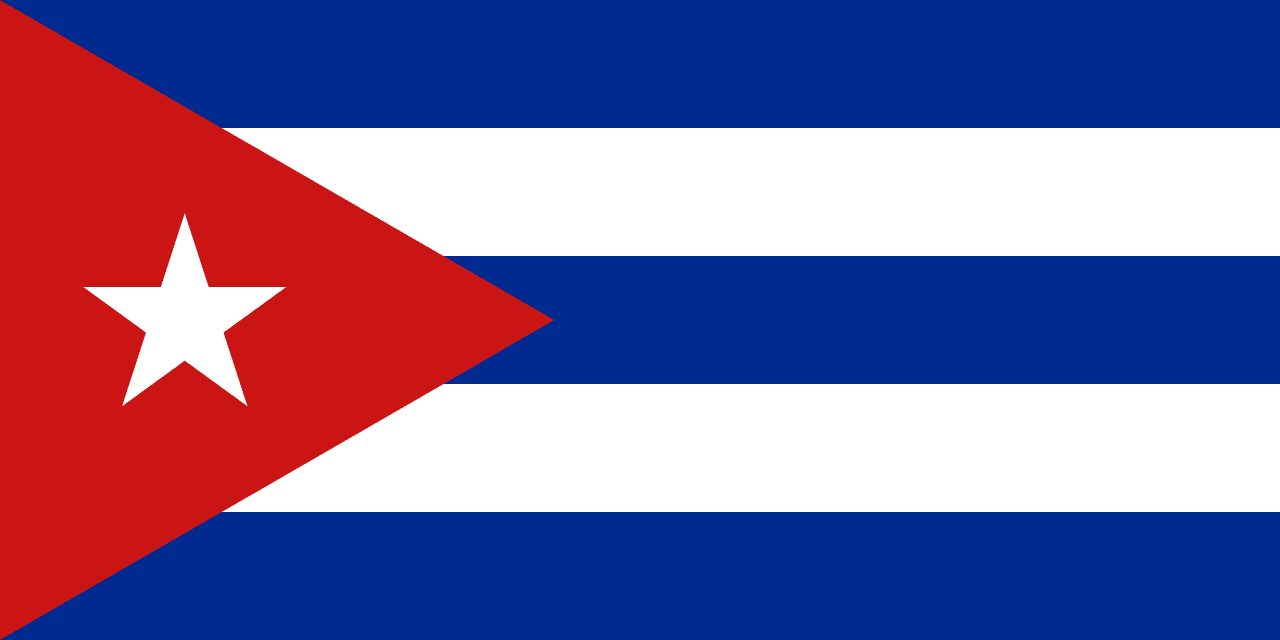
Cuba is the largest island in the Caribbean, a long, slender sliver of land where 1950s Chevrolets still rumble past crumbling colonial palaces and the air hums with rumba. It is a country of striking contradictions: world-class doctors and chronic shortages, faded grandeur and irrepressible joy. Here are ten genuinely fascinating facts that go far beyond the postcards.
1. It Is the Caribbean's Largest Island by a Wide Margin
At roughly 110,000 square kilometers, Cuba is bigger than all the other Caribbean islands combined, stretching about 1,250 kilometers from end to end while rarely exceeding 100 kilometers in width. From the air it resembles a basking crocodile, which is exactly why Cubans affectionately nickname their homeland El Cocodrilo, the Crocodile. The terrain is mostly gentle plains ideal for sugarcane and tobacco, but the southeast rises into the rugged Sierra Maestra, home to Pico Turquino, the country's highest peak at 1,974 meters. Surrounding the main island are some 4,000 smaller cays and islets, including the Jardines de la Reina, an almost untouched archipelago that ranks among the best-preserved marine ecosystems on the planet. To dig deeper into the landscape, see our country guide.
2. Havana Is a Living Museum of Colonial Architecture
Founded by the Spanish in 1519, Havana grew into one of the richest port cities in the Americas, the gateway through which Spain's New World treasure flowed back to Europe. Today its historic core, Old Havana, is a UNESCO World Heritage Site packed with baroque churches, grand plazas, and pastel mansions in various states of romantic decay. Roughly two million people live in the metropolitan area, making it the largest city in the Caribbean. The famous Malecon, a five-mile seawall promenade, doubles as the city's social living room, where Havaneros gather at sunset to fish, flirt, play music, and watch waves crash over the wall during storms.
3. Cuba Has One of the World's Highest Literacy Rates
Cuba's population of roughly 11 million enjoys a literacy rate above 99 percent, among the highest on Earth. This stems from a remarkable 1961 campaign in which around 100,000 young volunteers, many of them teenagers, fanned out across the countryside to teach reading and writing, slashing illiteracy in a single year. Education at all levels is free, and the country produces an enormous number of teachers, scientists, and especially physicians. Cuba has one of the highest doctor-to-patient ratios in the world and famously exports medical professionals abroad, sending tens of thousands of doctors to dozens of countries as a form of diplomacy and a major source of national income.
4. Spanish Is Spoken With a Distinctive, Rapid-Fire Flair
Spanish is the official language, but Cuban Spanish has a personality all its own. Speakers tend to drop the letter "s" at the ends of syllables, so buenos dias can sound more like bueno dia, and the speech rhythm is famously fast and musical. The vocabulary is sprinkled with words inherited from the Indigenous Taino, who lived on the island before European contact, including huracan (hurricane), tabaco, and canoa (canoe). African languages brought by enslaved people also left deep marks, particularly in the religious and musical lexicon, making Cuban Spanish a living archive of the island's layered history.
5. It Is the Birthplace of Some of the World's Greatest Music
Few countries of Cuba's size have shaped global music so profoundly. The island gave birth to son, rumba, mambo, cha-cha-cha, and the danzon, and its rhythms form the backbone of what the world calls salsa. The 1990s Buena Vista Social Club project introduced aging Cuban legends to international audiences and became one of the best-selling world music albums ever recorded. Music is woven into everyday life: impromptu performances spill out of doorways, courtyards, and street corners across the country. Cuban percussion instruments like the congas, bongos, and claves have been absorbed into jazz, pop, and rock worldwide, an outsized cultural footprint for an island nation.
6. Cuban Cigars Are Considered the Finest on Earth
Tobacco has been cultivated in Cuba since the days of the Taino, and the rich red soil of the western Vuelta Abajo region in Pinar del Rio is widely regarded as producing the best cigar leaf in existence. Hand-rolled brands like Cohiba, Montecristo, and Romeo y Julieta are coveted around the globe, and skilled rollers called torcedores can craft hundreds of cigars by hand each day. In a charming tradition, factory workers historically listened to a lector who read newspapers and novels aloud to ease the monotony of rolling. Alongside tobacco, sugar long dominated the economy, and Cuban rum, especially the daiquiri and mojito, became globally famous, partly thanks to writer Ernest Hemingway's well-documented Havana bar habits.
7. Home to the World's Smallest Bird
Cuba is a biodiversity hotspot with an astonishing array of species found nowhere else. The most famous is the bee hummingbird, the smallest bird in the world, measuring barely five centimeters long and weighing less than a two-gram coin, so tiny it is often mistaken for an insect. The island also shelters the Cuban crocodile, a feisty endemic reptile restricted to a small swampland, and the Cuban solenodon, a rare nocturnal mammal that delivers a venomous bite. With thousands of endemic plant species and protected zones like the Zapata Swamp and Alejandro de Humboldt National Park, Cuba is one of the Caribbean's most ecologically significant territories.
8. Vintage American Cars Still Rule the Roads
Step onto a Cuban street and you may feel you have traveled back in time. After the 1959 revolution and the subsequent U.S. trade embargo, imports of new American cars stopped, so Cubans kept their 1940s and 1950s Fords, Chevrolets, and Buicks running through sheer ingenuity. Mechanics nicknamed these survivors almendrones, and many now operate as shared taxis, their original engines often swapped for whatever spare parts could be cobbled together. The result is one of the world's largest collections of working classic cars, a rolling open-air museum that has become an iconic, candy-colored symbol of the island.
9. A Revolution That Reshaped the Cold War
Cuba won independence from Spain in 1898 following the Spanish-American War, but its modern identity was forged in 1959, when Fidel Castro's revolutionaries toppled the Batista government. The new socialist state allied with the Soviet Union, setting the stage for the 1962 Cuban Missile Crisis, when the discovery of Soviet nuclear missiles on the island brought the world closer to nuclear war than ever before. The standoff was resolved through tense negotiation, but the U.S. embargo that followed has endured for over six decades. Revolutionary figure Che Guevara remains a worldwide emblem, his beret-clad image among the most reproduced photographs in history. You can also explore the national emblem in our piece on the flag.
10. Baseball Is a National Obsession
While much of Latin America worships football, Cuba's heart belongs to baseball, introduced in the 19th century and embraced as the unofficial national sport. Heated debates about teams and players, known as peñas, erupt daily in Havana's Parque Central, where fans argue statistics for hours. Cuba has produced a steady stream of world-class players, and its national team has historically dominated international amateur tournaments, including multiple Olympic gold medals. The island also excels at boxing, having won more Olympic boxing titles than nearly any other nation, a testament to a sporting culture that punches far above the country's size.
Frequently Asked Questions
What is the capital of Cuba?
The capital of Cuba is Havana, founded in 1519. It is the largest city in the Caribbean, home to roughly two million people, and famous for its UNESCO-listed historic center, the seafront Malecon, and its blend of Spanish colonial and Art Deco architecture.
What is Cuba most famous for?
Cuba is best known for its premium hand-rolled cigars, vibrant music and dance such as salsa and rumba, vintage American cars, world-class rum and cocktails, and its dramatic revolutionary history. It is also celebrated for its high literacy rate and its export of skilled doctors.
Why is Cuba nicknamed "the Crocodile"?
Seen on a map, the long, narrow island looks remarkably like a crocodile floating in the Caribbean Sea, which earned it the affectionate Spanish nickname El Cocodrilo. Fittingly, the country is also home to the rare and feisty endemic Cuban crocodile.
Conclusion
Cuba is a place where history feels close enough to touch, where music never stops, and where everyday life unfolds with a resilience and warmth that surprise first-time visitors. From the smallest bird on Earth to classic cars and revolutionary legends, this Caribbean giant rewards anyone curious enough to look beyond the surface. These ten facts are only an invitation to keep exploring one of the world's most singular nations.