
Wedged into the parched corner of the Horn of Africa where the Red Sea funnels into the Gulf of Aden, Djibouti is one of the smallest yet most strategically explosive nations on the continent. It is a land of salt lakes that sit below sea level, of volcanic chimneys hissing in cracked plains, and of a port city that quietly anchors a fifth of global maritime trade. These ten facts reveal why this tiny desert republic punches far above its size.
1. It Sits on One of the Planet's Busiest Maritime Chokepoints
Djibouti guards the Bab-el-Mandeb strait, the narrow gateway between the Red Sea and the Gulf of Aden through which a huge share of global oil and container traffic must pass to reach the Suez Canal. This single accident of geography defines the country's entire identity. Ships steaming between Europe and Asia funnel within sight of its coast, and the nation has turned this position into its economic lifeblood, building world-class container terminals that handle cargo for the entire region. For a country with almost no natural resources, location is destiny — and Djibouti happens to own one of the best addresses on Earth.
2. It Hosts More Foreign Military Bases Than Almost Anywhere
Because of that strategic position, Djibouti has become a global garrison. The United States operates Camp Lemonnier, its only permanent base on the African continent, while France, Japan, Italy and China all maintain bases here too. China's facility, opened in 2017, was the country's first overseas military base anywhere in the world. These installations bring rent payments that pour hundreds of millions of dollars into the national budget each year. It is a remarkable arrangement: a nation of just over a million people earns serious income simply by leasing patches of its desert to the world's great powers.
3. Lake Assal Is the Lowest Point in Africa
Tucked into the Afar Depression, Lake Assal sits about 155 metres below sea level, making it the lowest point on the African continent and one of the lowest on Earth. It is also one of the saltiest bodies of water anywhere, ringed by dazzling white salt flats and turquoise water that looks almost alien. For centuries caravans have hauled salt from its shores, and the surrounding landscape of black lava fields, steaming vents and crystalline crusts feels more like another planet than a place tourists can actually visit. It is the crown jewel of Djibouti's surreal scenery.
4. The Capital and the Country Share the Same Name
Like a handful of nations worldwide, Djibouti's capital is also called Djibouti, sometimes referred to as Djibouti City to avoid confusion. The city is home to a large share of the entire national population, making this one of the most urbanised countries in Africa relative to its size. Founded by the French in the late 19th century as a coastal trading post, the capital remains the beating heart of the nation — its port, its airport, its government and its commerce all concentrated in this single sun-baked hub on the Gulf of Tadjoura. You can learn more in our country guide.
5. It Sits at a Geological Triple Junction Where Continents Are Splitting
Djibouti lies at the Afar Triple Junction, the rare spot where three tectonic plates are pulling apart from one another. This is one of the few places on land where you can actually see a continent tearing itself in two and the slow birth of a future ocean. The result is a violently dramatic landscape of active rift valleys, fumaroles, and the volcanic Ardoukoba, which erupted as recently as 1978. Geologists from around the world come here to study processes normally hidden deep beneath the sea floor. Few countries offer such a direct window into the raw machinery of the planet.
6. Two Official Languages, Many Mother Tongues
Djibouti's official languages are Arabic and French, a legacy of both its Arab-influenced trading culture and its decades as French Somaliland. Yet most people grow up speaking Somali or Afar at home, the languages of the country's two largest ethnic groups. This layered linguistic reality means a single conversation in the capital can drift between four tongues without anyone blinking. French dominates schooling and administration, Arabic carries religious and regional weight, and Somali and Afar bind communities together. It is a small nation with an outsized linguistic richness reflecting its position at the crossroads of Africa and the Arab world.
7. A Society Shaped by the Somali and Afar Peoples
Djibouti's roughly one million residents are predominantly drawn from two ethnic groups: the Issa Somali and the Afar. The overwhelming majority are Muslim, and Islamic traditions shape daily rhythms, holidays and customs across the country. Family and clan ties run deep, and hospitality toward guests is a cherished social value. The chewing of khat, a mildly stimulant leaf, is a widespread afternoon ritual for many men, with fresh shipments flown in daily — an everyday habit that reveals just how central this plant is to social and economic life across the Horn of Africa.
8. Whale Sharks Gather in Its Gulf Every Winter
Between roughly November and February, the Gulf of Tadjoura becomes one of the world's most reliable places to swim alongside whale sharks, the largest fish in the sea. Juveniles congregate in these plankton-rich waters in remarkable numbers, drawing divers and snorkellers from around the globe. Beyond the whale sharks, Djibouti's reefs and warm seas teem with manta rays, dolphins and vibrant coral, while inland the rugged Day Forest National Park shelters the endangered Djibouti francolin, a bird found nowhere else on Earth. For such an arid country, its marine life is astonishingly abundant.
9. A Cuisine of Spice, Flatbreads and French Touches
Djiboutian food sits at a flavorful junction of Somali, Afar, Yemeni, Indian and French influences. A typical meal might feature skoudehkaris, a fragrant rice-and-meat dish spiced with cardamom and cumin, alongside lahoh, a spongy fermented flatbread eaten with stews or honey. Coastal location means fresh fish and seafood are common, and the French legacy lingers in fresh baguettes and pastries sold in city bakeries. Tea brewed with cinnamon and ginger is a daily staple. The result is a warm, aromatic cuisine that mirrors the country's role as a meeting point of trade routes and cultures.
10. It Only Became Independent in 1977
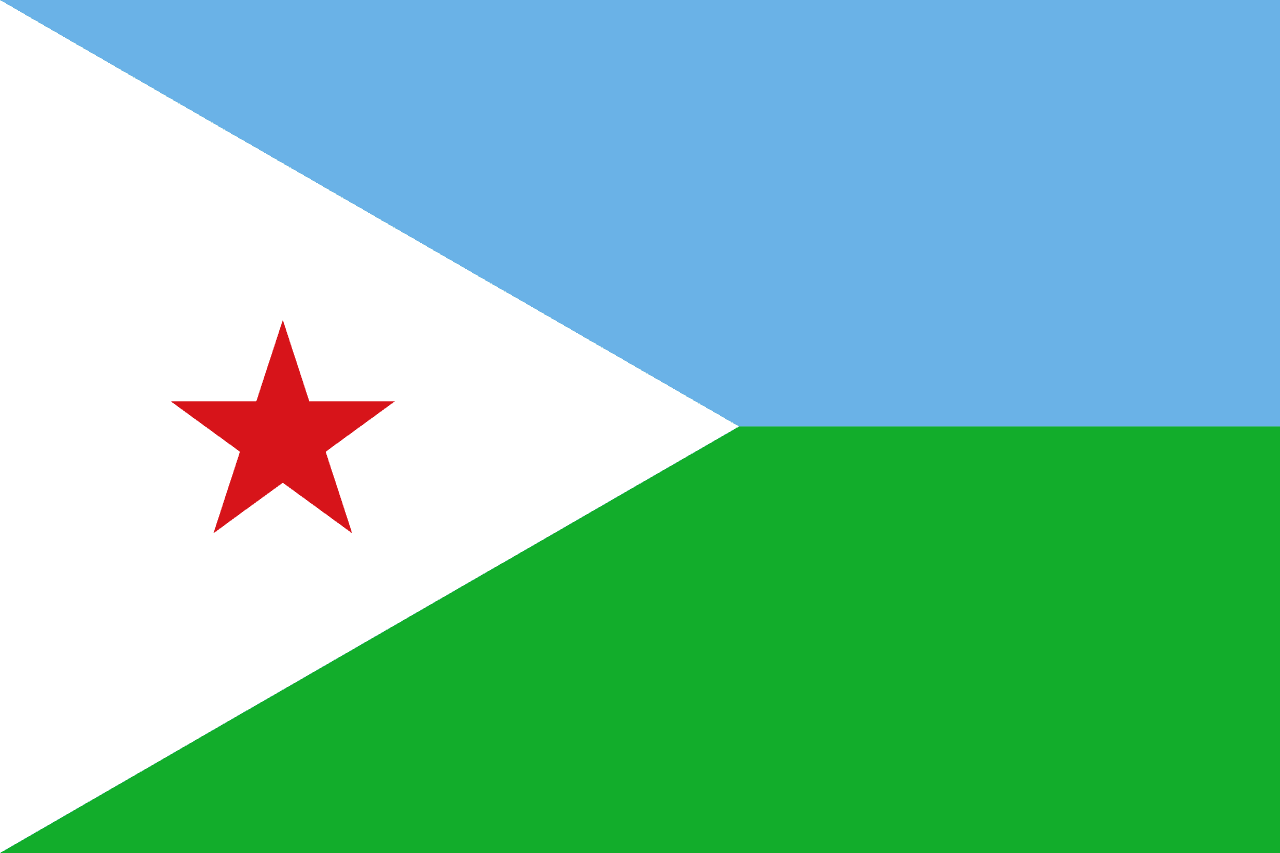
Djibouti is a young nation. After existing as French Somaliland and later the French Territory of the Afars and the Issas, it gained independence from France on 27 June 1977, becoming one of the last African territories to do so. The blue, green and white flag with its red star was raised for the first time that year, symbolising the Issa and Afar peoples and the unity between them. Despite its youth, Djibouti has cultivated a reputation for relative stability in a turbulent region, leveraging its location to become an indispensable hub for trade, diplomacy and global security.
Frequently Asked Questions
What is the capital of Djibouti?
The capital is Djibouti City, which shares its name with the country. It is the nation's largest urban centre and the location of its critical port, international airport and central government, home to a large portion of the entire population.
What is Djibouti famous for?
Djibouti is best known for its extraordinary strategic location at the mouth of the Red Sea, its busy port handling regional trade, and the many foreign military bases it hosts. It is also famous for the otherworldly salt flats of Lake Assal and seasonal whale shark gatherings in the Gulf of Tadjoura.
Can you really see continents splitting apart in Djibouti?
Yes. Djibouti sits at the Afar Triple Junction, one of the rare places on land where three tectonic plates are pulling apart. The visible rift valleys, active volcanic features and steaming fumaroles offer a live preview of how a new ocean is slowly being born over geological time.
Conclusion
Djibouti proves that size is no measure of significance. From its below-sea-level salt lakes and rifting continents to its globe-spanning military tenants and whale-shark-filled gulf, this small desert republic is packed with wonders that belie its modest footprint. It is a country that turned geography into opportunity — and a fascinating reminder of how much a tiny corner of the map can shape the wider world.
