
Estonia may be one of Europe's smallest nations, but it punches far above its weight in digital innovation, ancient song traditions, and wild forested landscapes. Tucked along the Baltic Sea between Russia and the Gulf of Finland, this country reinvented itself after regaining independence in 1991 and became one of the most connected societies on Earth. Here are ten genuinely fascinating facts about Estonia that go well beyond the usual textbook summary.
1. It Is the Most Digitally Advanced Country on the Planet
Estonia is often called the world's most digital society, and it has earned the nickname "e-Estonia." Citizens can vote online, sign documents digitally, file taxes in minutes, and access nearly every government service over the internet using a secure national ID card. Roughly 99 percent of public services are available online around the clock. The country even pioneered e-Residency in 2014, allowing entrepreneurs anywhere in the world to register and run an EU-based company remotely without ever setting foot in Estonia. This digital-first mindset emerged partly out of necessity after independence, when the small nation chose to leapfrog old bureaucracies and build everything from scratch online. To learn more, see our country guide.
2. Skype Was Born Here
The software that powered Skype, the app that revolutionized internet calling, was developed in Estonia in 2003 by a team of Estonian engineers. The country has since become a startup powerhouse, producing several "unicorn" companies valued at over a billion dollars, including Wise (formerly TransferWise), Bolt, and Playtech. Per capita, Estonia generates more tech startups than almost anywhere in Europe. Tallinn's tech scene is so vibrant that the city is sometimes described as the Silicon Valley of the Baltics, and the nation's success has inspired governments worldwide to study its model of nurturing digital entrepreneurship from a tiny population base of just 1.3 million people.
3. Over Half the Country Is Covered in Forest
Estonia is one of the greenest countries in Europe, with forests blanketing more than 50 percent of its land. Add in the extensive bogs, marshes, and wetlands, and a remarkable share of the nation remains genuinely wild. These dense woodlands are home to brown bears, lynx, wolves, and an estimated population of elk and roe deer. The country's love of nature runs deep: foraging for mushrooms and wild berries in autumn is a beloved national pastime, and many Estonians can identify dozens of edible species by sight. Soomaa National Park even experiences a so-called "fifth season" each spring when snowmelt floods the forests, and locals paddle through the trees in canoes.
4. Tallinn Has One of Europe's Best-Preserved Medieval Old Towns
The capital, Tallinn, boasts a UNESCO World Heritage-listed Old Town that looks like a fairy tale frozen in time. Cobblestone streets wind between Gothic spires, medieval merchant houses, and intact city walls topped with red-roofed defensive towers. Founded as a Hanseatic trading hub, the Old Town dates largely from the 13th to 15th centuries and survived World War II remarkably intact. Highlights include Toompea Castle, the onion-domed Alexander Nevsky Cathedral, and the Town Hall Square, which has hosted markets for over 700 years. Despite this ancient core, Tallinn is also strikingly modern, with sleek tech offices and free public transport for residents existing just steps from medieval ramparts.
5. Estonians Sang Their Way to Freedom
One of the most moving chapters in modern history is Estonia's "Singing Revolution." Between 1987 and 1991, hundreds of thousands of Estonians gathered to sing forbidden national songs as a peaceful protest against Soviet rule. At one event, an estimated 300,000 people, nearly a quarter of the entire population, assembled to sing together. This non-violent movement helped Estonia regain its independence in 1991 without bloodshed. The tradition is rooted in the Estonian Song Festival, or Laulupidu, held every five years since 1869, where choirs of tens of thousands perform on a single massive stage. UNESCO recognizes this song festival tradition as part of humanity's intangible cultural heritage.
6. The Language Is Unlike Almost Any Other in Europe
Estonian belongs to the Finno-Ugric language family, making it a cousin of Finnish and Hungarian rather than the Germanic, Slavic, or Romance languages spoken across most of Europe. It uses no grammatical gender and famously has fourteen noun cases, which can be daunting for learners. The language also features three distinct vowel and consonant lengths, so a word can change meaning depending on whether a sound is short, long, or extra-long. Despite the small number of native speakers, Estonian is thriving and serves as a powerful pillar of national identity, a language that survived centuries of foreign domination and Russification efforts to remain vibrantly alive today.
7. It Is a Land of More Than 2,000 Islands
Estonia's coastline along the Baltic Sea is dotted with over 2,000 islands and islets, though only a fraction are permanently inhabited. The two largest, Saaremaa and Hiiumaa, are beloved retreats famous for windmills, lighthouses, juniper forests, and a slower pace of life. Saaremaa is home to the Kaali meteorite crater, formed thousands of years ago when a meteor slammed into the island, leaving a striking water-filled crater that became the stuff of ancient legend. These islands preserve some of the oldest folk traditions in the country, where centuries-old customs, dialects, and rural architecture have endured far from the rapid modernization of the mainland.
8. Estonia Is the World's Least Religious Country by Some Measures
Surveys have repeatedly found Estonia to be among the least religious nations on Earth, with a large majority of people identifying as non-religious or saying religion is not important in their daily lives. Yet this does not mean Estonians lack spirituality. Many feel a deep, almost mystical connection to nature, forests, and ancient pagan traditions that predate Christianity. Sacred groves, old folk beliefs, and reverence for the natural world remain culturally significant. This blend of secular modernity and an earthy, nature-centered worldview gives Estonian culture a distinctive character that sets it apart from much of the rest of Europe.
9. The Country Loves Saunas and a Unique National Dish
Like its Nordic and Baltic neighbors, Estonia adores the sauna, and the smoke sauna tradition of the Vana-Vorumaa region is recognized by UNESCO. Smoke saunas have no chimney, filling the room with aromatic smoke before bathers enter, and the ritual is tied to community, healing, and even folk customs. When it comes to food, Estonian cuisine is hearty and seasonal, built around black rye bread, pork, potatoes, dairy, and Baltic herring. A beloved oddity is kama, a finely milled flour mixture of roasted barley, rye, oats, and peas, often stirred into buttermilk. Marzipan also has deep roots in Tallinn, which claims to be one of its birthplaces.
10. It Has Some of the Cleanest Air and Darkest Skies in Europe
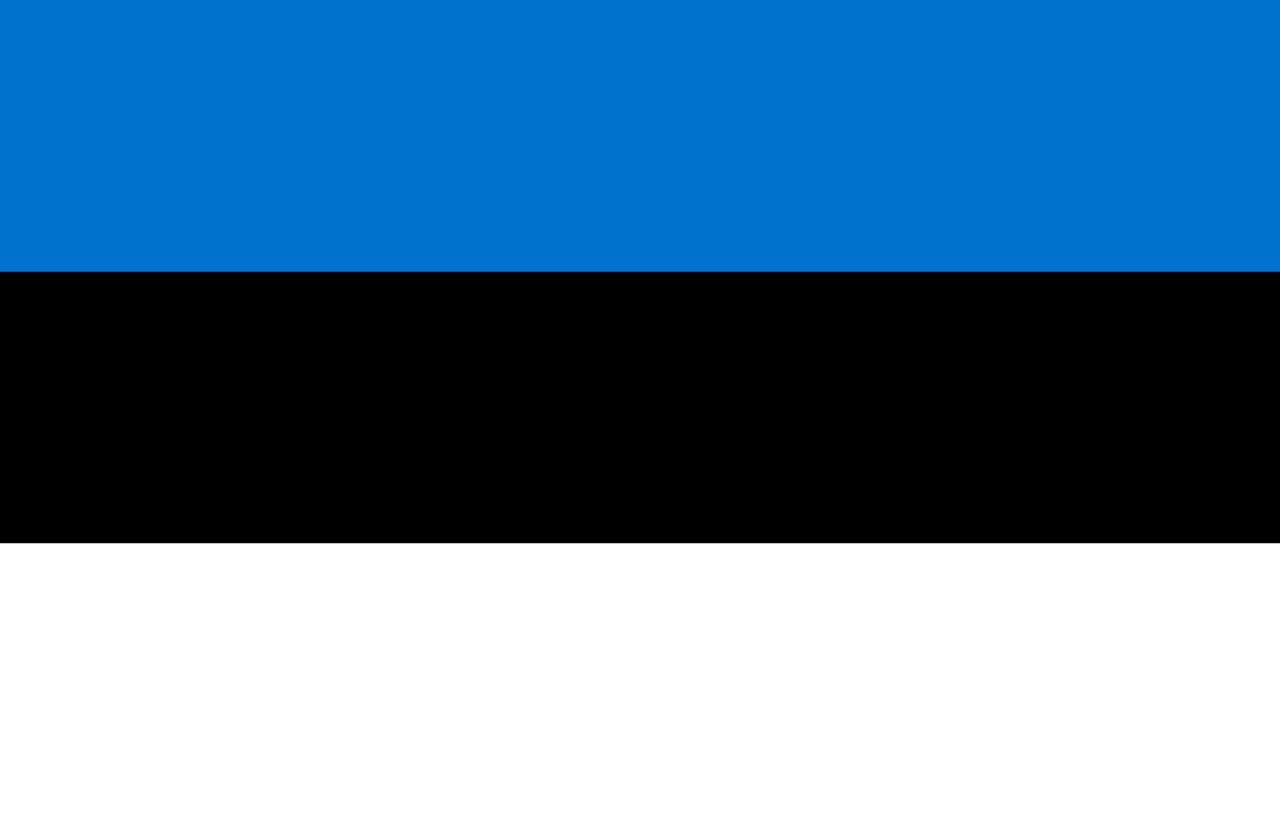
Estonia consistently ranks among the countries with the cleanest air in the world according to global health organizations, thanks to its low population density, vast forests, and limited heavy industry across much of the land. With so few people spread across the countryside, light pollution is minimal, offering spectacular stargazing and frequent views of the northern lights in winter. The country's commitment to its environment is also reflected in its national flag, whose blue, black, and white bands symbolize the sky, the soil, and the pursuit of freedom and snow. You can read more about its meaning in our guide to the Estonian flag.
Frequently Asked Questions
What is the capital of Estonia?
The capital of Estonia is Tallinn, a coastal city on the Gulf of Finland. It is famous for its remarkably preserved medieval Old Town, a UNESCO World Heritage Site, while also serving as the country's bustling center of technology, government, and culture.
What is Estonia most famous for?
Estonia is best known for being the world's most digitally advanced society, the birthplace of Skype, and the home of e-Residency. It is also celebrated for its fairy-tale medieval Tallinn, its vast forests, and the peaceful Singing Revolution that helped it regain independence in 1991.
What is a quirky fact about Estonia?
Estonia experiences a "fifth season" in Soomaa National Park, when spring snowmelt floods the forests so deeply that locals travel by canoe between the trees. The country is also one of the least religious in the world, yet retains a deep, nature-centered spiritual tradition.
Conclusion
Estonia is a country of striking contrasts, where medieval towers stand beside cutting-edge tech hubs and ancient song traditions coexist with online voting. From its endless forests and thousands of islands to its remarkable digital revolution, this small Baltic nation offers endless surprises. These ten facts only begin to capture what makes Estonia such a fascinating place to discover.
