
Picture a country so vast that flying from its western tip to its eastern edge crosses three time zones and takes longer than flying across the United States. That is Indonesia: a sprawling necklace of islands draped across the equator, home to roaring volcanoes, prowling dragons, and one of the most diverse populations on Earth. Beneath the postcard beaches lies a nation of staggering complexity and surprise.
1. The Largest Island Nation on Earth
Indonesia is the world's biggest archipelago, made up of roughly 17,000 islands, of which only about 6,000 are inhabited. Stretched between the Indian and Pacific Oceans, the country spans more than 5,000 kilometres from end to end and straddles the equator like a green ribbon. Its territory is dominated by water, yet it still ranks among the largest nations by land area in the world. Major islands include Java, Sumatra, Borneo (shared with Malaysia and Brunei), Sulawesi, and the western half of New Guinea. This scattered geography means that some Indonesian communities are reachable only by boat, and that regional identities remain remarkably distinct from one island to the next.
2. Sitting on the Pacific Ring of Fire
Few places on Earth are as geologically restless as Indonesia. The nation sits squarely on the Pacific Ring of Fire, where colliding tectonic plates have produced around 130 active volcanoes, more than any other country. Krakatoa's catastrophic 1883 eruption was heard thousands of kilometres away and lowered global temperatures, while the 2004 Indian Ocean tsunami devastated the province of Aceh. The same volcanic forces that bring danger also gift Indonesia extraordinarily fertile soil, which is part of why Java is one of the most densely farmed and populated islands on the planet. Earthquakes and eruptions are simply woven into the rhythm of Indonesian life.
3. The World's Fourth Most Populous Country
With roughly 287 million people, Indonesia trails only India, China, and the United States in population. More than half of all Indonesians live on Java alone, making it the most populous island on Earth. Despite this enormous headcount, the population is spread across hundreds of ethnic groups, each with its own customs and dialect. To learn more about how the nation presents itself to the world, you can explore our country guide. The sheer scale of its population makes Indonesia a rising economic and political heavyweight in Asia and beyond.
4. Over 700 Languages Spoken
Indonesia is one of the most linguistically diverse nations in existence, with more than 700 living languages spoken across its islands. To unite this patchwork, the country adopted Bahasa Indonesia as its official language, a standardized form of Malay chosen partly because it was a neutral trade tongue rather than the language of the dominant Javanese ethnic group. This was a deliberate act of nation-building: a shared language to bind together a country of immense diversity. Today nearly all Indonesians speak Bahasa Indonesia in addition to their local mother tongue, whether that be Javanese, Sundanese, Balinese, or one of hundreds of others.
5. The Birthplace of Borobudur
On the island of Java stands Borobudur, the largest Buddhist temple in the world, built in the 9th century during the Sailendra dynasty. This colossal stone monument is constructed as a giant mandala, with pilgrims meant to walk clockwise through its ascending terraces past more than 2,600 relief panels and over 500 Buddha statues. Remarkably, Borobudur was abandoned and partly buried under volcanic ash and jungle for centuries before being rediscovered in the 19th century. Today it is a UNESCO World Heritage Site and one of Southeast Asia's most awe-inspiring landmarks, drawing pilgrims and tourists alike, especially for sunrise over the misty Kedu Plain.
6. A Jakarta So Crowded a New Capital Is Being Built
Jakarta, the longtime capital, is one of the most densely populated megacities on the planet, plagued by notorious traffic and the alarming reality that it is sinking, with parts of the city dropping several centimetres a year as groundwater is pumped out. To address this, Indonesia is constructing an entirely new capital city called Nusantara on the island of Borneo, in East Kalimantan. The ambitious move aims to relieve pressure on Jakarta and rebalance development away from overcrowded Java. It is one of the largest capital-relocation projects in modern history, an enormous gamble on the country's future.
7. Home of the Komodo Dragon
Indonesia is the only place on Earth where you can see the Komodo dragon in the wild, the world's largest living lizard, growing up to three metres long and weighing as much as 70 kilograms. These formidable predators inhabit a handful of islands including Komodo, Rinca, and Flores. The country's wildlife is shaped by the invisible Wallace Line, a biogeographic boundary separating Asian species in the west from Australian-related species in the east. This is why Indonesia harbours both orangutans and tigers in Sumatra and birds-of-paradise in Papua. The nation ranks among the most biodiverse on the planet.
8. The Spice Islands That Reshaped History
The eastern islands of Indonesia, particularly the Maluku Islands, were once the only source of nutmeg, mace, and cloves on Earth, earning them the legendary name the Spice Islands. The fabulous wealth these spices commanded lured Portuguese, Dutch, and English traders across the globe and helped ignite the age of European colonial exploration. The Dutch eventually dominated the region for roughly 350 years until Indonesia declared independence on 17 August 1945. In one of history's stranger deals, the Dutch once traded the tiny nutmeg island of Run to the English in exchange for Manhattan, a swap that reshaped the map of the modern world.
9. A Cuisine of Rendang, Satay, and Sambal
Indonesian food is a vibrant celebration of spice, smoke, and texture. Rendang, a slow-cooked Sumatran beef dish simmered for hours in coconut milk and spices, has topped global polls as one of the world's most delicious foods. Street stalls serve smoky satay skewers, fragrant nasi goreng (fried rice), and gado-gado, a salad bound in rich peanut sauce. Nearly every meal is accompanied by sambal, a fiery chilli paste that comes in countless regional varieties. With so many islands and cultures contributing recipes, Indonesian cuisine is less a single tradition than a glorious mosaic of flavours.
10. The Island of the Gods
While Indonesia is the world's most populous Muslim-majority nation, the island of Bali is a striking exception, holding fast to a unique form of Hinduism blended with local animist traditions. Bali's terraced rice paddies, ornate temples, and elaborate ceremonies have made it one of the most beloved travel destinations on Earth. The Balinese calendar is packed with festivals, dances, and offerings to the gods, including Nyepi, a Day of Silence when the entire island shuts down, lights are dimmed, and even the airport closes. It is a vivid reminder of how dazzlingly diverse this single country can be.
Frequently Asked Questions
What is the capital of Indonesia?
The capital is currently Jakarta, a sprawling megacity on the island of Java. However, Indonesia is building a brand-new capital named Nusantara on the island of Borneo to ease Jakarta's overcrowding and the problem of the city slowly sinking.
What is Indonesia famous for?
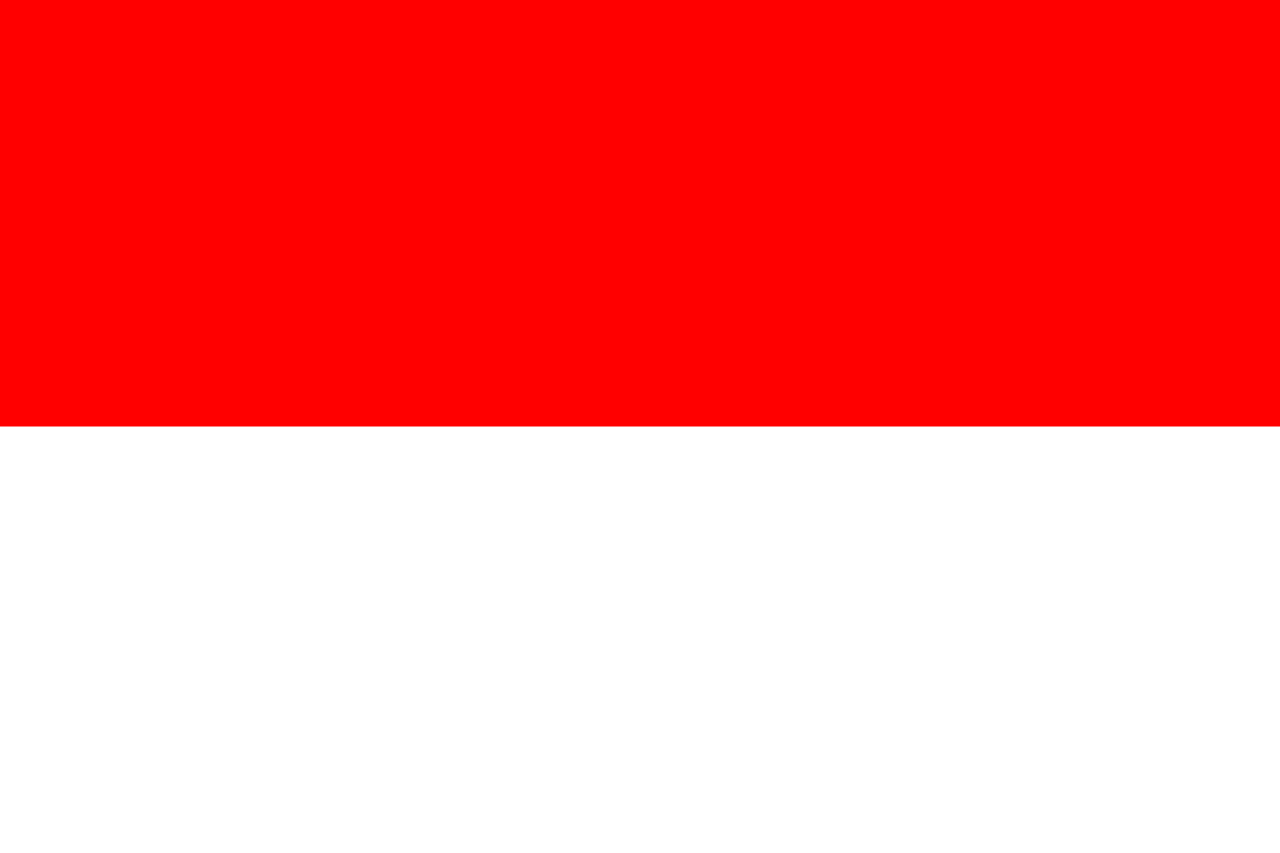
Indonesia is famous for being the world's largest archipelago, its active volcanoes along the Ring of Fire, the island paradise of Bali, the ancient temple of Borobudur, the Komodo dragon, and rich cuisine like rendang and satay. You can spot its distinctive red-and-white flag across the region.
How many islands and languages does Indonesia have?
Indonesia is made up of roughly 17,000 islands, around 6,000 of which are inhabited, and its people speak more than 700 distinct languages, all unified under the official national language, Bahasa Indonesia.
Conclusion
From sinking capitals and rising dragons to spice wars that redrew world maps, Indonesia is a country that defies easy summary. It is at once a single nation and a universe of cultures, faiths, and landscapes scattered across the equator. These ten facts barely scratch the surface, but they reveal a place where geography, history, and human resilience collide in spectacular fashion, well worth a deeper exploration.
