
Tucked along the Gulf of Guinea, Ivory Coast (Côte d'Ivoire) is the engine room of West Africa's economy and one of the continent's most surprising nations. It boasts the largest church on Earth, supplies the chocolate in a huge share of the world's candy bars, and gave global football one of its all-time greats. Here are ten genuinely fascinating facts that go far beyond the textbook.
1. It Has Two Capitals — and Most Business Happens in Neither
Yamoussoukro became Ivory Coast's official political capital in 1983, chosen because it was the home village of the country's founding president, Félix Houphouët-Boigny. Yet the real heartbeat of the nation is Abidjan, the sprawling economic capital on the coast, where most government offices, embassies, and corporate headquarters still operate. Abidjan is home to several million people and ranks among the largest French-speaking cities in Africa. Built around the Ébrié Lagoon and crowned by the skyscrapers of the Plateau district, it earned the nickname "the Manhattan of the tropics." So while maps list Yamoussoukro as capital, ask any Ivorian where the action is and they will point you straight to Abidjan.
2. The World's Largest Church Sits in a Modest Town
The Basilica of Our Lady of Peace in Yamoussoukro holds the Guinness World Record as the largest church on the planet, with a soaring dome modeled on St. Peter's in Rome. Completed in 1990, it can shelter tens of thousands of people and its interior is wrapped in dazzling stained glass and Italian marble. What makes it even more striking is the context: Ivory Coast has a large Muslim population alongside its Christians and followers of traditional African religions. The basilica rises almost surreally out of a relatively small town, a monument funded under President Houphouët-Boigny that remains one of the most photographed landmarks in all of Africa. You can read more in our country guide.
3. The Country Literally Grows the World's Chocolate
Ivory Coast is the planet's number-one producer of cocoa beans, growing roughly 40 percent of the global supply. If you have ever eaten a chocolate bar, there is a strong chance the beans began life on a small Ivorian farm. Cocoa was introduced during the colonial era and exploded into the backbone of the economy, employing millions of farmers across the humid south. Alongside cocoa, the nation is a leading exporter of cashews, palm oil, rubber, and coffee. This agricultural muscle helped fuel a period of rapid growth after independence that economists nicknamed the "Ivorian Miracle," making the country one of the wealthier economies in the region.
4. Its Name Comes From a Vanished Ivory Trade
The country is named after the elephant tusks that European merchants once shipped from this stretch of coastline. Along with neighboring "coasts" like the Gold Coast and the Pepper Coast, the Ivory Coast was a label tied to a single lucrative commodity. The elephant remains the national emblem and gives the football team its famous nickname, "Les Éléphants." In 1985 the government formally requested that the country be called Côte d'Ivoire in every language, refusing translation so that its name would stay consistent worldwide. That is why you will often see the French form used even in English-language news and at the United Nations.
5. French Is Official, But Dozens of Languages Fill the Streets
French is the official language, a legacy of colonial rule, and it serves as the common tongue for government, schools, and business. Yet everyday life hums with around 60 indigenous languages. Dioula functions as a widespread trade language in markets across the country, while Baoulé, Bété, Senufo, and many others anchor distinct ethnic communities. This linguistic richness reflects the dozens of ethnic groups who call the country home. Many Ivorians grow up effortlessly switching between their mother tongue, a regional lingua franca, and French, weaving multiple identities into a single conversation.
6. Football Is Practically a National Religion
Few things unite Ivorians like football. The Elephants have produced world-class talents such as Didier Drogba, whose stardom at Chelsea made him a global icon. Drogba is also credited with using his fame to help calm tensions during a period of civil conflict, famously pleading for peace on live television. In 2024 Ivory Coast hosted and won the Africa Cup of Nations on home soil, sparking euphoric celebrations across the country. The sport is woven into daily life, from dusty neighborhood pitches in Abidjan to packed stadiums, making football one of the clearest expressions of national pride and unity.
7. Tai National Park Shelters Rare Rainforest Giants
In the southwest lies Tai National Park, a UNESCO World Heritage Site protecting one of the last great primary rainforests in West Africa. Its dense canopy hides remarkable wildlife, including the elusive pygmy hippopotamus, forest elephants, and several species of monkey. The park is especially famous for its chimpanzees, which scientists have observed using stones and wooden clubs as tools to crack open hard nuts, a striking example of animal intelligence. These forests once blanketed much of the country, but heavy logging and the spread of cocoa farming have shrunk them dramatically, making protected reserves like Tai vital for conservation.
8. Attiéké Is the Dish That Defines the Table
Ask about Ivorian food and you will quickly hear about attiéké, a fluffy, slightly tangy couscous made from fermented and grated cassava. It accompanies grilled fish, chicken, or the popular street snack garba, which pairs attiéké with fried tuna and fiery pepper. Another beloved staple is aloko, sweet plantains fried until golden and often sold by roadside vendors. Meals are deeply social affairs, frequently shared from communal plates. The cuisine reflects the country's tropical bounty, blending cassava, plantain, yam, and fresh seafood into hearty, flavor-packed dishes that travelers remember long after they leave.
9. The Flag's Colors Tell a Story of Land and People
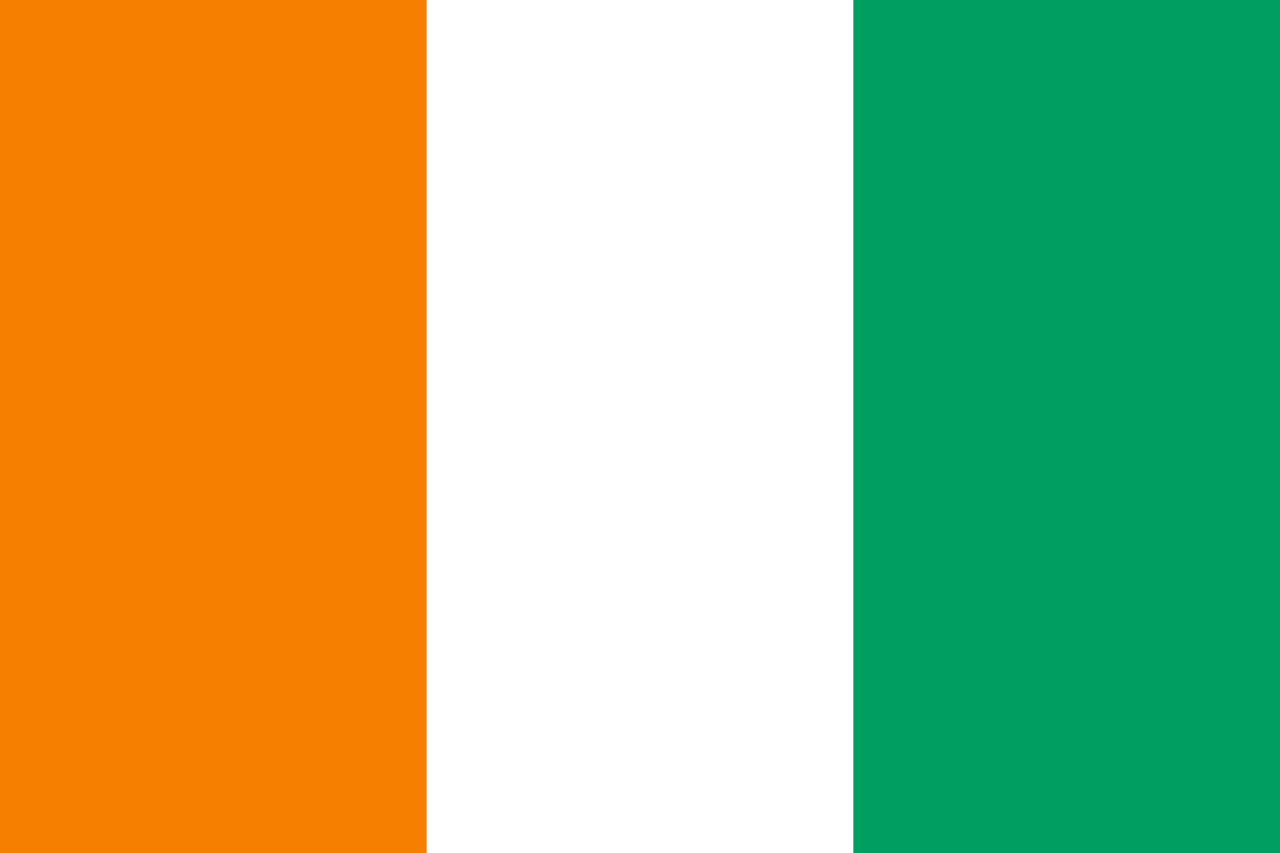
The Ivorian flag features three vertical bands of orange, white, and green. The orange is said to represent the savanna and the fertile northern land, the white stands for peace and unity, and the green symbolizes hope and the lush southern forests. Adopted at independence in 1960, it resembles the flags of several other nations but carries meaning rooted firmly in Ivory Coast's own geography. It is a simple yet powerful emblem flown proudly at football matches and national celebrations alike. Learn more about its design and symbolism in our piece on the flag.
10. It Was a Beacon of Stability — Then Tested by It
After gaining independence from France in 1960, Ivory Coast enjoyed decades of relative peace and prosperity under Houphouët-Boigny, standing out as a calm, business-friendly nation in a turbulent region. That stability frayed in the early 2000s, when political disputes and a contested election sparked civil conflict and a north-south divide. The country has since worked hard to reunify and rebuild, with Abidjan booming again as a regional commercial hub. Today Ivory Coast is once more one of Africa's fastest-growing economies, a testament to the resilience of its people and their determination to reclaim the optimism of earlier years.
Frequently Asked Questions
What is the capital of Ivory Coast?
The official political capital is Yamoussoukro, designated in 1983. However, Abidjan remains the economic capital and the largest city, hosting most government, business, and diplomatic activity. In practice, Abidjan functions as the country's true center of gravity.
What is Ivory Coast most famous for?
Ivory Coast is best known as the world's largest producer of cocoa, supplying around 40 percent of global beans. It is also famous for the record-breaking Basilica of Our Lady of Peace, its football stars like Didier Drogba, and its 2024 Africa Cup of Nations triumph.
Why is it sometimes called Côte d'Ivoire?
In 1985 the government asked that the country's name not be translated into other languages, insisting on the French form Côte d'Ivoire everywhere. That is why even English-speaking media and the UN frequently use the French name rather than "Ivory Coast."
Conclusion
From the chocolate in your favorite bar to the largest church on Earth and a football-mad nation that lifted a continental trophy at home, Ivory Coast packs an extraordinary amount of character into one corner of West Africa. Behind its statistics lies a vibrant, resilient country that rewards anyone curious enough to look closer. These ten facts are only the beginning of its story.
