
Tucked between the Adriatic Sea and the rugged spine of the Dinaric Alps, Montenegro packs more dramatic scenery into its borders than countries many times its size. This is a place where you can sunbathe on a Mediterranean beach in the morning and stand among snow-dusted peaks by afternoon. Here are ten fascinating facts that reveal why this small Balkan nation is one of Europe's most surprising corners.
1. Its Name Literally Means "Black Mountain"
The very name Montenegro comes from the Venetian phrase monte negro, meaning "black mountain," a reference to the dark, forested slopes of Mount Lovcen that loomed over the medieval coast. In the country's own language the nation is called Crna Gora, which translates to exactly the same thing. Few country names are so poetically tied to their landscape. The dense pine and beech woods that once cloaked these mountains appeared almost black from a distance, especially under cloud shadow, giving sailors and traders a memorable landmark. Today the name still feels apt, as Montenegro remains one of the most heavily forested and mountainous countries in all of Europe relative to its modest size.
2. The Bay of Kotor Is Often Called Europe's Southernmost Fjord
The Bay of Kotor is one of Montenegro's signature sights, a winding inlet of the Adriatic that snakes deep between towering limestone cliffs. Its dramatic, steep-walled appearance leads many to describe it as a fjord, though geologically it is a submerged river canyon, or ria. Either way, the effect is breathtaking. The medieval town of Kotor sits at the bay's innermost point, its stone walls climbing improbably up the mountainside to a fortress high above. The entire area is a UNESCO World Heritage Site, prized for its blend of natural beauty and Venetian-influenced architecture. Cruise ships now glide through waters that once carried Roman galleys and medieval merchant fleets.
3. Podgorica Is the Capital, but Cetinje Holds the Crown
Podgorica, with its modern buildings and riverside cafes, is Montenegro's largest city and official capital, serving as the seat of government and commerce. Yet the country also recognizes a second, ceremonial capital: Cetinje. Founded in the 15th century, Cetinje was the historic royal capital and the heart of Montenegrin identity for centuries. It still houses the official residence of the president, important monasteries, and museums dedicated to the nation's heritage. This dual-capital arrangement reflects a deep respect for history. You can learn more about the country's regions, climate, and travel highlights in our full country guide.
4. A Small Nation of Many Languages and Faiths
With a population of roughly 626,000, Montenegro is one of Europe's smallest nations, yet it is remarkably diverse. The official language is Montenegrin, a South Slavic tongue closely related to Serbian, Croatian, and Bosnian, and most people can understand all four with ease. Significant communities also speak Serbian, Bosnian, and Albanian. Religiously, the country is a patchwork too, with Orthodox Christians forming the majority alongside notable Muslim and Catholic populations. This blend of identities is a legacy of Montenegro's position at the crossroads of empires. Rather than dividing the country, this diversity has long been woven into the fabric of everyday Montenegrin life.
5. It Only Became Independent in 2006
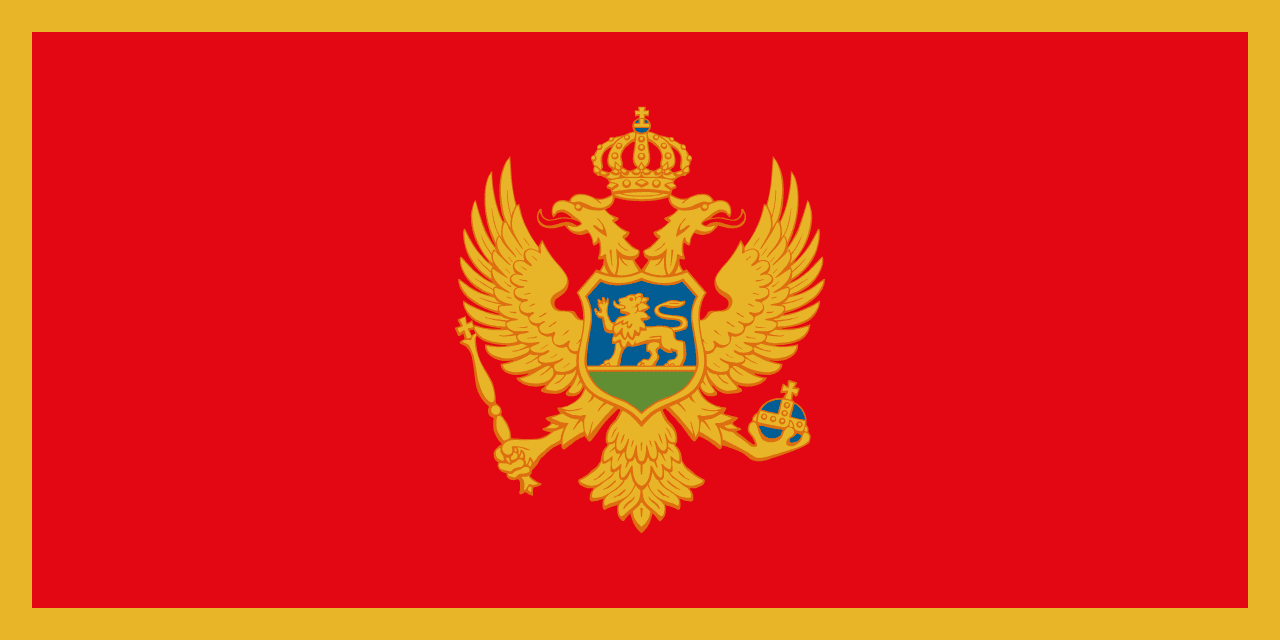
Modern Montenegro is a young state. Although it has a long and proud history as a principality and later a kingdom, the country spent much of the 20th century as part of Yugoslavia. After Yugoslavia fragmented in the 1990s, Montenegro remained joined with Serbia in a loose union. In May 2006, Montenegrins voted in a referendum to dissolve that partnership, and the country declared full independence, becoming one of the newest sovereign nations in Europe. Despite its youth as a modern state, Montenegro quickly pursued international integration, joining NATO in 2017 and pursuing membership in the European Union. Its red-and-gold banner with a double-headed eagle is one of Europe's most striking; read about it in our piece on the Montenegrin flag.
6. The Euro Is the Currency, Despite No EU Membership
Here is a quirk that surprises many visitors: Montenegro uses the euro as its currency, even though it is not a member of the European Union or the eurozone. When it was still tied to Serbia, Montenegro adopted the German mark to escape hyperinflation, and when the mark was replaced by the euro across Europe, Montenegro simply followed suit. It now uses the euro unilaterally, without the formal agreements that govern most euro-using nations. This unusual arrangement makes life convenient for the many tourists who arrive each year, and it reflects the country's strong economic and political orientation toward Western Europe and its aspirations for eventual EU accession.
7. Home to One of Europe's Deepest Canyons
The Tara River Canyon, carved by the rushing Tara River in the country's north, is among the deepest canyons in the world and the deepest in Europe, plunging roughly 1,300 meters at its most dramatic point, second globally only to the Grand Canyon. Protected within Durmitor National Park, another UNESCO-listed treasure, the canyon is a paradise for white-water rafting, hiking, and wildlife spotting. The surrounding park bristles with glacial lakes, known locally as "mountain eyes," along with soaring limestone peaks and ancient forests. The graceful Durdevica Tara Bridge, spanning the gorge, was once the largest vehicular concrete arch bridge in Europe. This wild northern landscape feels worlds away from the sunny coast.
8. A Coastline Steeped in Glamour and History
Montenegro's Adriatic coast stretches for nearly 300 kilometers and has become one of the Mediterranean's most fashionable destinations. The tiny fortified islet of Sveti Stefan, connected to the mainland by a slender isthmus, was once a fishing village and is now an exclusive luxury resort that has hosted royalty and movie stars. Beach towns like Budva buzz with nightlife and ancient stone quarters in equal measure, while Perast and Kotor preserve centuries of Venetian maritime heritage. The coast's mild Mediterranean climate, with hot dry summers and gentle winters, contrasts sharply with the snowy interior, all packed into a country smaller than the U.S. state of Connecticut.
9. Hearty Food Shaped by Sea and Mountain
Montenegrin cuisine is a delicious reflection of its geography, split between the coast and the highlands. Along the Adriatic, menus brim with fresh fish, octopus, mussels, and dishes flavored by Italian and Mediterranean influence, often paired with local olive oil and wine. Inland, the food turns hearty and rustic, built around smoked meats, lamb, cheeses, and dense breads. The most famous specialty is Njegusi prsut, a prized air-dried, smoked ham from the village of Njegusi near Mount Lovcen, often served with the region's distinctive cheese. Strong coffee, grilled cevapi, and the potent fruit brandy known as rakija round out a culinary culture that prizes generosity and long, leisurely meals.
10. Basketball and Water Polo Punch Above Their Weight
For a nation of just over half a million people, Montenegro is a sporting overachiever. The country is passionate about water polo, where its national team consistently ranks among the world's elite and has captured European and world medals, an extraordinary feat for such a small population. Basketball and handball are hugely popular too, and Montenegrins are famously among the tallest people on Earth, with average heights that rank near the very top of global statistics. This combination of size, athleticism, and intense national pride means Montenegro routinely competes against far larger countries on the international stage and often comes home with hardware.
Frequently Asked Questions
What is the capital of Montenegro?
The official capital and largest city is Podgorica, which serves as the seat of government and the country's main commercial center. Montenegro also recognizes Cetinje as its historic and ceremonial capital, home to the president's official residence and important cultural institutions.
What is Montenegro famous for?
Montenegro is renowned for its spectacular natural beauty, especially the UNESCO-listed Bay of Kotor, the dramatic Tara River Canyon, and Durmitor National Park. It is also famous for its glamorous Adriatic coastline, medieval towns, and its remarkably successful water polo team.
Why does Montenegro use the euro if it is not in the EU?
Montenegro adopted the euro unilaterally without joining the eurozone or the European Union. It had previously used the German mark to avoid hyperinflation, and simply switched to the euro when the mark was retired, betting its economic future on close ties with Western Europe.
Conclusion
From a name born of dark mountains to a coastline that rivals the French Riviera, Montenegro proves that great things come in small packages. Its blend of fjord-like bays, deep canyons, layered history, and fierce sporting pride makes it one of Europe's most rewarding countries to explore. Whether you come for the scenery, the food, or the culture, this little Balkan nation leaves a lasting impression far larger than its borders suggest.
