
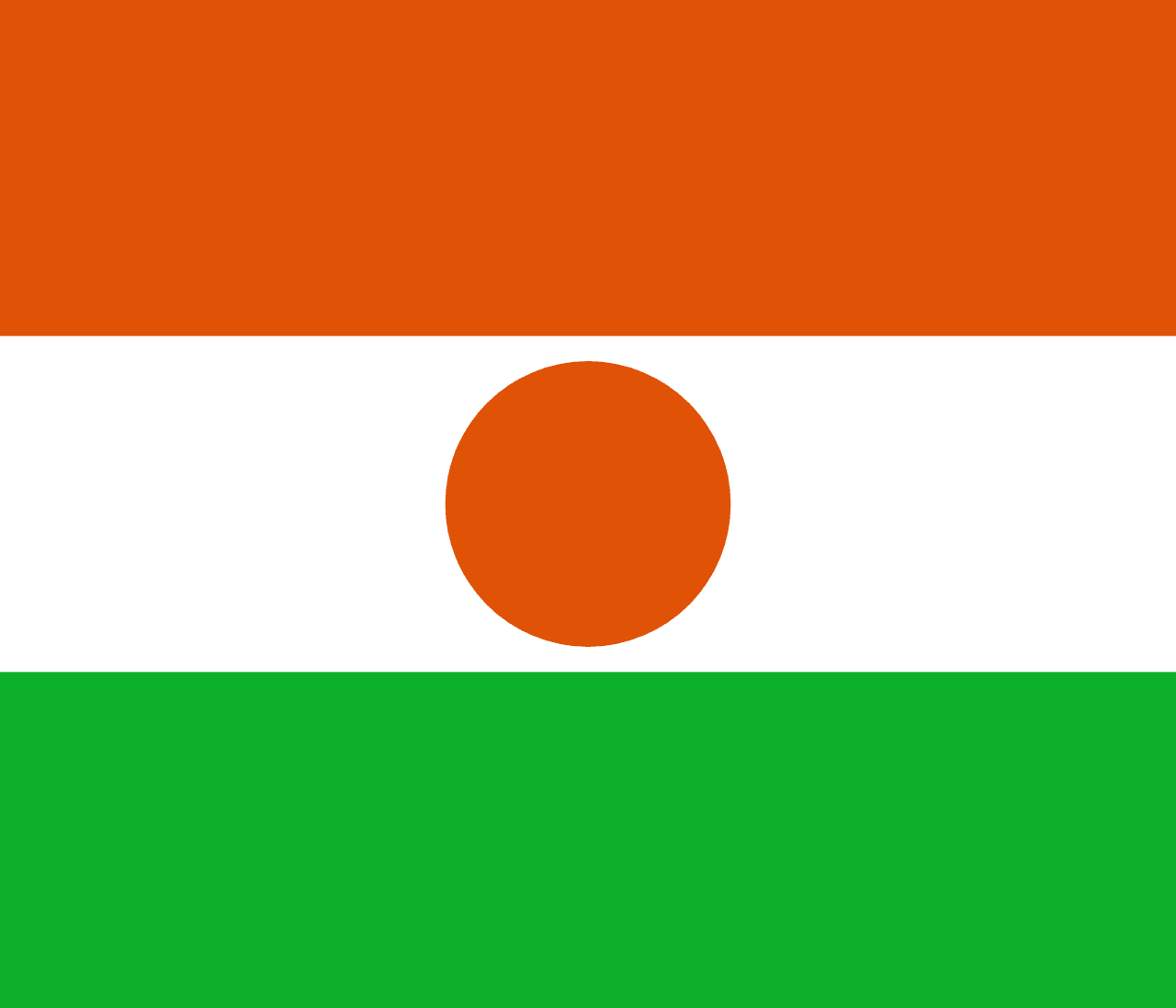
Niger is a vast, landlocked nation in West Africa where the Sahara Desert meets the Sahel, and where one of the world's longest rivers carves a lifeline through the sand. It is a country of camel caravans, ancient salt routes, dinosaur graveyards, and a young, fast-growing population. Here are ten genuinely fascinating facts that reveal why Niger deserves far more attention than it usually gets.
1. Most of the Country Is Swallowed by the Sahara
Niger is one of Africa's largest countries by area, yet roughly 80 percent of its territory lies within the Sahara Desert. The north is dominated by endless dunes, gravel plains, and the volcanic Aïr Mountains, while the inhospitable Ténéré desert stretches across the northeast as a sea of shifting sand. Because so little land is habitable, the population is squeezed into the thin southern strip near the border with Nigeria, where rainfall is just enough to support farming. This dramatic imbalance between size and livable space shapes nearly everything about the country, from where cities grow to how herders move their animals across enormous distances in search of grazing.
2. The Country Is Named After the Mighty Niger River
The nation takes its name from the Niger River, the third-longest river in Africa after the Nile and the Congo. Although the river only clips the southwestern corner of the country, it is absolutely vital, supplying water to the capital and supporting fishing, farming, and transport. The river's name is thought to derive from a Tuareg phrase meaning "river of rivers." Its banks are among the few green, fertile areas in an otherwise arid land, and the contrast between the lush riverside and the surrounding dry plains is striking. You can learn more in our country guide.
3. Niamey, a Capital That Grew Up Beside the River
Niamey, the capital, sits on the banks of the Niger River and is the country's largest city and economic engine. Once a modest fishing and farming settlement, it expanded rapidly during the French colonial era and has continued to grow ever since. Today it blends wide boulevards, bustling markets, mosques, and a lively riverside where pirogues drift past at sunset. The Grand Marché is one of West Africa's busiest markets, and the National Museum is famous for housing complete dinosaur skeletons. Despite the country's challenges, Niamey pulses with energy, music, and the everyday commerce that defines Sahelian urban life.
4. One of the Youngest and Fastest-Growing Populations on Earth
With around 28.8 million people, Niger has one of the highest birth rates in the world, and the median age is among the lowest anywhere, with the majority of the population under 18. Families are typically large, and the population is expanding at a pace that will see it multiply dramatically within a generation. This youthful demographic creates enormous challenges for schools, healthcare, and jobs, but it also means Niger is a nation overwhelmingly defined by children and young people, shaping a society that is energetic, family-centered, and deeply rooted in community.
5. A Tapestry of Peoples and Languages
Niger is home to a rich mix of ethnic groups, including the Hausa, who form the largest community, alongside the Zarma-Songhai, Tuareg, Fulani (Peul), Kanuri, and Toubou. French is the official language, a legacy of colonial rule, but Hausa is the most widely spoken tongue in daily life, serving as a common language across markets and regions. Each group brings its own dress, music, and customs. The Tuareg, often called the "blue people" for their indigo-dyed robes, are especially iconic, traditionally roaming the desert as nomadic herders and traders.
6. The Cure Salee, a Spectacular Festival of the Nomads
One of Niger's most extraordinary cultural events is the Cure Salée, or "Salt Cure," an annual gathering of Tuareg and Wodaabe Fulani herders held near In-Gall at the end of the rainy season. The highlight is the Gerewol, a courtship ritual in which young Wodaabe men paint their faces, dress elaborately, and perform a hypnotic dance, rolling their eyes and flashing their teeth to display their beauty. Women then choose the most attractive suitors. It is one of the few societies on Earth where men compete so openly to be judged beautiful, making it a mesmerizing celebration of identity, music, and tradition.
7. Home to the World's Largest Protected Area in Africa
Niger contains part of the Aïr and Ténéré Natural Reserves, a UNESCO World Heritage Site and one of the largest protected areas on the African continent. This remote desert wilderness shelters rare wildlife adapted to extreme heat, including the critically endangered addax antelope and the slender-horned dama gazelle. The region's volcanic mountains, ancient rock art, and dunes make it a place of haunting beauty. Conservation here is difficult given the harsh climate and security challenges, but the reserves remain a globally important refuge for some of the planet's most threatened desert-dwelling animals.
8. A Treasure Trove of Dinosaur Fossils
The deserts of Niger have proven to be one of the world's richest hunting grounds for dinosaur fossils. Paleontologists have unearthed astonishing creatures here, including Nigersaurus, a long-necked plant-eater with a wide, vacuum-like mouth lined with hundreds of tiny teeth, and Sarcosuchus, the so-called "SuperCroc," a prehistoric crocodile relative that grew to around 12 meters long. Millions of years ago this parched landscape was a lush, river-filled world teeming with life. Today, fossilized bones still emerge from the sand, and some of these remarkable finds are displayed in Niamey's National Museum.
9. Uranium Powers the Economy from Deep in the Desert
Niger is one of the world's leading producers of uranium, much of it mined in the northern desert town of Arlit. This radioactive metal is a cornerstone of the national economy and a major export, used to fuel nuclear power plants abroad. Yet despite this valuable resource, Niger remains one of the poorest countries on Earth, and most people depend on subsistence farming and herding rather than mining. The contrast between underground mineral wealth and widespread rural poverty is one of the defining tensions of the country's development story.
10. Millet Is the Heart of Every Meal
Food in Niger revolves around millet, a hardy grain perfectly suited to the dry climate. It is pounded into flour and cooked into a thick porridge or paste eaten with sauces made from vegetables, peanuts, or okra. A beloved dish is fura, balls of spiced millet dough mixed with milk to make a refreshing drink, while grilled meat, known across the Sahel as té or brochettes, is a popular street food. Meals are communal, shared from a single bowl, reflecting the strong sense of hospitality and togetherness that runs through Nigerien culture. The colors of the nation are reflected in its flag.
Frequently Asked Questions
What is the capital of Niger?
The capital of Niger is Niamey, located on the banks of the Niger River in the southwest of the country. It is the largest city and the political, cultural, and economic center, known for its busy markets, riverside life, and the National Museum with its famous dinosaur skeletons.
What is Niger famous for?
Niger is famous for its vast stretch of the Sahara Desert, its uranium mines, the nomadic Tuareg and Wodaabe peoples, and the colorful Cure Salée festival. It is also renowned among scientists for spectacular dinosaur fossil discoveries unearthed in its deserts.
Why is Niger sometimes confused with Nigeria?
Niger and Nigeria are two separate countries that share a border and both take their names from the Niger River. Niger is the large, mostly desert nation to the north with French as its official language, while Nigeria, to the south, is far more populous and uses English. Their similar names cause frequent mix-ups.
Conclusion
Niger is a land of extremes, where ancient salt caravans cross endless dunes, where dinosaurs once roamed riverbanks now buried in sand, and where a young and resilient population keeps tradition alive against considerable odds. From the volcanic Aïr Mountains to the lifeblood of the Niger River, this remarkable country rewards anyone curious enough to look beyond the headlines and discover the heart of the Sahel.
