
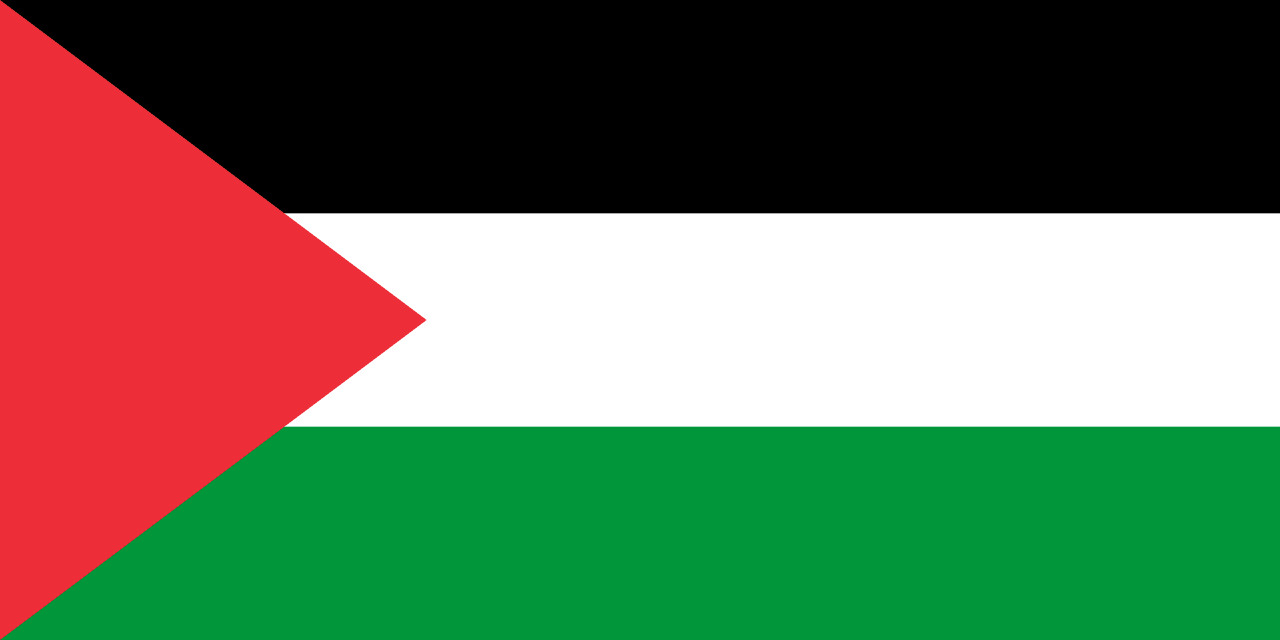
Palestine is a land where some of humanity's oldest stories were written, a place that has been a crossroads of empires, faiths, and cultures for thousands of years. From the terraced olive groves of the West Bank hills to the crowded coastline of Gaza, this is a small territory carrying an enormous weight of history. These ten facts reveal a Palestine that goes far beyond the headlines — one of ancient cities, fierce culinary pride, embroidered heritage, and a people deeply attached to their land.
1. Two Disconnected Territories Make Up Palestine
Unlike most countries, Palestine is not a single contiguous block of land. It consists of two separate territories: the West Bank, a landlocked, hilly region bordering Jordan, and the Gaza Strip, a narrow coastal sliver along the Mediterranean Sea roughly 41 kilometres long. The two are divided by Israeli territory and cannot be reached from one another without crossing it. This unusual geography shapes nearly every aspect of Palestinian life, from politics and trade to family connections. The West Bank is dotted with ancient hill towns, while Gaza is one of the most densely populated places on Earth. To explore the territory in more depth, see our country guide.
2. Jericho May Be the Oldest City on Earth
Located in the West Bank near the Jordan River, Jericho is widely considered one of the oldest continuously inhabited cities in the world, with archaeological layers stretching back more than 10,000 years. Excavations have revealed Neolithic stone towers and walls predating the pyramids by thousands of years. Sitting more than 250 metres below sea level, Jericho is also among the lowest permanently inhabited places on the planet. Fed by natural springs in an otherwise arid landscape, it became an oasis of agriculture in antiquity. Walking its ruins, you are quite literally standing at the dawn of urban civilization, a humbling reminder of just how deep this region's roots run.
3. Ramallah Is the Administrative Heart
Ramallah serves as the de facto administrative capital, home to the Palestinian Authority, government ministries, and a lively cultural scene. Just north of Jerusalem, the city has transformed in recent decades into a hub of cafes, universities, NGOs, and nightlife unusual for the region. However, Palestinians regard East Jerusalem (Al-Quds) as their rightful capital, a city sacred to Muslims, Christians, and Jews alike. This dual identity — Ramallah for practical governance, Jerusalem for aspiration — reflects the complicated political reality Palestinians navigate daily. Ramallah's relative openness has made it a magnet for artists, entrepreneurs, and young professionals from across the West Bank.
4. Bethlehem Draws Millions of Pilgrims
Just south of Jerusalem lies Bethlehem, revered by Christians worldwide as the birthplace of Jesus. The Church of the Nativity, built over the cave traditionally marking the spot, is one of the oldest continuously operating churches in the world and a UNESCO World Heritage Site. Every December, Bethlehem's Manger Square fills with pilgrims and visitors for Christmas celebrations. Palestine is home to a significant and ancient Christian community, one of the oldest in existence, alongside its Muslim majority. This religious diversity has shaped the culture for centuries, and Bethlehem remains a powerful symbol of Palestine's role at the spiritual heart of three major world faiths.
5. The Olive Tree Is a National Symbol
Few things are as central to Palestinian identity as the olive tree. Some groves in the hills contain trees said to be more than a thousand years old, passed down through generations of farming families. The annual olive harvest in October and November is a cherished social event, with entire families gathering to pick by hand. Olive oil is a kitchen staple, but the tree also carries deep emotional weight as a symbol of rootedness, resilience, and connection to the land. Palestinian olive oil and the related soap industry of Nablus — famous for its centuries-old Nabulsi soap made from olive oil — are sources of immense cultural pride.
6. Palestinian Embroidery Is UNESCO-Recognized
The art of tatreez, traditional Palestinian cross-stitch embroidery, was inscribed on UNESCO's list of Intangible Cultural Heritage in 2021. Passed down from mother to daughter, tatreez decorates the flowing thobe dresses worn by Palestinian women, with distinct patterns and color schemes historically signaling a woman's village or region of origin. A bride's dowry once included intricately embroidered garments representing months of careful work. Today the craft has become a powerful emblem of cultural continuity, appearing on everything from formal gowns to modern fashion and protest art. Each stitch carries a story, making tatreez a living archive of Palestinian villages, family lineages, and regional identities.
7. The Cuisine Is Bold, Fresh, and Shared
Palestinian food is a celebration of the Levantine table. The national dish, musakhan, layers roasted chicken with caramelized onions, tangy sumac, and pine nuts over flatbread soaked in olive oil. Another beloved dish is maqluba, an upside-down pot of rice, meat, and fried vegetables dramatically flipped onto a platter at the table. Hummus, falafel, freekeh, and stuffed grape leaves are everyday staples, while desserts like knafeh — a sweet, cheese-filled pastry doused in syrup and famously associated with Nablus — are regional treasures. Meals are communal affairs, generous and unhurried, reflecting the deep tradition of hospitality that defines Palestinian social life.
8. The Dead Sea Borders the West Bank
The eastern edge of the West Bank meets the Dead Sea, the lowest point on Earth's land surface at roughly 430 metres below sea level. Its water is so saturated with salt and minerals that swimmers float effortlessly on the surface — sinking is nearly impossible. The mineral-rich mud has been prized for its skin benefits since antiquity, with even Cleopatra reputedly seeking its cosmetics. The surrounding Judean Desert is a stark, dramatic landscape of canyons and cliffs. This region also includes the area where the famous Dead Sea Scrolls were discovered, among the most important archaeological finds of the twentieth century.
9. Arabic Is the Language, With Distinct Dialects
The official language is Arabic, and Palestinians speak a Levantine dialect closely related to that of Jordan, Lebanon, and Syria. Within Palestine itself, accents and vocabulary shift noticeably between regions, and even between rural villages and urban centers. Many Palestinians, especially the large diaspora communities scattered across the globe, also speak English, Spanish, or other languages depending on where they have settled. Language is a fiercely guarded part of identity, and folk poetry, proverbs, and oral storytelling remain vibrant traditions. The Palestinian dialect is instantly recognizable to other Arabic speakers and carries its own distinctive musicality, humor, and turns of phrase.
10. A Global Diaspora Larger Than the Homeland
One of the most striking facts about Palestine is that more Palestinians live outside the territories than within them. Following the events of 1948 and subsequent decades, a vast diaspora formed across Jordan, Lebanon, Syria, the Gulf states, the Americas, and Europe. This global community has produced renowned scholars, artists, athletes, and entrepreneurs while maintaining strong ties to ancestral villages, many of which no longer exist on the map. The keffiyeh scarf and the flag have become internationally recognized symbols carried by this dispersed nation. Despite separation by thousands of kilometres, a shared culture, cuisine, and collective memory keep Palestinian identity remarkably cohesive worldwide.
Frequently Asked Questions
What is the capital of Palestine?
Ramallah functions as the administrative capital and seat of the Palestinian Authority, hosting government institutions and ministries. However, Palestinians consider East Jerusalem (Al-Quds) to be their rightful and historic capital, a city of profound religious and political significance.
What is Palestine famous for?
Palestine is famous for its ancient holy sites such as Bethlehem and Jericho, its rich cuisine including musakhan and knafeh, its iconic olive groves, and its UNESCO-recognized tatreez embroidery. It is also globally known as a land sacred to three major world religions.
Is it true Palestine has one of the oldest cities in the world?
Yes. Jericho, in the West Bank, is widely regarded as one of the oldest continuously inhabited cities on Earth, with human settlement dating back over 10,000 years. It also sits among the lowest-elevation towns anywhere on the planet.
Conclusion
Palestine is far more than a place in the news — it is a land of ancient cities, terraced olive hills, sacred shrines, and a culture stitched together across continents by memory and tradition. From the floating waters of the Dead Sea to the embroidered patterns of a single thobe, every detail tells a story stretching back millennia. These ten facts only begin to capture the depth of a people whose identity remains vibrant and unbroken, both at home and across a worldwide diaspora.
