
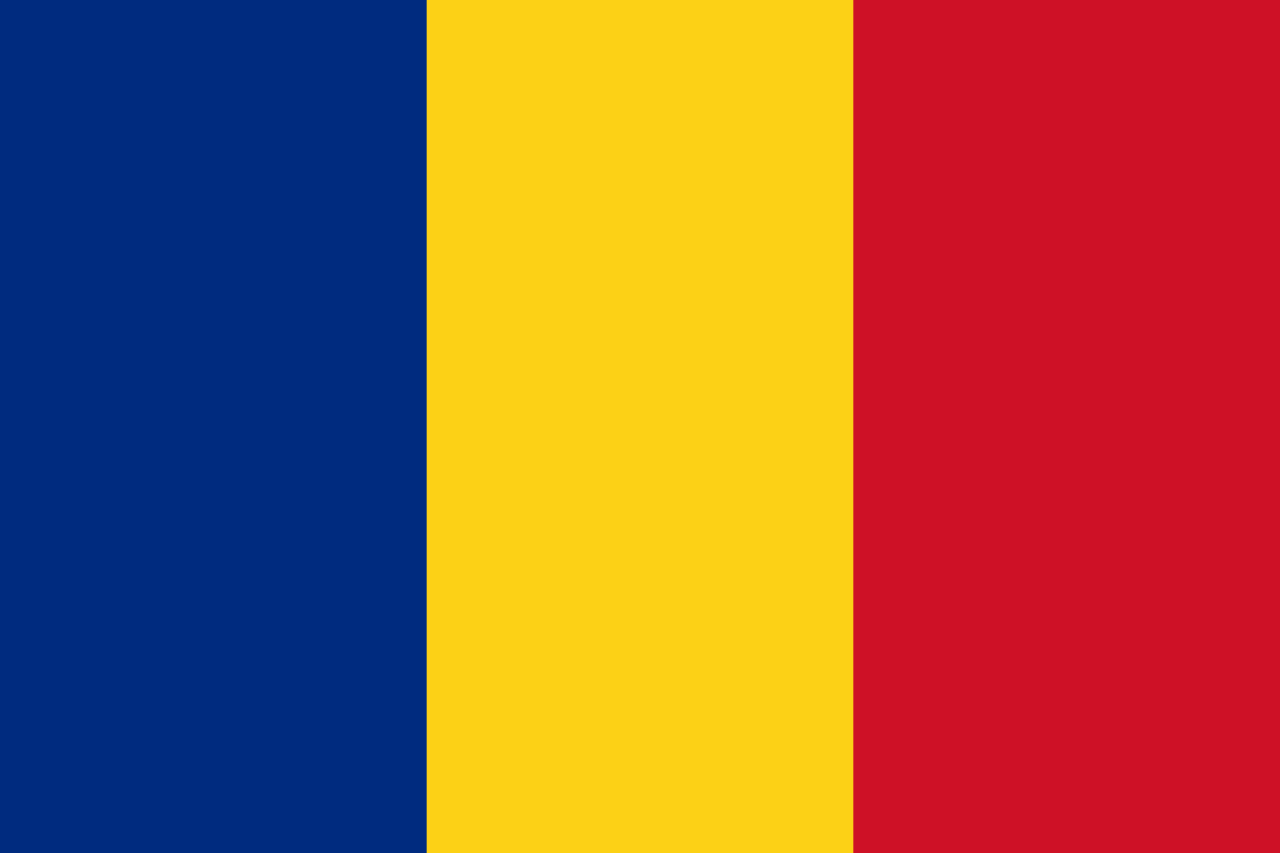
Wedged between the Carpathian Mountains, the Danube River, and the Black Sea, Romania is one of Europe's most underrated treasures — a land where painted monasteries, medieval Saxon towns, and pristine wilderness sit side by side. It gave the world the Dracula legend, gymnast Nadia Comaneci, and the heaviest building on the planet. These ten facts go far beyond the postcard clichés to reveal why this Eastern European nation is endlessly fascinating.
1. The Carpathian Mountains Cut Romania Into Three Worlds
The Carpathian Mountains sweep through Romania in a giant arc, slicing the country into three historic regions: Transylvania in the center and northwest, Wallachia in the south, and Moldavia in the northeast. These ranges cover roughly a third of the country and shelter some of Europe's last untouched old-growth forests. The mountains have always been more than scenery — they shaped trade routes, defended communities, and bred a culture of mountain shepherds whose traditions survive today.
Romania's geography is remarkably balanced, split almost evenly between mountains, hills, and plains. To dig deeper into how this terrain shaped the nation, see our country guide.
2. Bucharest Was Once Called "Little Paris"
Romania's capital, Bucharest, earned the nickname "Little Paris of the East" in the early 20th century, thanks to its elegant Belle Epoque architecture and even its own Arcul de Triumf, a triumphal arch echoing the famous Paris landmark. The city of nearly two million people blends grand boulevards, art-nouveau villas, and stark communist-era apartment blocks.
Bucharest's name is tied to the legend of a shepherd named Bucur, whose name carries the root for "joy." Today it is the political, financial, and cultural heart of the country, home to a buzzing cafe scene, sprawling parks, and a nightlife reputation that draws visitors from across the continent.
3. Around 19 Million People Call Romania Home
Romania has a population of roughly 19 million, making it one of the larger nations in Eastern Europe. The vast majority are ethnic Romanians, but the country is also home to significant Hungarian and Roma communities, plus smaller groups of Germans, Ukrainians, and others — a legacy of centuries of shifting empires and migration.
Like much of the region, Romania has experienced steep population decline since 1990, driven by low birth rates and large-scale emigration after the country joined the European Union in 2007. Millions of Romanians now live and work abroad in Italy, Spain, Germany, and the UK, sending home remittances that form a meaningful part of the economy.
4. Romanian Is a Latin Language Surrounded by Slavs
Here is a linguistic surprise: Romanian is a Romance language, descended from the Latin spoken by Roman colonists nearly 2,000 years ago. That makes it a cousin of Italian, French, Spanish, and Portuguese — yet it sits in a sea of Slavic and Hungarian-speaking neighbors. Romanians often joke that they are "a Latin island in a Slavic ocean."
Roughly 1,700 years of contact left Romanian peppered with Slavic, Turkish, Greek, and Hungarian loanwords, giving it a distinct flavor. Still, an Italian speaker can often grasp the gist of written Romanian. The language is a powerful symbol of national identity and a living link to the country's ancient Roman roots.
5. The Romans Conquered Dacia — and Left Their Name Behind
Long before "Romania" existed, the land was home to the Dacians, a fierce people whose kingdom resisted Rome for years. In 106 AD, Emperor Trajan finally conquered Dacia after brutal wars, and the victory was so prized it was carved in spiraling detail onto Trajan's Column in Rome.
The Roman occupation lasted under two centuries, but its cultural imprint was permanent: the Latin language took root, and the very name "Romania" means "land of the Romans." After Rome withdrew, waves of Goths, Huns, Slavs, and others swept through, yet the Latin-derived identity endured — a remarkable example of cultural survival through centuries of upheaval.
6. Bran Castle Inspired the World's Most Famous Vampire
Perched on a rocky crag in Transylvania, Bran Castle is marketed worldwide as "Dracula's Castle." The connection to Bram Stoker's 1897 novel is loose — Stoker never visited Romania — but the brooding fortress fits the gothic imagination perfectly. The fictional Count Dracula was partly inspired by Vlad III, known as Vlad the Impaler, a 15th-century Wallachian ruler infamous for his savage punishments.
Vlad was a national hero who defended his land against the Ottoman Empire, and Romanians remember him very differently from the Hollywood vampire. The real Vlad likely never lived at Bran, but the castle remains one of Romania's biggest draws. Discover more national symbols in our piece on the Romanian flag.
7. The Palace of the Parliament Is the Heaviest Building on Earth
Bucharest is home to a colossal record-holder: the Palace of the Parliament, the heaviest building in the world and one of the largest administrative buildings anywhere. Commissioned by communist dictator Nicolae Ceausescu in the 1980s, it has around 1,100 rooms, vast marble halls, and crystal chandeliers weighing tonnes.
Its construction was ruinous — entire historic neighborhoods and churches were bulldozed to make room, and the cost drained the economy as ordinary Romanians endured shortages. Ceausescu was overthrown and executed in the 1989 revolution before the palace was even finished. Today it houses Romania's parliament and stands as both an architectural marvel and a sobering monument to the excesses of dictatorship.
8. Sarmale and Mamaliga: Comfort Food With Soul
Romanian cuisine is hearty, rustic, and built around the seasons. The unofficial national dish is sarmale — cabbage or vine leaves stuffed with minced meat and rice, slow-cooked for hours and served with a dollop of sour cream and a side of mamaliga, a polenta-like cornmeal staple that once fed the peasantry.
Street food fans flock to mici (also called mititei), skinless grilled sausages of seasoned minced meat eaten with mustard and bread. For dessert, there is cozonac, a sweet braided bread laced with walnuts and cocoa, traditionally baked at Christmas and Easter. Wash it all down with tuica, a potent plum brandy that no Romanian celebration is complete without.
9. Europe's Largest Population of Brown Bears Roams the Carpathians
Romania's wild heart beats in the Carpathians, which shelter the largest populations of brown bears, gray wolves, and Eurasian lynx in Europe outside Russia. Thousands of bears roam these forests, alongside chamois, red deer, and wildcats — a level of biodiversity that has vanished from most of the continent.
The country also boasts the Danube Delta, a UNESCO World Heritage Site and one of the best-preserved wetlands in Europe, where the Danube River fans out before reaching the Black Sea. It hosts more than 300 bird species and is a vital stopover for migrating pelicans and herons. Conservationists prize Romania as one of Europe's last great strongholds of true wilderness.
10. Nadia Comaneci Scored the First Perfect 10 in Olympic History
At the 1976 Montreal Olympics, a 14-year-old Romanian gymnast named Nadia Comaneci stunned the world by scoring a perfect 10.0 on the uneven bars — the first ever awarded in Olympic gymnastics. The scoreboard, never built to display a perfect score, flashed "1.00" because it couldn't show 10.0.
Comaneci went on to earn seven perfect tens and three gold medals at those Games, becoming a global icon and inspiring generations of gymnasts. Her achievement cemented Romania's reputation as a gymnastics powerhouse, a tradition the nation has carried proudly for decades. To this day, "a perfect 10" remains synonymous with flawless excellence.
Frequently Asked Questions
What is the capital of Romania?
The capital of Romania is Bucharest, the country's largest city with roughly two million residents. It is the political, economic, and cultural center, famous for its Belle Epoque architecture, the enormous Palace of the Parliament, and a lively cafe and nightlife scene.
What is Romania most famous for?
Romania is best known for Transylvania and the Dracula legend tied to Bran Castle, its dramatic Carpathian Mountains, the painted monasteries of Bucovina, and its rich wildlife. It is also celebrated for gymnast Nadia Comaneci and the colossal Palace of the Parliament in Bucharest.
Why do Romanians speak a Latin language?
Romanian descends from the Latin of Roman colonists who settled the province of Dacia after Emperor Trajan's conquest in 106 AD. Despite being surrounded by Slavic and Hungarian speakers, Romania kept its Latin-rooted tongue, making it a "Latin island" and a living link to its ancient Roman heritage.
Conclusion
From the perfect 10 that broke an Olympic scoreboard to the bears prowling its mountain forests, Romania is a country full of surprises that defy easy stereotypes. It blends ancient Roman roots, gothic legends, communist-era grandeur, and breathtaking nature into one captivating whole. These ten facts only begin to reveal a nation well worth exploring — so keep your curiosity alive and dig deeper into this remarkable corner of Europe.