
Tanzania is a country of staggering superlatives: the roof of Africa rises here, the planet's largest land migration thunders across its plains, and a thousand-year-old trading culture still hums along its Indian Ocean shore. It is a place where snow-capped peaks sit just a few hundred kilometres from coral reefs, and where more than 120 ethnic groups live together under one unifying language. These ten facts go far beyond the guidebook clichés to reveal what makes this East African giant genuinely unforgettable.
1. Kilimanjaro Is the Highest Free-Standing Mountain on Earth
Mount Kilimanjaro towers to 5,895 metres, making it Africa's tallest peak and the highest free-standing mountain in the world, meaning it is not part of a connected range. What stuns visitors most is its sheer variety: climbers pass through tropical rainforest, alpine moorland, and barren lunar-like desert before reaching glaciers that sit almost exactly on the equator. The mountain is actually a dormant volcano made of three cones, with the summit named Uhuru Peak, "uhuru" meaning freedom in Swahili. Roughly 30,000 people attempt the climb each year, and unlike most major summits, no technical climbing gear is required, only stamina and patience as the body adjusts to the thinning air.
2. The Serengeti Hosts the Greatest Wildlife Show on Earth
Each year, more than 1.5 million wildebeest, joined by hundreds of thousands of zebra and gazelle, sweep across the Serengeti in a circular journey known as the Great Migration. Driven by the search for fresh grass and water, the herds brave crocodile-filled rivers and prowling lions and cheetahs in one of nature's most dramatic spectacles. The word "serengeti" comes from the Maasai term siringet, meaning "the place where the land runs on forever." This endless plain is not just a tourist draw; it is a living laboratory that has shaped our scientific understanding of predator-prey dynamics and ecosystem balance across vast scales.
3. The Ngorongoro Crater Is a World Within a Wall
The Ngorongoro Crater is the world's largest intact volcanic caldera, formed when a giant volcano collapsed on itself roughly two to three million years ago. Its steep walls enclose a 260-square-kilometre floor that functions like a natural enclosure, sheltering an extraordinary density of wildlife including lions, elephants, hippos, and some of the last remaining black rhinos in the region. Remarkably, Maasai herders still graze their cattle alongside this wildlife, one of the few places on Earth where people and big game share protected land. Nearby Olduvai Gorge, often called the "Cradle of Mankind," has yielded some of the oldest known fossils of early humans.
4. Dodoma Is the Capital, but Dar es Salaam Is the Beating Heart
Dodoma became Tanzania's official capital in 1996, chosen for its central location as part of a plan to spread development inland. Yet the coastal metropolis of Dar es Salaam remains the country's largest city, its commercial engine, and its main port, home to several million people. Dar es Salaam, whose name derives from Arabic for "abode of peace," buzzes with markets, ferries to Zanzibar, and a fast-growing skyline. You can dive deeper into the geography and regions of the nation in our country guide, which maps out how the political and economic centres balance one another.
5. Swahili Unites a Nation of More Than 120 Ethnic Groups
Tanzania is home to over 120 distinct ethnic groups, yet it has largely avoided the ethnic conflict seen in some neighbouring nations. A key reason is Swahili, a Bantu language enriched by Arabic, Persian, and later English vocabulary through centuries of coastal trade. Promoted by founding president Julius Nyerere as a tool of national unity, Swahili is spoken by virtually the entire population as a common tongue, with English used in higher education and business. Swahili has even gone global: words like safari (journey), jambo (hello), and the famous hakuna matata (no worries) have entered everyday English.
6. Zanzibar Was Once the World's Spice and Trade Hub
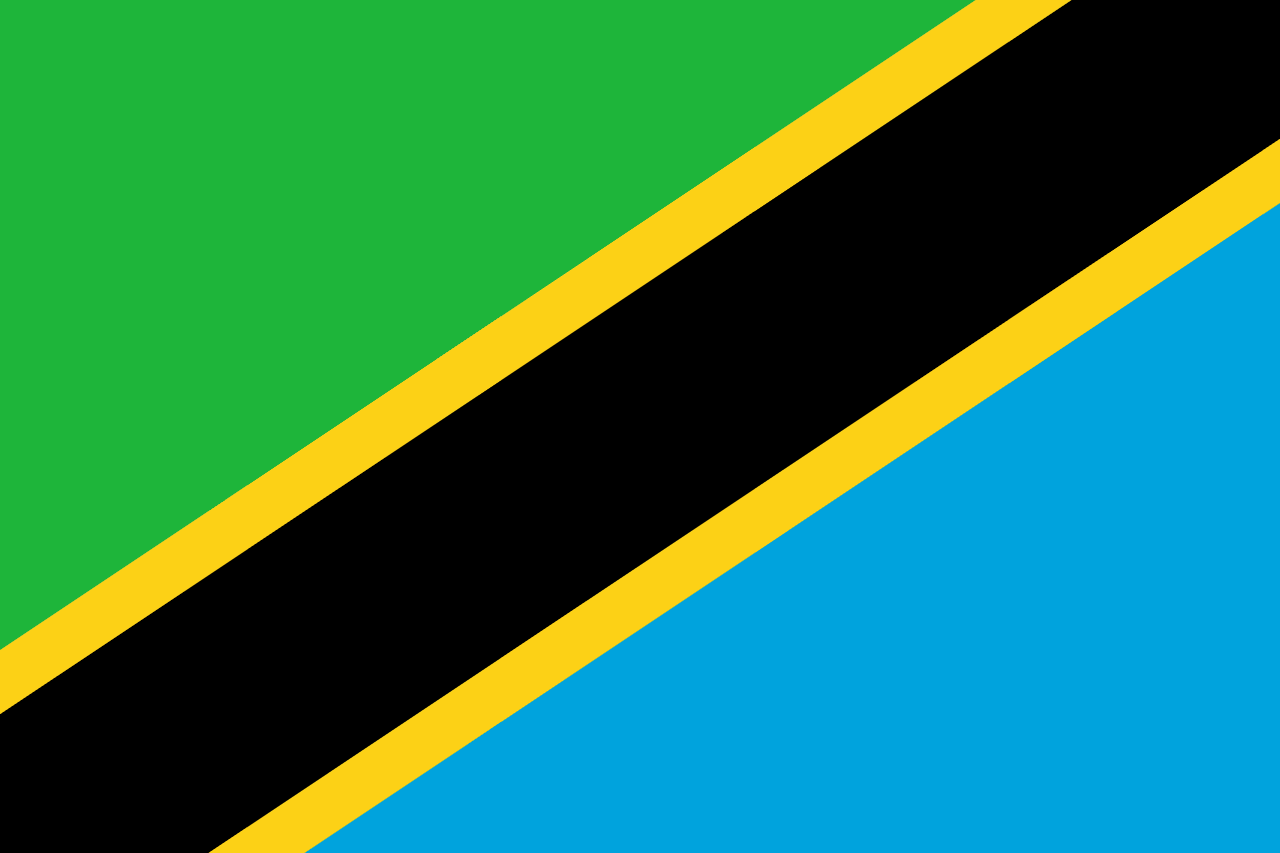
The semi-autonomous archipelago of Zanzibar was, for centuries, one of the most important trading centres in the Indian Ocean. Arab, Persian, Indian, and European traders met in its winding alleys to exchange cloves, ivory, and, tragically, enslaved people. Stone Town, the old quarter of Zanzibar City, is a UNESCO World Heritage Site famous for its carved wooden doors and fusion architecture. Today the islands are nicknamed the "Spice Islands" for the cloves, nutmeg, and cinnamon still grown there. To see how this layered identity is reflected nationally, take a look at the symbolism behind the Tanzanian flag.
7. The Country Was Born from a 1964 Union
The name "Tanzania" itself tells a story of unity. In 1964, the newly independent mainland nation of Tanganyika merged with the islands of Zanzibar to form the United Republic of Tanzania, blending parts of both names. Tanganyika had gained independence from British rule in 1961 under Julius Nyerere, who became a towering figure in pan-African politics. Nyerere, affectionately called Mwalimu (teacher), pursued a socialist development philosophy known as Ujamaa, emphasising self-reliance and community. While its economic results were mixed, his emphasis on national identity over tribal division left a lasting mark on the country's remarkable social stability.
8. Lake Tanganyika Is the World's Longest Freshwater Lake
Tanzania borders three of Africa's Great Lakes, including Lake Victoria, the continent's largest, and Lake Tanganyika, which holds astonishing records of its own. Lake Tanganyika is the longest freshwater lake on the planet, stretching some 670 kilometres, and the second deepest lake anywhere, plunging over 1,400 metres. It is also one of the oldest lakes on Earth, and its isolated waters have evolved hundreds of unique fish species, especially colourful cichlids prized by aquarium enthusiasts worldwide. It was on this lake's shore, at Ujiji, that explorer Henry Morton Stanley reportedly greeted the missing missionary with the famous line, "Dr. Livingstone, I presume?"
9. Ugali and Nyama Choma Anchor the Table
Tanzanian food reflects its crossroads geography. The everyday staple is ugali, a stiff porridge made from maize flour, scooped by hand and used to mop up stews and grilled meats. Nyama choma, simply meaning "grilled meat," is the beloved social food, often shared among friends over long, relaxed meals. The coast and Zanzibar add a richer, spicier layer with dishes like pilau and biryani rice fragrant with cloves and cardamom, coconut-based curries, and the famous street snack "Zanzibar pizza," a stuffed, fried flatbread. Sweet, milky chai tea and locally grown coffee round out a cuisine shaped by African, Arab, and Indian influences alike.
10. It Sits on the Edge of the Great Rift Valley
Much of Tanzania's dramatic scenery owes its existence to the East African Rift, a colossal geological fault where the continent is slowly tearing apart. This rifting created the deep lakes, towering volcanoes, and escarpments that define the landscape. One of the most haunting examples is Ol Doinyo Lengai, an active volcano sacred to the Maasai whose name means "Mountain of God." It erupts an unusual, relatively cool black lava that turns white as it weathers. Nearby Lake Natron, coloured red by salt-loving microorganisms, is so caustic it can calcify dead animals, yet it remains the most important breeding ground for East Africa's lesser flamingos.
Frequently Asked Questions
What is the capital of Tanzania?
The official capital is Dodoma, located in the centre of the country and designated the capital in 1996. However, Dar es Salaam on the Indian Ocean coast remains the largest city, the main commercial and financial centre, and the busiest port.
What is Tanzania most famous for?
Tanzania is best known for Mount Kilimanjaro, the highest peak in Africa, and for its spectacular wildlife, especially the Great Migration across the Serengeti and the densely populated Ngorongoro Crater. The tropical spice islands of Zanzibar are another world-famous draw.
Can you really see snow on the equator in Tanzania?
Yes. Although Tanzania sits near the equator, the summit of Mount Kilimanjaro is high enough to support glaciers and permanent ice. These ancient ice fields are shrinking due to climate change, but for now climbers can still stand among genuine equatorial snow.
Conclusion
From the glaciers of Kilimanjaro to the spice-scented alleys of Zanzibar, Tanzania packs an entire continent's worth of wonders into a single nation. Its unifying language, peaceful blend of cultures, and unmatched wildlife make it one of the most rewarding countries on Earth to explore. These ten facts are only a starting point, an invitation to keep discovering everything this extraordinary corner of East Africa has to offer.