
The United States is a country built on superlatives: the world's largest economy, some of its deepest canyons and tallest trees, and a cultural output that echoes from Hollywood to your phone's app store. Stretching from the Atlantic to the Pacific and reaching far north into the Arctic and out across the Pacific, it is a nation of staggering variety, where a single road trip can carry you from desert dunes to glaciers. Here are ten facts that capture just how remarkable this country really is.
1. It Sprawls Across an Entire Continent and Beyond
The United States is the third- or fourth-largest country on Earth by area, covering roughly 3.8 million square miles and stretching about 2,800 miles coast to coast. Its territory is so wide that it spans six standard time zones, from the Eastern Seaboard to Hawaii in the central Pacific. Within those borders you'll find the scorching depths of Death Valley, the only U.S. point below sea level on land, and the towering peak of Denali in Alaska, the highest mountain in North America. Add subtropical Florida, the Rocky Mountains, the Great Plains, and Pacific rainforests, and you have a country that contains almost every climate and landscape imaginable. To dig deeper into its regions, see our country guide.
2. Washington, D.C. Was Built to Be a Capital
Unlike most world capitals that grew organically over centuries, Washington, D.C. was deliberately planned and constructed to serve as the seat of government. Founded in 1790 on land ceded by Maryland and Virginia along the Potomac River, it was designed by French-born engineer Pierre Charles L'Enfant with grand diagonal avenues and sweeping vistas. Crucially, the city sits within the District of Columbia, which belongs to no state, a compromise so that no single state would hold power over the national government. Today it houses the White House, the Capitol, the Supreme Court, and the Smithsonian museums, yet its roughly 700,000 residents famously have no voting representation in Congress.
3. A Nation of Immigrants and More Than 330 Million People
With a population well over 330 million, the United States is the third most populous country in the world, behind only India and China. What truly defines it, though, is diversity: it is often called a "nation of immigrants," with residents tracing their roots to virtually every country on Earth. Around 99 percent of Americans descend from people who arrived within the last few centuries, while Native American nations represent the land's original inhabitants. This blend has produced an extraordinary cultural mosaic, from Chinatowns and Little Italys to vast Latino communities, shaping American food, music, language, and festivals in ways few other nations can match.
4. There's No Official National Language
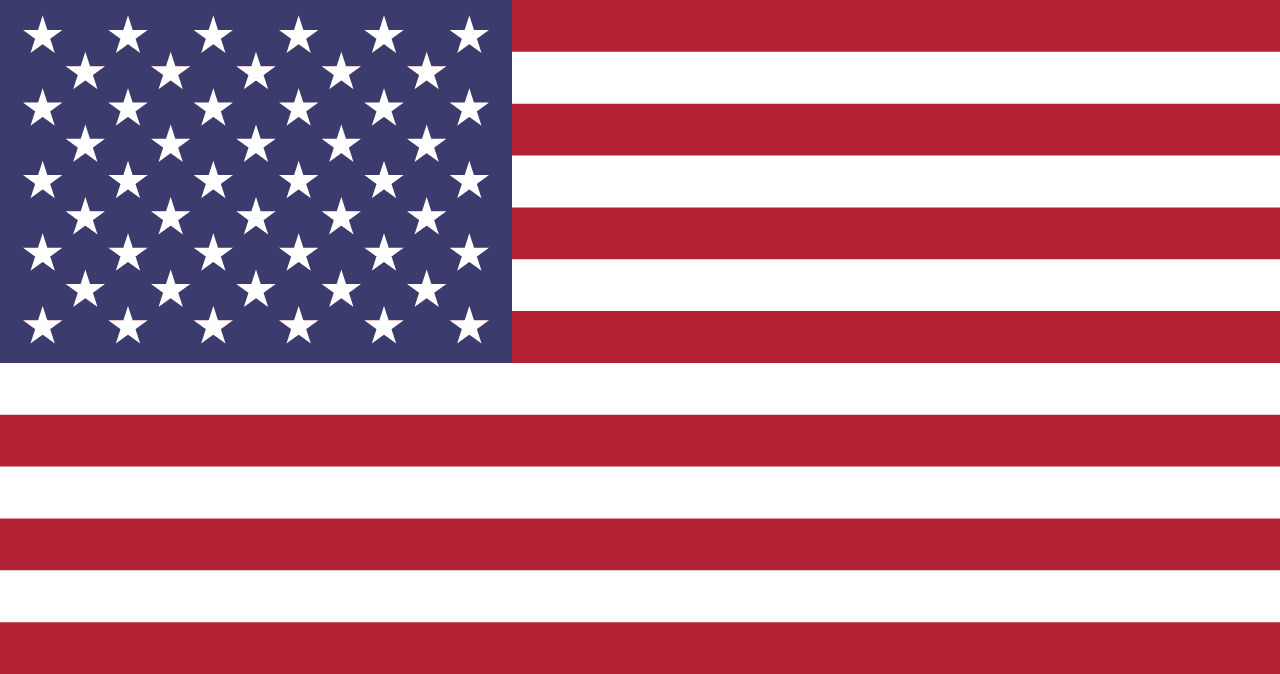
Despite English being spoken by the vast majority of Americans, the United States has historically had no official language at the federal level. English functions as the de facto national tongue, but the country is profoundly multilingual. Spanish is the second most spoken language by a wide margin, with tens of millions of speakers, and cities like Miami and Los Angeles operate fluently in both. Beyond that, you'll hear Chinese, Tagalog, Vietnamese, Arabic, and hundreds of Indigenous languages such as Navajo. This linguistic richness reflects the country's immigrant heritage, and you can explore its national symbols, including the Stars and Stripes, in our piece on the American flag.
5. It Started With Thirteen Rebellious Colonies
The United States was born on July 4, 1776, when thirteen British colonies along the Atlantic coast declared their independence. After winning the Revolutionary War, the founders drafted the U.S. Constitution in 1787, which remains the world's oldest written national constitution still in use. From those thirteen original states, the country expanded westward through purchases, treaties, and annexations, including the enormous 1803 Louisiana Purchase that roughly doubled its size overnight. The number of states grew steadily until reaching the current fifty in 1959, when Alaska and Hawaii joined the union. That growth is why the flag's stars increased over time while the thirteen stripes stayed fixed.
6. The World's Largest Economy
The United States has the largest economy on the planet by nominal gross domestic product, generating tens of trillions of dollars in output each year. Its strength lies in remarkable diversity: world-leading technology firms in Silicon Valley, finance hubs in New York, energy production in Texas, entertainment in California, and vast agricultural output across the Midwest. The U.S. dollar serves as the world's primary reserve currency, used in a large share of global trade and held by central banks everywhere. Brands born in America, from Coca-Cola and McDonald's to Apple and Google, have become household names across virtually every nation on Earth.
7. The Birthplace of National Parks
In 1872, the United States created Yellowstone, widely regarded as the world's first true national park, pioneering an idea now copied across the globe. Today the country protects more than 60 national parks plus hundreds of monuments, forests, and seashores. Among them are the mile-deep Grand Canyon carved by the Colorado River, the granite cliffs of Yosemite, and the giant sequoias of California, the largest trees on Earth by volume. These wild spaces shelter iconic wildlife including the American bison, which once numbered in the tens of millions, the grizzly bear, and the bald eagle, the national bird that has rebounded dramatically from the brink of extinction.
8. Pop Culture's Global Superpower
Few countries shape global culture quite like the United States. Hollywood has dominated cinema for over a century, while American music genres, from jazz, blues, and country to rock and roll and hip-hop, were invented here and now play everywhere. Television formats, streaming platforms, and video games largely originate from American studios. The country also gave the world cultural institutions that feel universal, from Disney theme parks to the Super Bowl, an event that draws over 100 million viewers in the U.S. alone. This cultural reach, often called "soft power," means people in distant countries often feel they know America before ever visiting.
9. A Land of Distinctly American Food
American cuisine is essentially a delicious fusion of the world's immigrant traditions, reinvented on a grand scale. The hamburger, hot dog, and the now-global pizza slice all became American staples, while Southern barbecue, New England clam chowder, Tex-Mex, and Cajun gumbo showcase deep regional identities. Apple pie is so iconic it inspired the phrase "as American as apple pie." The country also pioneered fast food, with McDonald's and the drive-through reshaping how the world eats. Thanksgiving, celebrated each November with roast turkey and pumpkin pie, remains one of the most cherished national food traditions, gathering families around the table for a uniquely American feast.
10. Sports That Stop the Country
Americans are passionate about sports that are largely homegrown. American football reigns supreme, with the National Football League's Super Bowl functioning as an unofficial national holiday. Baseball, nicknamed "America's pastime," fills summer evenings, while basketball, invented in Massachusetts in 1891, has exploded into a global phenomenon through the NBA. The country has hosted the Summer and Winter Olympics multiple times and consistently tops the all-time Olympic medal count. College sports are uniquely huge here, too, with university football and basketball games drawing crowds of tens of thousands and inspiring fierce loyalties that can span entire lifetimes.
Frequently Asked Questions
What is the capital of the United States?
The capital is Washington, D.C., located along the Potomac River within the District of Columbia, which is not part of any state. It is home to the White House, the U.S. Capitol, the Supreme Court, and the Smithsonian museums. The largest city, however, is New York City, not the capital.
What is the United States most famous for?
The United States is famous for many things: Hollywood movies, its global tech giants, the world's largest economy, iconic landmarks like the Statue of Liberty and the Grand Canyon, and being a "melting pot" of cultures. It is also known for inventing national parks and exporting pop culture worldwide.
Does the United States really have no official language?
Historically, yes. At the federal level English has long served as the de facto language without official status, though most government business is conducted in English. Many individual states have declared English official, while the country remains deeply multilingual, with Spanish as the widely spoken second language.
Conclusion
From planned capitals and pioneering national parks to a cuisine and culture borrowed from the whole world, the United States is a country defined by scale, diversity, and reinvention. These ten facts only begin to capture a nation that continues to shape the planet's economy, entertainment, and imagination. Keep exploring, and you'll find there is always another surprising layer to discover.
