

The Statue of Unity in Gujarat, India, stands at 182 meters (597 feet), making it the tallest statue in the world. Completed in 2018 at a cost of approximately $420 million, it depicts Sardar Vallabhbhai Patel, the first Deputy Prime Minister of India, and is nearly twice the height of the Statue of Liberty including its pedestal.
Introduction
The race to build the world's tallest statue has intensified in the 21st century, with several countries commissioning massive monuments as symbols of national pride, spiritual devotion, and engineering prowess. Most of the tallest statues have been built since 2000, reflecting advances in construction technology and a global trend toward monumental public art.
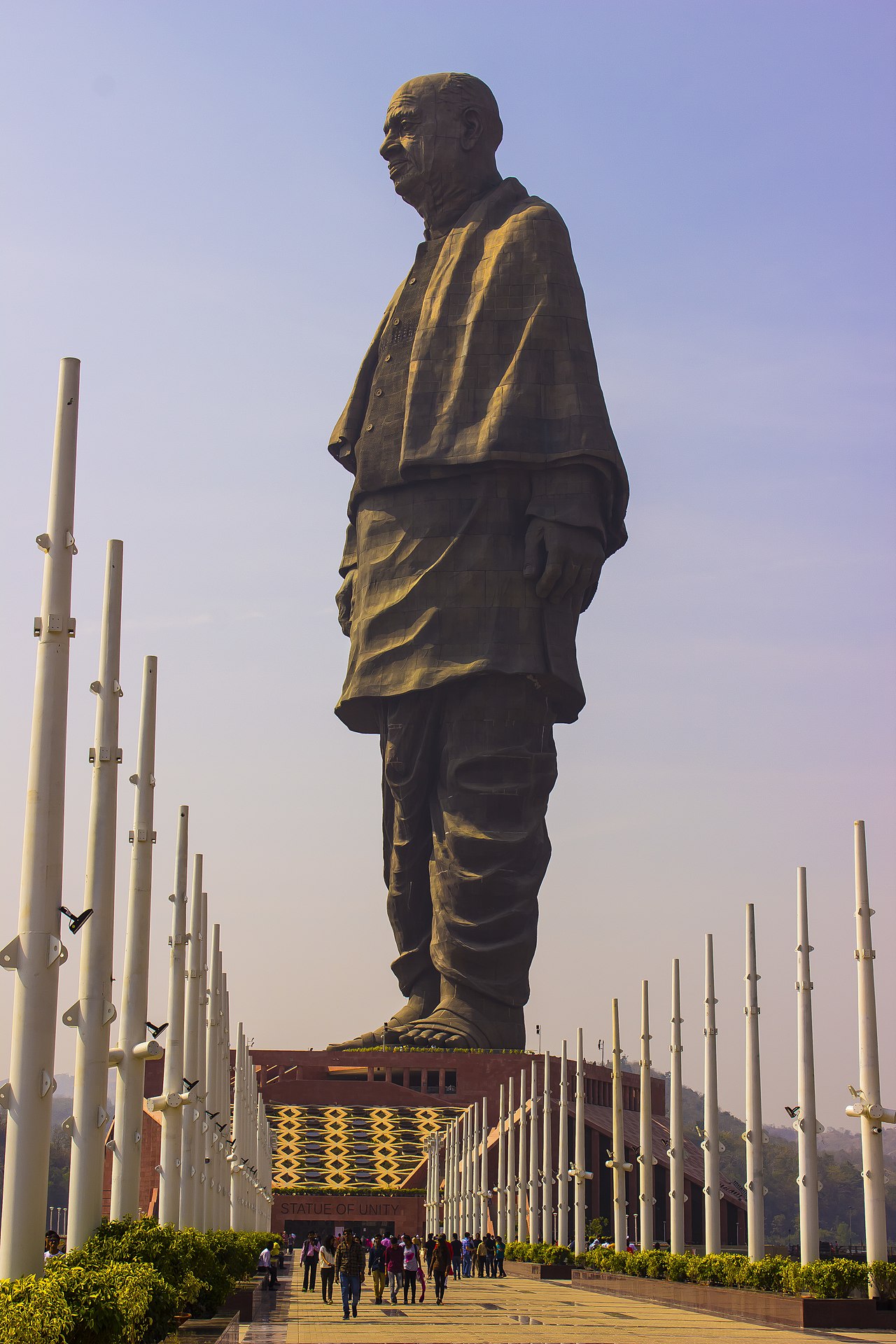
1. Statue of Unity, India — 182 m
- Height: 182 m (240 m including base)
- Location: Narmada District, Gujarat, India
- Completed: 2018
- Cost: ~$420 million
The Statue of Unity depicts Sardar Vallabhbhai Patel, who unified India's 562 princely states after independence in 1947. The statue is built on a river island in the Narmada River, facing the Sardar Sarovar Dam. Its steel frame contains 12,000 bronze panels, and the observation deck at 153 meters offers panoramic views of the surrounding landscape.
Construction involved 3,400 workers and 250 engineers working for 33 months. The statue is designed to withstand wind speeds up to 220 km/h and earthquakes up to magnitude 6.5. A high-speed elevator whisks visitors to the observation gallery in under a minute.
2. Spring Temple Buddha, China — 153 m
- Height: 153 m (208 m including base and throne)
- Location: Lushan County, Henan, China
- Completed: 2008
- Cost: ~$55 million
The Spring Temple Buddha depicts Vairocana Buddha and stands atop a 25-meter lotus throne, which sits on a 20-meter building and a 10-meter pedestal, bringing the total structure height to 208 meters. Located in Henan Province near natural hot springs that give it its name, the statue was built following the Taliban's destruction of the Bamiyan Buddhas in 2001.
The copper statue weighs approximately 1,000 tonnes and contains over 1,100 pieces of copper casting. The surrounding temple complex includes a monastery, bell tower, and landscaped grounds covering several square kilometers.
3. Laykyun Sekkya, Myanmar — 116 m
- Height: 116 m (129 m including throne)
- Location: Khatakan Taung, Sagaing Region, Myanmar
- Completed: 2008
Laykyun Sekkya is a standing Buddha statue near the city of Monywa in central Myanmar. The statue stands 116 meters tall on a 13-meter throne, making it the third-tallest statue in the world. Next to it is a 95-meter reclining Buddha, one of the largest reclining Buddha statues globally.
Visitors can enter the standing statue and climb to the top via internal staircases. Each floor is decorated with murals depicting Buddhist teachings, and windows at various levels offer views of the surrounding plains. The statue is clad in gold-colored paint, making it visible from dozens of kilometers away.
4. Ushiku Daibutsu, Japan — 110 m
- Height: 110 m (120 m including base)
- Location: Ushiku, Ibaraki Prefecture, Japan
- Completed: 1993
- Cost: ~$30 million
The Ushiku Daibutsu is a bronze statue of Amitabha Buddha standing in Ushiku, about 50 kilometers northeast of Tokyo. When completed in 1993, it was the tallest statue in the world, holding the record for 15 years. The statue's right hand is raised in the Abhaya Mudra, a gesture of fearlessness and protection.
An elevator takes visitors to an observation platform at 85 meters, offering views across the Kanto Plain. The interior contains four levels: a room of light and darkness, a room of knowledge and prayer, a room of the lotus sanctuary containing 3,400 small gold Buddha statues, and the observation room.
5. Sendai Daikannon, Japan — 100 m
- Height: 100 m
- Location: Sendai, Miyagi Prefecture, Japan
- Completed: 1991
The Sendai Daikannon is a large statue of Nyoirin Kannon (the Bodhisattva of compassion) located in Sendai, the largest city in the Tohoku region. The white statue holds a jewel in her right hand and a water vessel in her left. It stands on a hill overlooking the city and is visible from the Tohoku Shinkansen bullet train.
Inside the statue, visitors ascend through 12 floors connected by an elevator and staircases. Each floor features statues representing the 12 animals of the Chinese zodiac and 33 incarnations of Kannon. The top floor provides panoramic views of Sendai and the Pacific Ocean on clear days.
Key Facts
- The Statue of Unity at 182 m is the tallest statue in the world — nearly twice the Statue of Liberty's height.
- Seven of the world's 10 tallest statues are located in Asia.
- Most of the tallest statues were built after the year 2000.
- The Spring Temple Buddha was built partly in response to the destruction of the Bamiyan Buddhas in Afghanistan.
- Many of the tallest statues contain internal observation decks and museums.
Fun Facts
- The Statue of Unity used enough steel to build the Eiffel Tower twice over.
- Japan once held the record for the world's tallest statue three different times with three different monuments.
- The Statue of Liberty, often thought of as enormous, would rank only about 40th if measured against all statues worldwide.
- The Spring Temple Buddha weighs approximately 1,000 tonnes — roughly the same as 150 African elephants.
Final Thoughts
The world's tallest statues represent extraordinary feats of engineering and cultural ambition. From the spiritual devotion embodied in Asia's colossal Buddhas to the patriotic symbolism of India's Statue of Unity, these monuments push the limits of construction technology while reflecting the values and aspirations of the societies that built them.
Test Your Knowledge!
Think you know your geography facts? Try our interactive quiz!
Play Geography Games →