
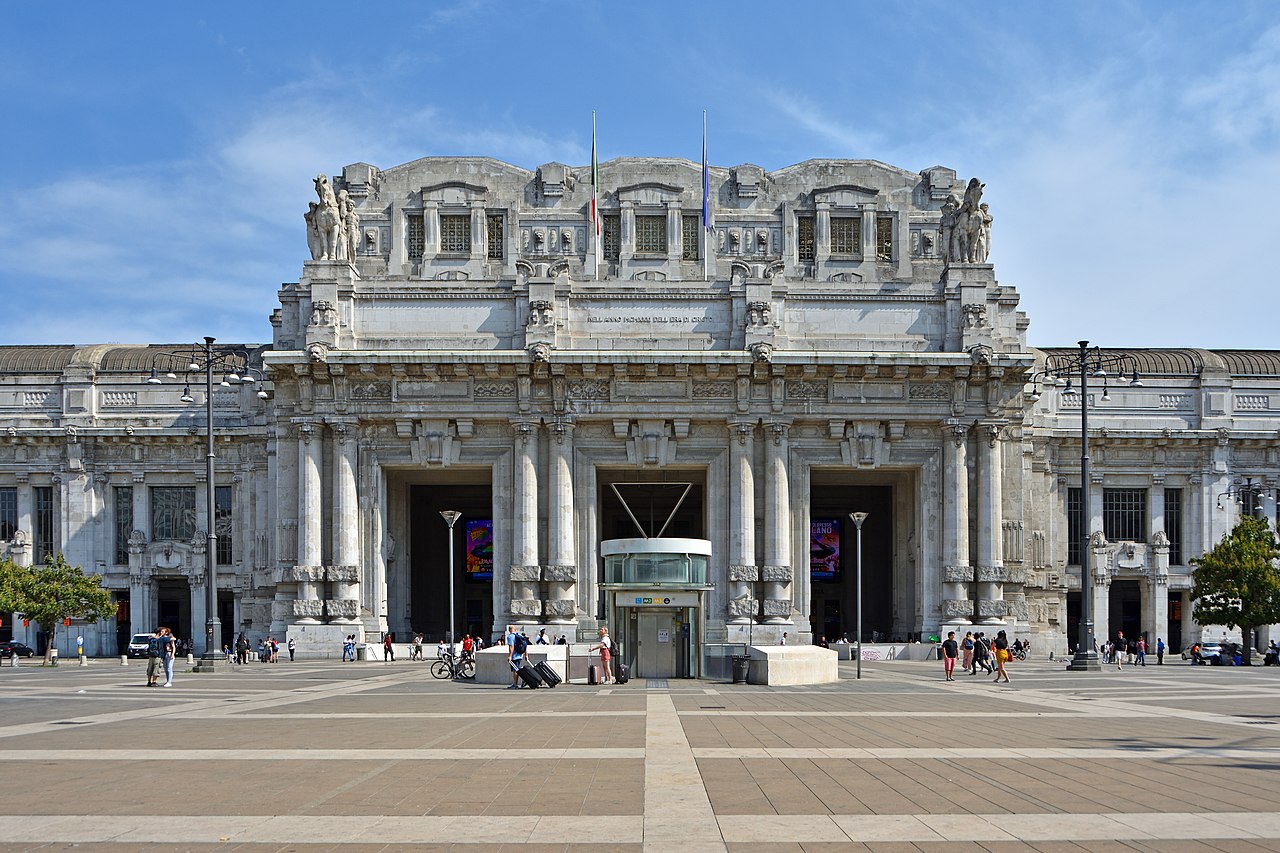
Railway stations are among the most ambitious buildings of the modern era. When railways first appeared in the 1830s, no architectural precedent existed for their stations — buildings that had to combine the engineering challenge of spanning wide train sheds with the civic ambition of creating grand public gateways. The result was a new building type that drew on classical temples, Gothic cathedrals, and Islamic palaces while incorporating the latest materials: iron, steel, and glass.
Introduction
The great railway terminals of the 19th and early 20th centuries were built to impress. They announced the power of the railway companies that built them, the ambitions of the cities that hosted them, and the promise of the industrial age itself. Many remain among the most visited and photographed buildings in their cities, their soaring train sheds and ornate facades continuing to inspire awe more than a century after their construction.
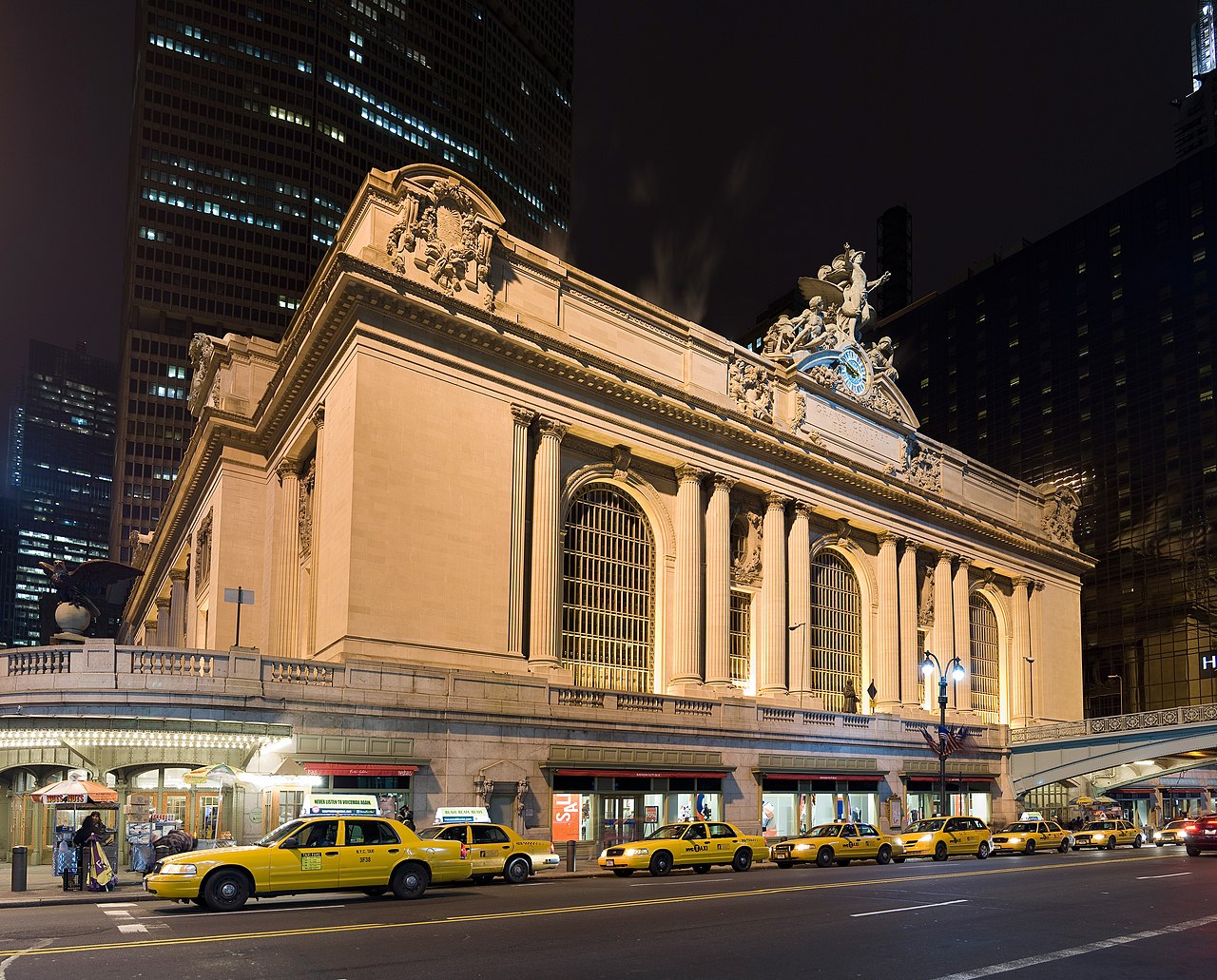
Grand Central Terminal, New York
- Opened: 1913
- Architects: Reed & Stem; Warren & Wetmore
- Daily Passengers: ~750,000 (pre-pandemic)
- Ceiling: Painted constellation mural covering 24,000 sq ft
Grand Central Terminal is not just a railway station — it is one of the most important urban buildings in the world. Opened in 1913 on a site that had housed earlier stations since 1871, the terminal was a revolutionary urban planning achievement: its tracks and platforms were buried underground, freeing the surface for Park Avenue's development and transforming midtown Manhattan. The engineering feat of electrifying the approach tracks and submerging them below street level made modern midtown possible.
The Main Concourse, measuring 84 by 37 meters with a 38-meter ceiling, is one of the great interior spaces in American architecture. The astronomical ceiling mural depicts 2,500 stars in a reversed constellation map (the constellations are painted as they would appear from outside the celestial sphere). Grand Central was nearly demolished in the 1960s for a skyscraper, but a landmark preservation campaign led by Jacqueline Kennedy Onassis saved it, establishing precedents that strengthened preservation law across the United States.
Chhatrapati Shivaji Maharaj Terminus, Mumbai
- Opened: 1888 (as Victoria Terminus)
- Architect: Frederick William Stevens
- Style: Victorian Gothic Revival with Indian elements
- UNESCO Status: World Heritage Site since 2004
Chhatrapati Shivaji Maharaj Terminus (formerly Victoria Terminus) in Mumbai is the most extravagant railway station ever built. Designed by British architect Frederick William Stevens and completed in 1888 after 10 years of construction, it combines Victorian Gothic Revival architecture with traditional Indian palace elements in a building of almost delirious ornamentation. Its stone dome, turrets, pointed arches, stained glass windows, and carved animal friezes create a visual spectacle unmatched by any other station.
The building reflects the colonial geography of British India — a grand imperial gateway built at the terminus of the Great Indian Peninsula Railway, which connected Bombay (now Mumbai) to the interior. Over 3 million commuters pass through the station daily, making it one of the busiest in the world. Despite its tourist-attracting facade, CSMT is an intensely functional building, its platforms handling a suburban rail network that is the lifeline of Mumbai's 20-million-strong metropolitan area.
St Pancras & the European Grand Stations
- St Pancras: London, 1868 — 74m single-span train shed
- Gare du Nord: Paris, 1864 — busiest station in Europe
- Antwerp Central: Belgium, 1905 — "Railway Cathedral"
- Helsinki Central: Finland, 1919 — Art Nouveau/National Romantic
London's St Pancras station, opened in 1868, featured the largest single-span roof in the world at the time — a 74-meter-wide iron and glass train shed designed by engineer William Barlow. The station's Gothic Revival frontage, the Midland Grand Hotel designed by George Gilbert Scott, was considered one of the finest Victorian buildings in London. After decades of decline, both the train shed and hotel were magnificently restored when St Pancras became the London terminus of the Channel Tunnel Rail Link in 2007.
Antwerp Central Station in Belgium, completed in 1905, is widely regarded as the most beautiful railway station in Europe. Its eclectic design combines a stone facade inspired by the Pantheon in Rome with a vast iron-and-glass train shed. The station's central waiting hall, with its marble staircase and gilded clock, earned it the nickname "Railway Cathedral." Helsinki Central Station, designed by Eliel Saarinen in the National Romantic style and completed in 1919, features a pair of monumental granite figures holding globe-shaped lamps flanking the entrance — among the most iconic architectural sculptures in Scandinavia.
Asian Railway Masterpieces
- Tokyo Station: 1914, red-brick Edwardian Baroque
- Kuala Lumpur Station: 1910, Mughal-inspired colonial
- Taipei Main Station: Rebuilt 1989, modern monumental
- Kanazawa Station: 2005, wooden tsuzumi drum gate
Asia's grand railway stations reflect the continent's complex architectural history. Tokyo Station, designed by Tatsuno Kingo and opened in 1914, is a red-brick masterpiece in the Edwardian Baroque style, modeled partly on Amsterdam Centraal. Damaged during World War II, it was restored to its original three-story form in 2012 after operating for decades in a truncated two-story version. Today it handles over 400,000 passengers daily as the hub of Japan's Shinkansen bullet train network.
The Kuala Lumpur Railway Station, opened in 1910, is one of the most striking colonial-era buildings in Southeast Asia. Designed by A.B. Hubback in a Mughal-inspired style with horseshoe arches, chatri pavilions, and soaring minarets, it was built to withstand a hypothetical 1-meter snowfall on its roof — an absurd specification for tropical Malaysia that resulted in an unnecessarily robust structure now appreciated for its dramatic over-engineering.
Contemporary Station Design
- Liège-Guillemins: Santiago Calatrava, 2009 — sweeping white arches
- Napoli Afragola: Zaha Hadid, 2017 — flowing organic form
- Kenitra Station: Morocco, 2019 — lattice-screen design
- Trends: Integration with urban fabric, sustainability, mixed use
Contemporary railway station design has shifted from the monumental approach of the 19th century toward buildings that integrate seamlessly with their urban surroundings while expressing the speed and fluidity of modern rail travel. Santiago Calatrava's Liège-Guillemins station in Belgium, completed in 2009, replaces walls and conventional roofing with a sweeping canopy of white steel and glass arches that flows over the platforms like a frozen wave, deliberately blurring the boundary between interior and exterior.
The emerging trend in station design is the transit-oriented development hub — a building that combines railway platforms with commercial, residential, and civic functions. New stations in cities like The Hague, Vienna, and Shenzhen are being designed as mini-cities above and around the tracks, with office towers, housing, parks, and retail integrated into the station complex. This approach transforms the station from a single-purpose transport building into a catalyst for urban regeneration.
Key Facts
- Grand Central Terminal's buried tracks made modern midtown Manhattan possible.
- Chhatrapati Shivaji Terminus handles over 3 million daily commuters in Mumbai.
- St Pancras station's 74-meter train shed was the world's widest single-span roof in 1868.
- Tokyo Station handles over 400,000 passengers daily as the Shinkansen network hub.
- Contemporary station design focuses on transit-oriented development that combines transport with urban functions.
Fun Facts
- Grand Central's constellation ceiling is painted backwards — showing the sky as God would see it from outside the celestial sphere.
- The Kuala Lumpur Railway Station was designed to withstand 1 meter of snowfall in tropical Malaysia.
- Antwerp Central Station is so beautiful it is known as the "Railway Cathedral" of Belgium.
- Grand Central was saved from demolition by a campaign led by Jacqueline Kennedy Onassis.
Final Thoughts
Railway stations are unique in architectural history — buildings born entirely from industrial technology that quickly aspired to rival the grandest civic and religious structures of earlier ages. From the Gothic splendor of Chhatrapati Shivaji Terminus to the fluid transparency of Liège-Guillemins, the railway station has continuously reinvented itself while maintaining its essential role: the gateway between a city and the world beyond.
Test Your Knowledge!
Think you know your architecture and cities? Try our interactive quiz!
Play Geography Games →