
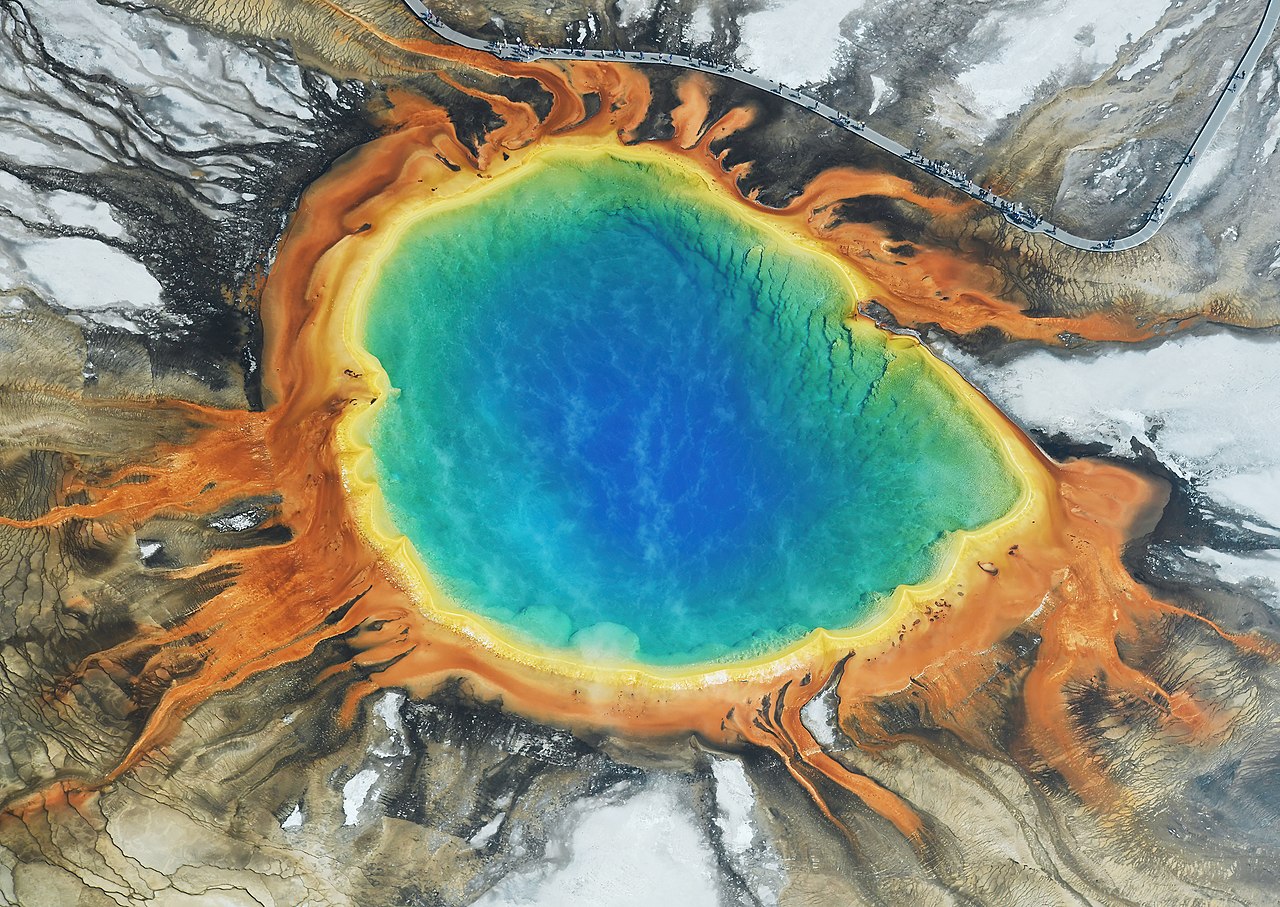
A hot spring (also called a thermal spring) is a natural discharge of groundwater heated by geothermal energy to a temperature significantly above the ambient air temperature. Hot springs occur where water seeps deep underground, is heated by volcanic activity or the Earth's natural geothermal gradient, and then rises back to the surface through fractures in rock. They are found on every continent and have been used by humans for bathing, healing, and spiritual purposes for thousands of years.
Introduction
Hot springs are among the most fascinating and visually spectacular geological features on Earth. From the rainbow-colored pools of Yellowstone to the milky-blue waters of Iceland's Blue Lagoon to the centuries-old onsen bathing houses of Japan, hot springs have captivated humans throughout history. They form at the intersection of water and heat — two of the most fundamental geological forces — and they create unique ecosystems where extremophile organisms thrive in conditions that would kill most life forms. Hot springs also have enormous economic value as tourist attractions, geothermal energy sources, and therapeutic bathing destinations.

How Hot Springs Form
Hot springs form through a relatively straightforward process: surface water (rain, snowmelt) percolates deep into the Earth's crust through fractures and permeable rock. As it descends, it encounters progressively higher temperatures — the geothermal gradient averages roughly 25-30 degrees Celsius per kilometer of depth, though this rate is much higher near volcanic areas. The heated water, now less dense than the cooler water above, rises through fractures and emerges at the surface as a hot spring.
In volcanic regions like Yellowstone, Iceland, and Japan, magma chambers close to the surface heat water to extreme temperatures, sometimes producing superheated water above 100 degrees Celsius that flashes to steam on reaching the surface (creating geysers and fumaroles). In non-volcanic regions, hot springs can form where water circulates to great depths — the hot springs of Bath, England, for example, are heated by water descending to roughly 2,700 meters before rising along fault lines.
Types of Hot Springs
- Non-volcanic (Fault-heated): Water descends along deep faults, is heated by the geothermal gradient, and returns to the surface. Found in Bath (England), Hot Springs (Arkansas), and Budapest (Hungary).
- Volcanic: Heated by proximity to magma chambers. Found in Yellowstone, Iceland, Japan, and New Zealand. Typically much hotter and more mineral-rich.
- Geysers: A specialized hot spring where pressure builds until water erupts in periodic bursts. Old Faithful in Yellowstone erupts roughly every 90 minutes.
- Fumaroles: Vents where water is entirely converted to steam before reaching the surface.
- Mud Pots: Hot springs where limited water mixes with clay and volcanic gases to create bubbling mud.
Famous Hot Springs Around the World
Yellowstone National Park, USA
Yellowstone contains more than 10,000 thermal features — roughly half of all the geothermal features on Earth. These include the Grand Prismatic Spring (the third-largest hot spring in the world at 90 meters across, famous for its vivid rainbow coloring caused by heat-loving bacteria), Old Faithful Geyser, and Mammoth Hot Springs with its spectacular travertine terraces. Yellowstone sits atop a massive volcanic hotspot whose magma chamber lies just 5-15 kilometers below the surface, heating the entire hydrothermal system.
Blue Lagoon, Iceland
Iceland's Blue Lagoon is a man-made geothermal spa fed by the wastewater of the Svartsengi geothermal power plant, but its milky-blue, mineral-rich waters heated to approximately 38 degrees Celsius have made it one of the world's most visited geothermal attractions. Iceland sits on the Mid-Atlantic Ridge, giving it extraordinary geothermal resources — the country heats nearly 90 percent of its buildings with geothermal energy. Natural hot springs like the Reykjadalur hot river and Myvatn Nature Baths offer more off-the-beaten-path experiences.
Japanese Onsen
Japan's volcanic geology produces over 27,000 hot spring sources (onsen), and hot spring bathing is a deeply ingrained part of Japanese culture dating back over 1,000 years. The most famous onsen towns include Beppu (which produces more hot spring water than any city in the world), Hakone (with views of Mount Fuji), Kusatsu (famous for its highly acidic waters), and Kinosaki. Japanese onsen culture involves strict bathing etiquette: guests wash thoroughly before entering the communal baths, tattoos are often prohibited, and silence is observed.
Pamukkale, Turkey
Pamukkale ("Cotton Castle" in Turkish) is a UNESCO World Heritage Site in southwestern Turkey where hot calcium-carbonate-rich waters cascade down a white travertine hillside, creating stunning terraced pools. The ancient Greek-Roman city of Hierapolis was built above these springs over 2,000 years ago, and visitors can still swim in the Antique Pool among sunken Roman columns.
Biology of Hot Springs
Hot springs harbor unique ecosystems dominated by extremophile microorganisms — bacteria and archaea that thrive at temperatures lethal to most life. The vivid colors of Yellowstone's hot springs are produced by different species of thermophilic bacteria thriving at different temperatures: orange and yellow mats indicate temperatures around 65-72 degrees Celsius, while green indicates slightly cooler zones. The discovery of Thermus aquaticus in a Yellowstone hot spring led to the development of the PCR (polymerase chain reaction) technique, which revolutionized molecular biology and made DNA analysis possible.
Key Facts
- Hot springs are groundwater heated by geothermal energy and discharged at the surface.
- Yellowstone contains roughly 10,000 thermal features — half of Earth's total.
- Japan has over 27,000 hot spring sources, the most of any country.
- Grand Prismatic Spring in Yellowstone is 90 m across and gets its colors from thermophilic bacteria.
- Iceland heats ~90% of its buildings using geothermal energy from hot spring systems.
Fun Facts
- The PCR technique that revolutionized genetics was possible because of a bacterium discovered in a Yellowstone hot spring in 1966.
- Capybaras and Japanese macaques (snow monkeys) are famous for bathing in hot springs during winter.
- The world's hottest hot spring is Frying Pan Lake in New Zealand, averaging 50-60°C across its 38,000 m² surface.
- The ancient Romans built elaborate bath complexes over hot springs across their empire, from Bath in England to Carthage in Tunisia.
Final Thoughts
Hot springs are windows into the Earth's interior, revealing the immense heat that lies beneath our feet. They have shaped human culture for millennia — from Roman bath houses to Japanese onsen — and they continue to provide clean energy, scientific discoveries, and unforgettable experiences for millions of visitors worldwide.
Test Your Knowledge!
Think you know your geography? Try our interactive quiz!
Play Geography Games →