
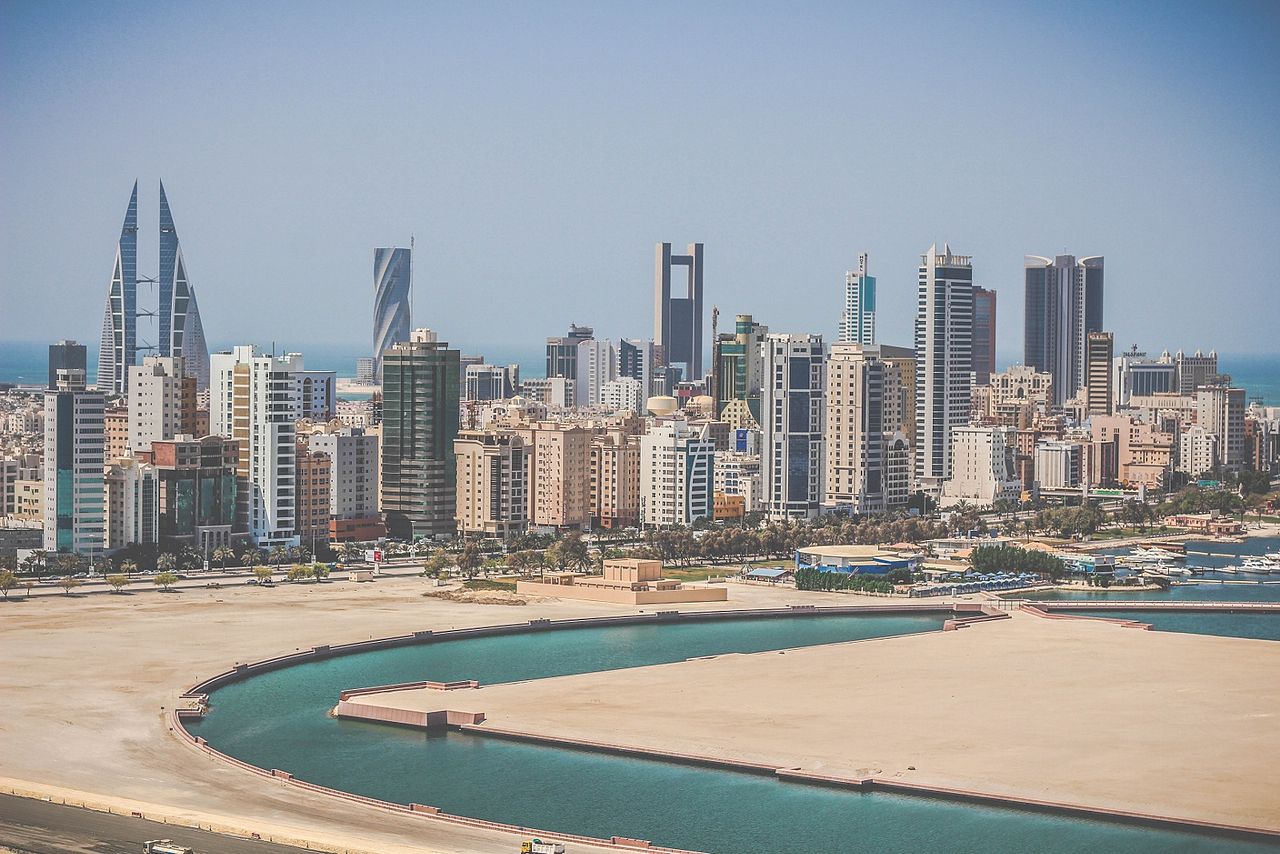
Bahrain is one of the world's smallest sovereign nations (765 km², roughly four times the size of Washington DC) but punches enormously above its weight in international affairs. An archipelago of 33 islands in the Persian Gulf, connected to Saudi Arabia by the 25 km King Fahd Causeway and within sight of Qatar, the country is the United States' major naval ally in the Gulf (US Navy Fifth Fleet headquarters), home to Formula 1's traditional season-opener at the Bahrain International Circuit, and a major regional banking center. The country was the first Gulf state to discover oil (1932) and has since transitioned to a service economy. Bahrain's distinctive cultural character comes from being the historic pearling capital of the ancient world — until Japanese cultured pearl production collapsed the market in the 1930s, Bahraini natural pearls were considered the finest in the world. The famous Pearling Path (UNESCO World Heritage since 2012) traces this heritage through 17 buildings and pearling sites on Muharraq Island. The country combines modern skylines (the Bahrain Financial Harbour twin towers, the World Trade Center with its three integrated wind turbines), ancient archaeological sites (Bahrain Fort dates to 2300 BC, Saar burial mounds), and one of the Gulf's most cosmopolitan cultural scenes — Bahrain is famously more liberal than Saudi Arabia or Kuwait.
Climate is hot Arabian desert with two distinct seasons. Winter (November-April) is genuinely pleasant — daytime 20-28 °C, occasional rain. Summer (May-September) is unlivable for outdoor activities — daytime 40-46 °C with Gulf humidity making it feel hotter. The traditional Bahrain Ras Al-Bahrain ("head of the sea") shamal — a southerly desert wind that brings dust storms — can hit any time of year but is most common in early summer.
Quick verdict
Best overall: November-March (cool dry winter).
Best for Bahrain Grand Prix (F1): Early-mid March (book accommodation 6-12 months ahead — F1 weekend triples hotel rates).
Best for pearl diving heritage and the UNESCO Pearling Path: November-March.
Best for Bahrain International Airshow: Mid-November (biennial).
Best for desert camping in southern Bahrain: November-February.
Best for Spring of Culture festival: February-March.
Best for budget travelers: July-August (extreme summer, lowest prices).
Best for Bahrain National Day: December 16-17.
Best for art lovers (Art Bahrain): Late March-early April.
Avoid if you can: May-September (40+ °C extreme heat, outdoor activities impossible); Ramadan if you want full restaurant operations during daylight; F1 weekend without booking ahead.
Cool dry season (November-April)
Bahrain at its travel best. Daytime 20-28 °C with low humidity, nights cool (12-18 °C), mostly sunny. The famous Bahrain Fort (Qal'at al-Bahrain) — a UNESCO site dating to the ancient Dilmun civilization, with archaeological layers spanning 4,000 years — is walkable in cool morning temperatures. The site's interpretation center (the Bahrain Fort Museum) showcases the famous Dilmun seals and ancient artifacts.
Muharraq Island's Pearling Path is the cool-season highlight. The 3.5 km walking route connects 17 restored pearling-era buildings (merchants' homes, oyster boat anchorage, the famous "Bin Matar" tower) — all accessible without summer heat. The Sheikh Ebrahim bin Mohammed Al Khalifa Center for Culture and Research hosts heritage programs. Adjacent Bu Maher Fort and the Khalifa Bin Salman Park provide further heritage.
Manama's Bab Al Bahrain souk and the famous Al Fateh Grand Mosque (Bahrain's largest, accommodating 7,000 worshippers) are at their visitor-friendly peak. The Bahrain National Museum (one of the Gulf's finest) traces the country's pearling heritage and Dilmun archaeology.
Tree of Life (Shajarat-al-Hayat) — a 400+-year-old Prosopis cineraria mesquite growing in the middle of an apparently water-less desert south of Manama — is visitable in cool months. The mystery of how it survives in the desert remains scientifically debated.
Formula 1 Grand Prix (early-mid March)
Bahrain's signature global event. The Bahrain International Circuit at Sakhir hosts what has historically been the F1 season opener (some recent seasons have moved the Australian Grand Prix earlier). The Saturday qualifying and Sunday race draw 30,000+ international fans, transforming Manama into a luxury hospitality showcase. Hotel rates triple during F1 weekend (Thursday-Sunday). Book 6-12 months ahead. The wider race week includes Formula 2, Formula 3, and Porsche Supercup support races plus the famous "Formula 1 After-Hours" parties at venues like Lost Paradise of Dilmun water park (yes, F1 night parties happen there) and venues at the Ritz-Carlton.
Ramadan considerations
Bahrain observes Ramadan but is significantly more relaxed than Saudi Arabia or Kuwait. Restaurants typically operate behind screened areas serving non-Muslims; international hotels operate normally. Ghabga (late-evening Ramadan gatherings) become major social events. Bahrain National Day if it falls in Ramadan is shifted in celebration. Dates vary annually based on lunar calendar.
Hot season (May-September)
Genuinely brutal. Daytime 40-46 °C with Gulf humidity (relative humidity often 60-80%) — heat index frequently feels like 50-55 °C. Outdoor walking limited to before 7 am or after 9 pm. The famous Bahrain Souq Al Manama indoor section, City Centre Bahrain mall, and air-conditioned cultural venues remain active. Most expatriates leave for the summer. The shamal (sandstorms) can hit in June-July, reducing visibility. Hotel rates drop 40-60%. Some smaller businesses close for July-August.
Shoulder (April and October)
April daytime climbs from 25 °C to 32 °C — still manageable until mid-month, increasingly hot after. October starts at 35 °C cooling to 28 °C by month-end. Both months offer transition weather; F1 weekend in early-mid March extends the high season into April effectively.
Regional/area variations
Manama (capital, financial district): Year-round indoor culture; outdoor walking best November-March.
Muharraq Island (Pearling Path, UNESCO): Best November-March.
Adliya (the cultural and dining district): Year-round indoor cafe culture; outdoor terraces best November-March.
Riffa (royal residential area, Riffa Fort): Best November-March.
Sakhir (F1 circuit, desert south): F1 weekend in March is the major draw.
Tree of Life and Hawar Islands (south): Best November-February.
Saar Burial Mounds (ancient Dilmun, central Bahrain): Best November-March for walking.
Hawar Islands (off east coast, separate boat trip): Best November-March for marine wildlife.
Festivals & cultural events
Bahrain Grand Prix (F1, early-mid March): The year's biggest international event.
Bahrain National Day (December 16-17): National celebrations with fireworks and parades.
Spring of Culture festival (February-March): Multi-week arts and music festival across various Bahrain venues.
Bahrain International Airshow (mid-November, biennial): Major aviation showcase.
Bahrain National Day Run (December): Half-marathon in cool weather.
Eid al-Fitr and Eid al-Adha (varies, lunar): Major religious holidays.
Ashura (varies): Significant Shia Muslim commemoration — Bahrain has a Shia majority population.
Bahrain Food Festival (October-November): Growing culinary event.
Art Bahrain (late March-early April): Modern art fair drawing regional and international galleries.
Food, drink, and daily life
Bahrain has one of the Gulf's most cosmopolitan food scenes — strong Indian, Iranian, Levantine, and Filipino influences alongside traditional Bahraini cuisine (machboos rice dishes, the famous muhammar sweet rice, gulf fish dishes). Adliya is the dining district. Alcohol is freely available at hotels and licensed restaurants (unlike Saudi Arabia or Kuwait). The Bahrain Bay area's Block 338 in Adliya is the famous nightlife hub. Cafe culture is strong — the famous Coffee Roastery and Roost are the local favorites.
Cultural and practical notes
Arabic is official; English universally understood in business and tourism. Bahraini Dinar is the currency (BHD; among the world's highest-value units against USD, currently ~2.65 USD per BHD). Cards widely accepted everywhere. Tipping 10-15%. Dress modestly outside resorts and hotels — shoulders and knees covered for cultural sites. Driving on the right side. Visa-on-arrival for most Western nationalities. The country uses Bahrain Time (UTC+3); no daylight saving. The country is a major regional shopping hub — the Bahrain City Centre and Seef Mall are the largest.
Practical considerations
Bahrain International Airport (Muharraq Island) receives direct flights from major European hubs, Asia, and the entire Gulf region. The 25 km King Fahd Causeway connects Bahrain to Saudi Arabia at Al Khobar — a major weekend route as Saudis come to Bahrain for entertainment and Bahrainis go to Saudi Arabia for shopping. Local transport is via taxi, Uber/Careem, or rental car. Public transport is limited; most visitors stay in Manama or Adliya and use taxis.
Traveler-type advice
F1 fans (Bahrain's biggest international draw): Early-mid March; book grandstand seats and accommodation 6-12 months ahead. Stay near Sakhir or in Manama with shuttle service.
Cultural travelers: November-March for the UNESCO Pearling Path, Bahrain Fort, and National Museum combined. Pair with Saudi Arabia trip if visa allows.
Business travelers (Bahrain's primary tourism segment): Year-round; meetings happen indoors. Hotels cheaper June-September.
Family travelers: November-March for outdoor activities; Lost Paradise of Dilmun water park year-round; Wahooo! Waterpark indoor option.
Weekend travelers from Saudi Arabia or UAE: November-March for outdoor culture; year-round for shopping and dining.
Pearl heritage travelers: November-March for Muharraq Pearling Path; year-round for the National Museum exhibits.
Stopover travelers: 24-48 hours suffices to see Bahrain Fort, the Pearling Path, Al Fateh Grand Mosque, and the Tree of Life. Direct flights make Bahrain an easy add-on to UAE or Saudi Arabia trips.
Art and design travelers: Late March-early April for Art Bahrain; year-round for the famous Saint Christopher's Cathedral architecture and Bahrain National Theatre.
Bottom line
Bahrain is decisively a winter destination. November-March delivers the country at its cultural and weather best, with March's Formula 1 Grand Prix as the marquee international event. The country offers one of the Gulf's most accessible cultural depths — combining ancient Dilmun archaeology, the unique pearling heritage UNESCO site, and a famously cosmopolitan dining scene that distinguishes it from more conservative Gulf neighbors.