
Paraguay is South America's most overlooked country — a landlocked nation of 7.1 million people, 406,752 km² tucked between Argentina (south, southwest), Brazil (east, northeast), and Bolivia (north, northwest). The country receives barely 1.5 million international visitors annually, most weekend tourists from neighboring Argentina or business travelers to Asunción. The famous Paraguayan War (1864-1870) — also called the War of the Triple Alliance against Brazil, Argentina, and Uruguay — was one of history's most devastating wars proportionally, killing 60-70% of the Paraguayan population and an estimated 90% of adult Paraguayan men. The country has been a stable democracy since the 1989 ousting of the famous 35-year Stroessner dictatorship (one of the world's longest-running dictatorships). That low tourism profile masks Paraguay's distinct character — it's the most Guaraní-speaking country in the world (95% of population speaks the indigenous Guaraní language alongside Spanish, making Paraguay the most successfully bilingual country with two non-Romance Indigenous-European pairings).
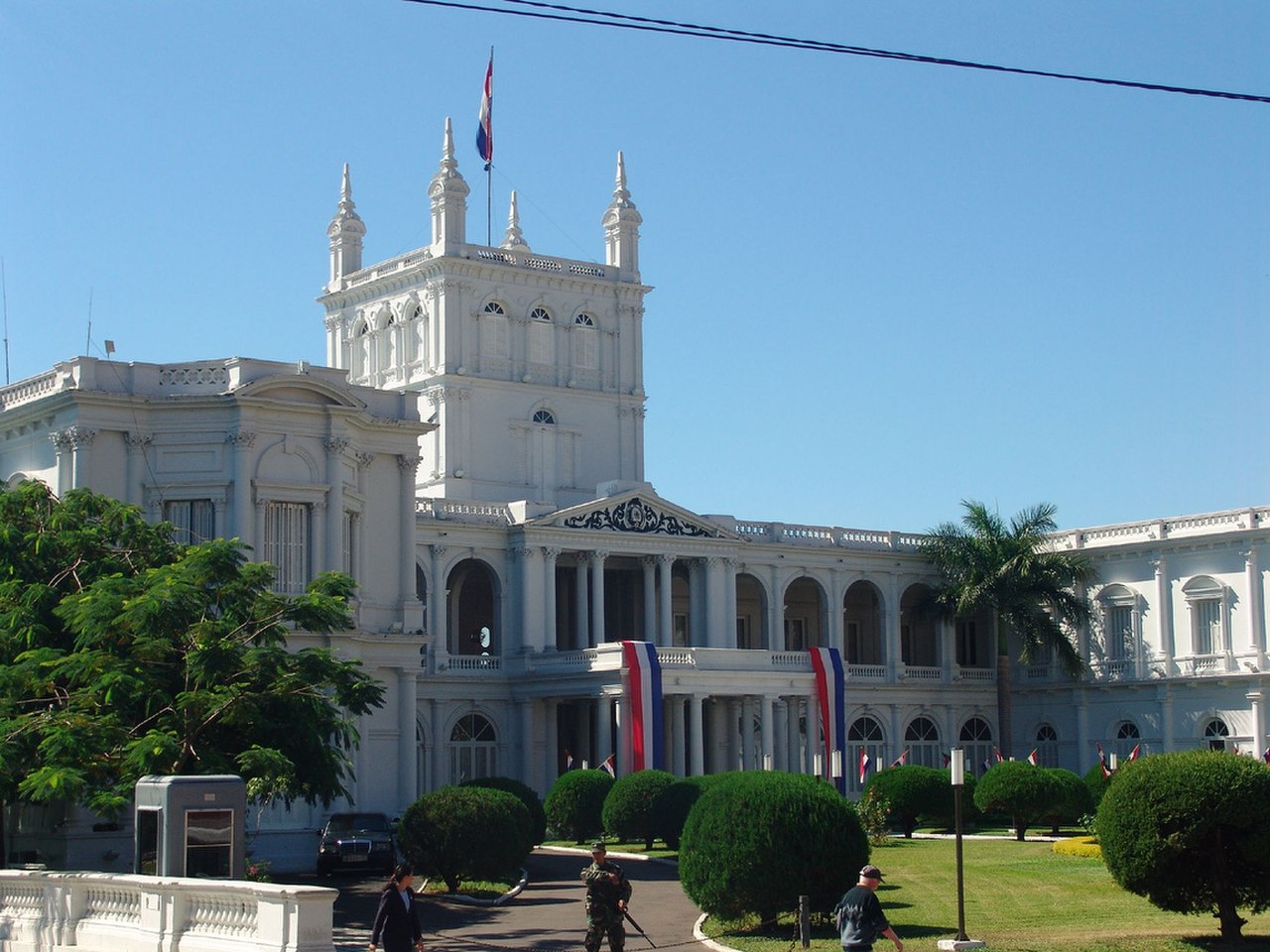
Major destinations include Asunción (the famous capital and South America's oldest continuously inhabited city, founded 1537 — with population 530,000 city and 2.2 million metropolitan, with the famous Manzana de la Rivera colonial quarter, the famous Palacio de los López — the presidential palace, the famous Asunción Cathedral, the famous Costanera waterfront promenade along the Paraguay River, the famous Mercado 4 — the country's largest market, the famous Cementerio de la Recoleta, and extensive 19th-century French neoclassical architecture), the famous UNESCO Jesuit Missions of La Santísima Trinidad de Paraná and Jesús de Tavarangue (the spectacular ruins of 17th-18th century Guaraní-Jesuit reductions made famous by the 1986 film "The Mission" — though that film was actually shot in Argentina and Colombia), the famous Iguazu Falls region (Ciudad del Este sits on the famous "Triple Frontier" between Paraguay, Argentina, and Brazil — only 20 minutes from the falls, with the famous Itaipu Dam — the world's second-largest hydroelectric facility by installed capacity), the famous Gran Chaco (the second-largest South American ecosystem after the Amazon — covering 60% of Paraguay's territory with extensive jaguar, maned wolf, giant anteater, and tapir populations, accessible via Defensores del Chaco National Park), the famous Mennonite colonies of Filadelfia, Loma Plata, and Neuland in the Chaco (the famous German-speaking Mennonite religious communities that have thrived since 1927), the famous Encarnación (the Brazilian-border city with the famous Carnaval Encarnaceno — Paraguay's biggest Carnival), the famous Areguá (the famous lakeside artistic community with extensive ceramics and pottery), the famous Itauguá (the famous "ñandutí" lace-making town), the famous San Bernardino and Lake Ypacaraí (Asunción's weekend escape), the famous Cerro Corá National Park (with sandstone rock formations and the famous site where Paraguay's Marshal López died ending the Paraguayan War), and the famous Caacupé Basilica (the country's most important Catholic pilgrimage site).
Climate is subtropical with hot humid summers and surprisingly cool dry winters — counter to the typical Latin American pattern where winter means rain. Paraguay is one of South America's cheapest destinations year-round.
Quick verdict
Best overall: April-September (cooler half of year).
Best for Chaco wildlife and trekking: June-September.
Best for Jesuit Ruins (Trinidad, Jesús): April-September.
Best for Asunción city visits: April-September.
Best for Festival del Ñandutí: Mid-July (in Itauguá).
Best for budget travelers: Year-round — Paraguay is among South America's cheapest destinations.
Best for Independence Day (May 14-15): May.
Avoid if you can: December-February in Asunción and the Chaco (40+ °C extreme heat); July-August Chaco overnight cold without proper gear.
Winter (May-September)
The country at its best. Asunción daytime 18-25 °C with cool nights (8-15 °C, occasionally colder). The famous Asunción riverfront walks comfortable. The Chaco — which gets brutally hot in summer — drops to pleasant 22-28 °C daytime and 8-15 °C overnight. Wildlife concentrates around remaining water sources, making this the prime time for spotting jaguars (Paraguay's Defensores del Chaco National Park has one of South America's highest jaguar densities), maned wolves, and giant anteaters.
The Jesuit Missions at Trinidad and Jesús (in the southeast near Encarnación) are at their photographic best — dramatic stonework, comfortable walking temperatures, and dry weather mean exploration without rain interruptions. The sound-and-light show at Trinidad (operating most weekend nights year-round) is most pleasant in cool evenings.
Summer (December-February)
Brutal. Asunción daytime 32-40 °C with high humidity — occasional heat waves past 45 °C. The Chaco can hit 45-50 °C. Most outdoor activities limited to early morning or evening. Air conditioning essential. Many Paraguayans escape to Argentina's south or Brazil's beaches.
The unexpected upside: summer is also the rainy season, and Iguazu Falls (a 5-hour drive from Asunción to the Brazilian/Argentine side) is at peak water flow. Combined Iguazu-Paraguay trips work well in early summer (November-December).
Shoulder months (March-April and October-November)
Excellent value with comfortable temperatures. Daytime 22-28 °C, lower humidity, fewer crowds at the Jesuit ruins. Hotel rates in Asunción at their lowest. Wildflowers in the Chaco peak in October-November after spring rains.
Regional variations
Asunción (capital): Best May-September. The Manzana de la Rivera colonial quarter and the Costanera waterfront promenade are walkable in cool months.
Itauguá (Ñandutí lace-making town near Asunción): Best July for the Festival del Ñandutí.
Encarnación and Jesuit Missions (Trinidad, Jesús): Best April-October.
Ciudad del Este (Triple Frontier, near Iguazu): Best April-October. Combined with Iguazu visits.
The Chaco (Mennonite colonies at Filadelfia, Loma Plata, Neuland; Defensores del Chaco NP): Best June-September.
San Bernardino and Lake Ypacaraí (Asunción weekend escape): Best December-February (locals' summer beach despite heat) or April-September (lower water but cooler).
Cerro Corá National Park (northeast, sandstone rock formations): Best April-September.
Festivals & cultural events
Heroes' Day / Battle of Cerro Corá (March 1): National holiday commemorating the end of the Paraguayan War.
Easter and Holy Week: Major religious celebration; small towns host distinctive processions.
Independence Day (May 14-15): Asunción's biggest annual celebration with parades and concerts.
Festival del Ñandutí (mid-July, Itauguá): Showcases the famous Paraguayan lace ñandutí, an art form with intricate spiderweb patterns.
Festival del Takuara (varies, August-September): Bamboo culture festival in Areguá.
Asunción International Book Fair (October): Latin America's largest book fair after Buenos Aires.
Día de la Virgen de Caacupé (December 8): Major Catholic pilgrimage drawing 1 million+ to the basilica in Caacupé.
Cultural and practical notes
Paraguay is uniquely bilingual — both Spanish and Guaraní are official languages (the famous "Jopará" — code-switching mix of Spanish and Guaraní — is the typical daily-speech form for most Paraguayans). Almost no English in tourism outside top hotels. Cash dominates outside Asunción; Paraguayan Guaraní (PYG) is the currency (the lowest-value major currency by exchange rate — 7,000+ guaraní per USD as of 2026). Mate (cold version called "tereré" — distinctively Paraguayan and unique to a few other regions) is everywhere. The country is officially secular but strongly Catholic. Visa-free for most Western nationalities (90 days). Tipping 10%. The famous Paraguayan cuisine includes sopa paraguaya (paradoxically "Paraguayan soup" is actually a dense cornbread — perhaps the world's only solid soup), chipa (the famous cheese-and-manioc starch bread), the famous Bori-Bori soup, and the famous Paraguayan beef culture from the famous Chaco ranches. The famous "ñandutí" lace (UNESCO-recognized intricate spider-web pattern weaving) is the country's signature textile art.
Practical considerations
Asunción's Silvio Pettirossi International Airport (ASU) receives direct flights from Madrid (LATAM), São Paulo, Buenos Aires, Lima, and other regional capitals. Internal travel is by bus (cheap and reliable for major destinations) or rental car (essential for the Chaco). The country is one of South America's cheapest — budget travelers can easily live on USD 25-40 per day. The famous Friendship Bridge connects Ciudad del Este to Brazilian Foz do Iguaçu (10-minute crossing for Iguazu Falls access). The famous Bridge of the Americas connects Encarnación to Argentine Posadas. The famous Tres Fronteras viewpoint near Ciudad del Este offers the "Triple Frontier" panorama where Paraguay, Argentina, and Brazil meet.
Traveler-type advice
Adventure travelers: June-September for the Chaco — Defensores del Chaco for jaguar tracking with experienced operators.
Cultural travelers: April-September for Jesuit Missions and Asunción's colonial center.
Budget travelers: Year-round (avoiding January peak heat). Hostels in Asunción USD 15-25/night.
Combined-trip travelers: Paraguay pairs well with Iguazu (Brazil or Argentina) — 5-hour drive from Asunción to the falls.
Off-the-beaten-path travelers: Paraguay is genuinely undertouristed — even peak month accommodation rarely books up.
Religious travelers: December 8 for Caacupé pilgrimage.
Mennonite culture travelers: Year-round for visits to Filadelfia and Loma Plata in the Chaco.
Wildlife photographers: June-September in Defensores del Chaco (one of South America's highest jaguar densities).
Cultural travelers (Jesuit Missions UNESCO sites): April-October for combined Trinidad and Jesús visits with comfortable temperatures.
Soccer fans: Year-round at Estadio Defensores del Chaco for Paraguayan first-division matches.
Bottom line
Paraguay rewards April-September visits decisively for comfortable temperatures and prime Chaco wildlife conditions. The country offers some of South America's best value combined with unique cultural authenticity — the Guaraní language alongside Spanish makes it genuinely different from neighbors Argentina and Brazil. Allow 5-7 days for combined Asunción + Jesuit Missions + Triple Frontier; longer for serious Chaco wildlife expeditions.