
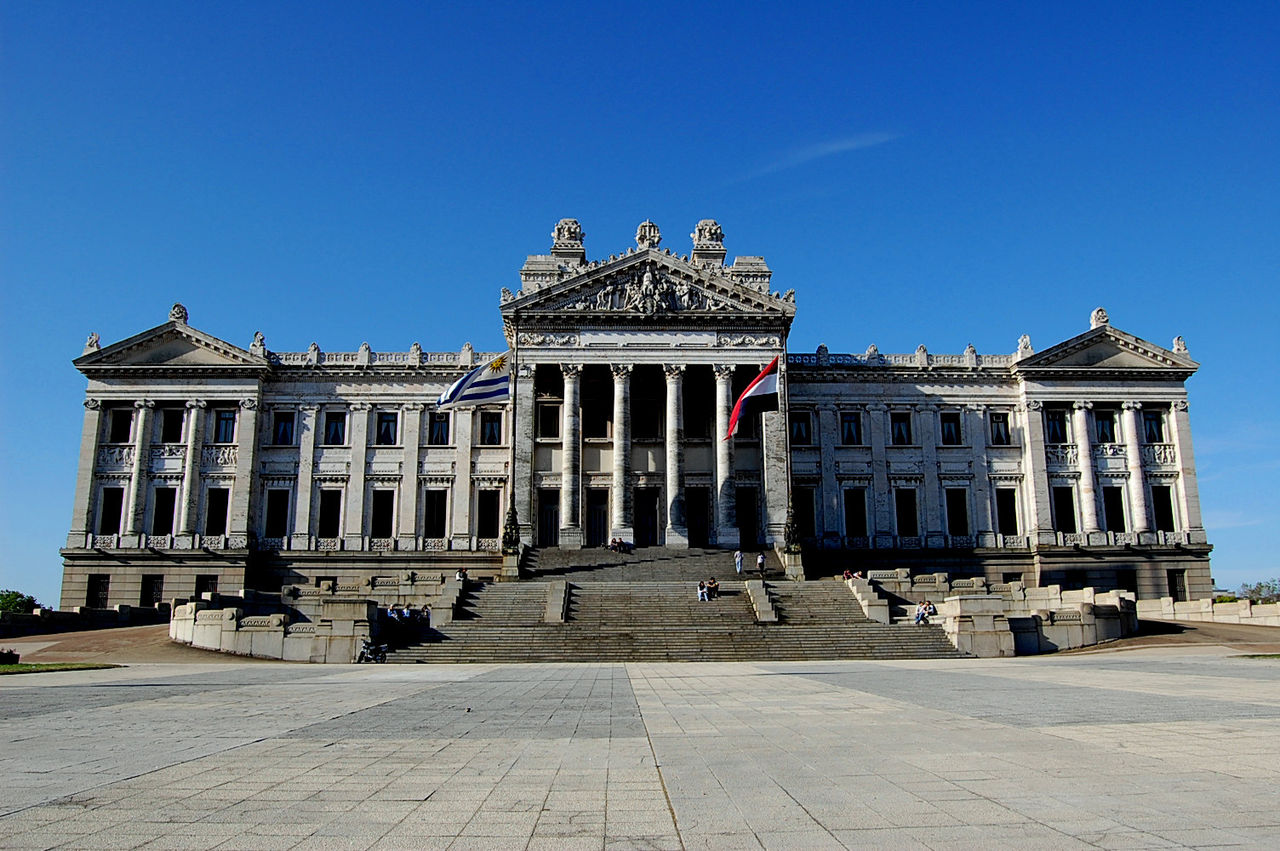
Uruguay is South America's second-smallest country at 176,215 km² with population of 3.4 million — tucked between Argentina (west) and Brazil (north and east) along the Atlantic coast. The country has perhaps the strongest "European" cultural feel in Latin America — pavement cafes, gauchos with mate gourds, asado (barbecue) tradition rivaling Argentina's, and a famous reputation for social progressiveness (Uruguay was the first country in the world to legalize recreational cannabis in 2013, legalized same-sex marriage and abortion in 2012-13, and has consistently topped Latin American rankings for democracy, low corruption, and quality of life). Uruguay was Spanish-colonized from the 17th century, gained independence in 1828 following struggles between Spain, Portugal/Brazil, and Argentina, and emerged as one of South America's most stable democracies. The country has produced famous global cultural figures including soccer legends Diego Forlán, Luis Suárez, and Edinson Cavani; writer Eduardo Galeano (the famous "Open Veins of Latin America"); and the famous "world's poorest president" José "Pepe" Mujica (president 2010-2015 who donated 90% of his salary to charity).
Major destinations include Montevideo (the capital — 1.4 million metropolitan area, with the famous Ciudad Vieja old town, the famous Mercado del Puerto (port market) for traditional parrilla steakhouse experiences, the famous Plaza Independencia, the famous Solis Theatre, the famous Rambla — the 24 km waterfront promenade along the Rio de la Plata, the famous Pocitos Beach urban beach, and extensive tango cultural venues), Punta del Este (the famous "Hamptons of South America" — Uruguay's main beach resort with extensive luxury infrastructure, the famous Los Dedos / La Mano sculpture emerging from sand, the famous Casapueblo — the famous artist Carlos Páez Vilaró's whitewashed clifftop hotel, and extensive Argentine and Brazilian elite tourism culture), José Ignacio (the famous bohemian luxury alternative to Punta del Este, 35 km east), Colonia del Sacramento (UNESCO World Heritage — the famous historic Portuguese colonial town founded 1680, accessible as a day trip from Buenos Aires via 1-hour ferry), the famous Cabo Polonio (the famous off-grid lighthouse settlement accessible only by 4x4 across sand dunes — no electricity, candles and generators only, distinctive bohemian beach culture, and the famous sea lion colony), La Pedrera and La Paloma (the famous surf towns on the Atlantic coast), the famous Punta del Diablo (the famous laid-back fishing village turned bohemian beach destination), the famous wine country of Canelones and Maldonado (Uruguay produces the famous Tannat — the world's best Tannat wine since the variety nearly disappeared from its native Madiran in France), the famous Salto thermal baths in northern Uruguay, the famous Quebrada de los Cuervos national park, and the famous Carmelo wine region. Climate is temperate with Atlantic Ocean moderation — hot summers (Southern Hemisphere December-February), mild winters, and reliable seasonal markers. The Uruguayan Carnival — running roughly 40 days from late January through early March — is the world's longest carnival.
Quick verdict
Best overall: Mid-December-early March.
Best for Punta del Este beach scene: January (peak), early March (calmer, still warm).
Best for Carnival: Late January-early March (Llamadas parade in early February is the famous highlight).
Best for budget travelers: April-May and September-October.
Best for whale watching (southern right whales): Late July-late November along the eastern coast.
Best for Colonia del Sacramento (UNESCO Old Town): Year-round, but best November-April.
Best for wine country (Canelones): February-April harvest.
Avoid if you can: Punta del Este in late January if you don't want the most crowded weeks; June-August for beach (sea 13-15 °C, too cold).
Summer (December-February)
The country at its absolute best. Montevideo daytime 22-28 °C with Atlantic sea breeze; sea reaches 21-23 °C — pleasantly swimmable. The famous Rambla fills with rollerbladers, runners, and families drinking mate from communal thermos. Outdoor parrillas (steakhouses) at peak.
Punta del Este — sometimes called "the Hamptons of South America" — sees its biggest week in early January as Argentine and Brazilian celebrities arrive in volume. José Ignacio (the bohemian alternative 35 km east) attracts the famous fashion-week crowd. Hotel rates in Punta double or triple December 26-January 15. By late February the crowds thin but weather stays perfect — locals call this "the best secret of Uruguay."
Autumn (March-May)
March is excellent — still warm, fewer tourists, the famous La Pedrera small surf town and the eastern coast (Cabo Polonio, the lighthouse community without electricity) at their most peaceful. April brings the Wine Harvest Festival in Canelones. May daytime 12-19 °C, comfortable for Montevideo and Colonia walking.
Winter (June-August)
Mild but cool (5-15 °C). No snow at sea level. Punta del Este shuts down significantly — many restaurants close. Montevideo continues but the beach scene becomes a city break instead. Whale watching from La Paloma and Cabo Polonio peaks July-September as southern right whales calve in the protected bays. Wine country accessible. Tango shows in Montevideo at their atmospheric best.
Spring (September-November)
Daytime climbs from 14 °C to 22 °C. Pampas grasses turn green. November is excellent for Colonia and Montevideo. Whale watching continues through November. Some Punta restaurants begin reopening in late October.
Regional variations
Montevideo: Best November-April. The Mercado del Puerto (port market) for parrilla works year-round.
Punta del Este and José Ignacio: Best mid-December-early March.
Colonia del Sacramento (UNESCO): Best November-April. Day trip from Buenos Aires via Buquebus ferry.
Cabo Polonio (the off-grid lighthouse settlement): Best January-March for the bohemian beach scene; July-September for whale watching.
Wine country (Canelones, Maldonado): Best February-April harvest; year-round for tastings.
Salto and the thermal baths: Best April-October (cooler air, warm springs).
Festivals & cultural events
Carnival (40 days, late January-early March): The world's longest Carnival. The Desfile de Llamadas (Calling Parade) in early February is the famous highlight — Afro-Uruguayan candombe drumming through Barrio Sur and Palermo.
Wine Harvest Festival (April, Canelones): Vineyards open for harvest tastings.
Día del Patrimonio (Heritage Day, late September): Historic buildings open free to public.
Tango festival circuit (year-round): Sala Zitarrosa and Cafe Brasilero host regularly.
Día de la Independencia (August 25): National holiday with parades.
Cultural and practical notes
Spanish is essential but English common in tourist zones. Uruguayan Peso (UYU) is the currency, though USD widely accepted in upscale tourism. Tipping standard 10% in restaurants. Mate (a bitter herbal tea drunk from a gourd with a metal straw, called "bombilla") is everywhere — Uruguayans drink the famous beverage at a per-capita rate higher than any country in the world, with locals carrying their gourds and thermos to work, the beach, on buses, and family gatherings. The famous "asado" (Uruguayan barbecue) tradition rivals Argentina's, with the famous "parrilla" charcoal-grilled meat tradition being central to weekend social gatherings. Uruguay legalized cannabis in 2013 (the world's first country to do so) but tourist purchase requires citizenship registration — most visitors don't navigate this; some private cannabis clubs do welcome foreign members. Cash plus contactless cards dominate. The country is famously secular (with one of the lowest religious-observance rates in Latin America).
Practical considerations
Carrasco International Airport in Montevideo (MVD) is the main entry point — major flights from Buenos Aires (1 hour), São Paulo (3 hours), Madrid, Panama City, and other regional hubs. The famous Buquebus ferry from Buenos Aires provides 1-hour Colonia del Sacramento crossings and 2.5-hour Montevideo crossings (popular day-trip and connection option). Driving on the right side; rental cars work well for coastal road trips. The famous Atlantic coast Route 9 (Ruta 9) connects Montevideo to Punta del Este (2 hours) and continues east to Cabo Polonio and Punta del Diablo. The country is famously safe — consistently ranked among Latin America's safest countries with the lowest violent crime rates. The famous Uruguayan literacy rate exceeds 98%.
Traveler-type advice
Beach travelers: Mid-December-early March, with late January-mid-February as peak. José Ignacio for quieter luxury than Punta del Este.
Cultural travelers: February for Llamadas Carnival parade; year-round for tango.
Budget travelers: April-May or September-October for half-price Montevideo accommodation.
Wine travelers: February-April for harvest visits to Canelones and Carmelo estancias.
Whale watching travelers: July-November at La Paloma and Cabo Polonio.
Buenos Aires day trippers: Year-round day trip to Colonia via 1-hour ferry.
Food travelers (parrilla, mate culture): Year-round.
Off-the-beaten-path travelers: February-April at Cabo Polonio for the famous off-grid lighthouse settlement experience.
Soccer fans: Year-round; Uruguay won the famous 1930 (first World Cup) and 1950 World Cups; the famous Estadio Centenario in Montevideo is a major soccer pilgrimage site.
Family travelers: Mid-December-March.
Bottom line
Uruguay rewards mid-December through early March visits decisively for the beach scene, Carnival, and Punta del Este. Whale watching adds a July-November winter window. The shoulder months (March and November) deliver the country at its calmest with still-comfortable weather. Allow 5-7 days for combined Montevideo + Punta del Este + Colonia; longer for comprehensive Uruguay including Cabo Polonio and wine country.