

Introduction
The taiga, also known as the boreal forest, is the largest terrestrial biome on Earth, forming an almost continuous belt of coniferous forest across the Northern Hemisphere between approximately 50°N and 70°N latitude. Covering roughly 17 million square kilometers — about 11% of Earth's land surface — it spans from Alaska across Canada, through Scandinavia, and across the vast expanse of Siberia to the Pacific coast.
The taiga exists at the intersection of two extremes: winters cold enough to freeze the ground solid for months and summers warm enough for tree growth. This narrow window of survivability produces a forest of remarkable uniformity, dominated by just a handful of coniferous tree genera adapted to extreme cold, deep snow, and poor soils. Yet within this apparent simplicity lies a biome of enormous global importance.
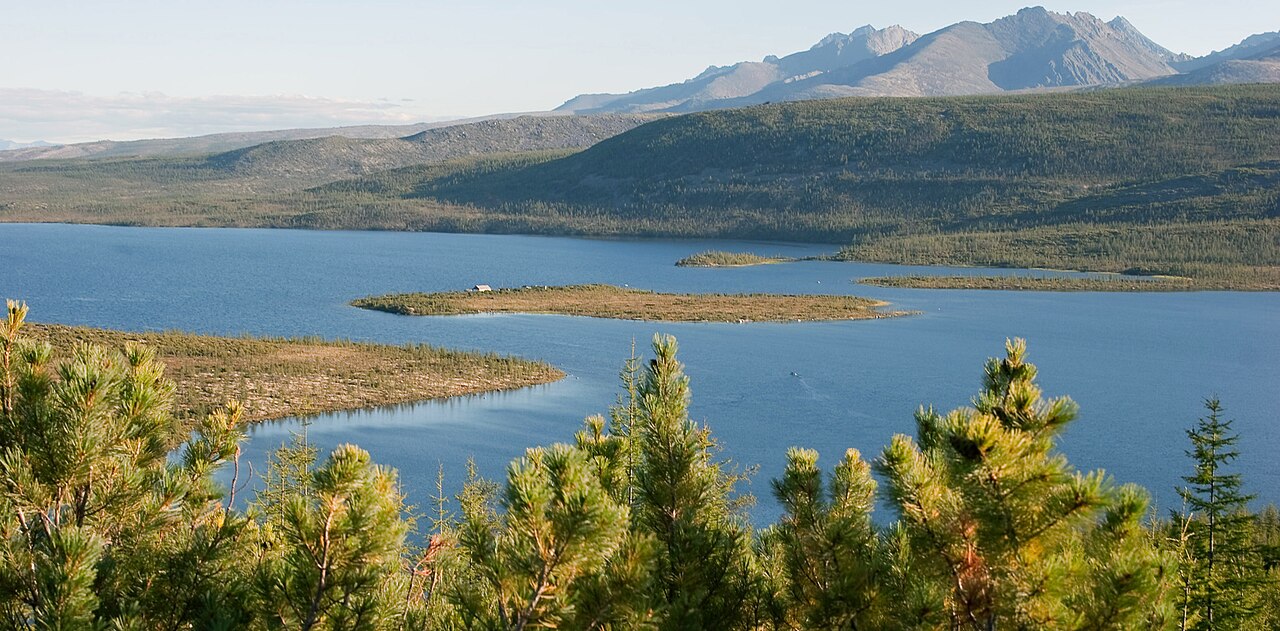
Climate Characteristics
- Winter Temperature: -20 to -50°C or below
- Summer Temperature: 10-20°C (warmest month)
- Growing Season: 80-150 days
- Annual Precipitation: 200-750 mm
The taiga climate is characterized by long, brutally cold winters and brief, moderately warm summers. Winter temperatures frequently drop below -40°C in interior regions, and the ground may remain frozen for six to eight months. Yet summer temperatures can reach 20°C or above, providing a growing season of 80 to 150 days — just enough for the adapted tree species to grow and reproduce.
The taiga receives relatively modest precipitation, typically 200 to 750 millimeters per year. Much of it falls as snow, which accumulates through the long winter and melts rapidly in spring, causing dramatic flooding and creating a waterlogged landscape. Low temperatures minimize evaporation, so the moisture that does fall is used efficiently by the vegetation.
Dominant Vegetation
- Tree Genera: Spruce, pine, larch, fir, birch
- Forest Structure: Dense, single-canopy, 10-20 m tall
- Understory: Mosses, lichens, berry shrubs
- Adaptations: Needle leaves, conical shape, flexible branches
The taiga is dominated by coniferous trees with specific adaptations to extreme cold. Spruce, pine, and fir have narrow, needle-like leaves with thick waxy coatings that resist freezing and reduce water loss. Their conical shape sheds heavy snow loads, and flexible branches bend rather than break under ice accumulation.
Larch (Larix) is the only deciduous conifer in the taiga, shedding its needles in autumn and surviving winter in a dormant, leafless state. This allows it to dominate the coldest parts of the taiga in eastern Siberia, where winter temperatures drop below -60°C — conditions too severe even for evergreen conifers. The understory is typically sparse, dominated by mosses, lichens, blueberry shrubs, and shade-tolerant ferns.
Wildlife
- Large Mammals: Moose, caribou, brown bear, wolves, lynx
- Birds: Over 300 species, many migratory
- Insects: Mosquitoes and black flies in enormous numbers
- Fur-Bearing Animals: Beaver, marten, sable, ermine, wolverine
The taiga supports a community of large mammals adapted to cold and deep snow. Moose are the largest taiga herbivore, wading through deep snow on their long legs to browse on twigs and bark. Caribou and reindeer migrate in vast herds between boreal forest and tundra. Gray wolves, brown bears, and lynx are the primary predators.
The taiga comes alive in summer with an explosion of insect life. Mosquitoes and black flies breed in the billions in the waterlogged landscape, forming dense clouds that can drive large animals to distraction. However, these insects are a critical food source for the millions of migratory birds that travel to the boreal forest each summer to breed, including warblers, thrushes, and waterfowl.
Carbon & Climate Role
- Carbon Storage: Stores 30-40% of terrestrial carbon
- Peat Deposits: Vast peatlands act as carbon sinks
- Fire Cycle: Natural fire return interval of 50-200 years
- Albedo: Snow-covered forest reflects less light than open snow
The taiga is arguably the most important biome for global carbon cycling. Its soils and peat deposits contain an estimated 30-40% of all terrestrial carbon, far more than tropical rainforests on a per-area basis. Much of this carbon has accumulated slowly over thousands of years in cold, waterlogged soils where decomposition is extremely slow.
Fire is a natural and essential part of the taiga ecosystem. Lightning-caused fires burn millions of hectares each year, clearing old forest and recycling nutrients. Many taiga tree species are adapted to fire: jack pine cones open only when heated, and birch and aspen resprout rapidly from roots after burning. Climate change is increasing fire frequency and intensity, threatening to convert the taiga from a carbon sink to a carbon source.
Threats & Future
- Climate Change: Warming 2-3x faster than global average
- Fire Increase: Burn area has doubled since 1970s in some regions
- Logging: Major forestry industry in Russia, Canada, Scandinavia
- Permafrost Thaw: Undermining forest stability in many areas
The taiga is warming significantly faster than the global average, with winter temperatures in some regions increasing by 3-4°C over the past half-century. This warming is extending the growing season, allowing the treeline to advance northward into former tundra. While this might seem beneficial, the loss of reflective snow cover and tundra surface is creating a positive feedback loop that accelerates warming.
Industrial logging is a major pressure on the taiga, particularly in Russia and Canada. Russia's boreal forests are harvested at a rate of roughly 1.2 million hectares per year, often without adequate reforestation. In Canada, clearcutting in the boreal forest affects critical habitat for caribou, whose populations have declined dramatically as their forest habitat is fragmented.
Key Facts
- The taiga is the largest land biome at ~17 million km², covering 11% of Earth's land surface.
- Taiga soils and peat store 30-40% of all terrestrial carbon.
- Larch is the only deciduous conifer and dominates the coldest parts of the Siberian taiga.
- The taiga's growing season lasts only 80-150 days, yet produces vast forests.
- Fire is natural and essential in the taiga, with return intervals of 50-200 years.
Fun Facts
- Siberian larch forests are so vast that they influence global atmospheric circulation patterns.
- Mosquitoes in the taiga can be so dense that caribou lose up to a liter of blood per day to bites during peak season.
- The boreal forest of Canada alone contains more freshwater lake surface area than all other countries combined.
- Some taiga mosses can survive being frozen solid for months and resume photosynthesis within hours of thawing.
Final Thoughts
The taiga is a biome of superlatives: the largest land biome, the greatest terrestrial carbon store, and one of the last great wilderness areas on Earth. Its vast coniferous forests regulate global climate, harbor millions of migratory birds, and provide timber and other resources to billions of people. As climate change accelerates in the boreal zone, the future of the taiga will be one of the defining environmental stories of the coming century.