
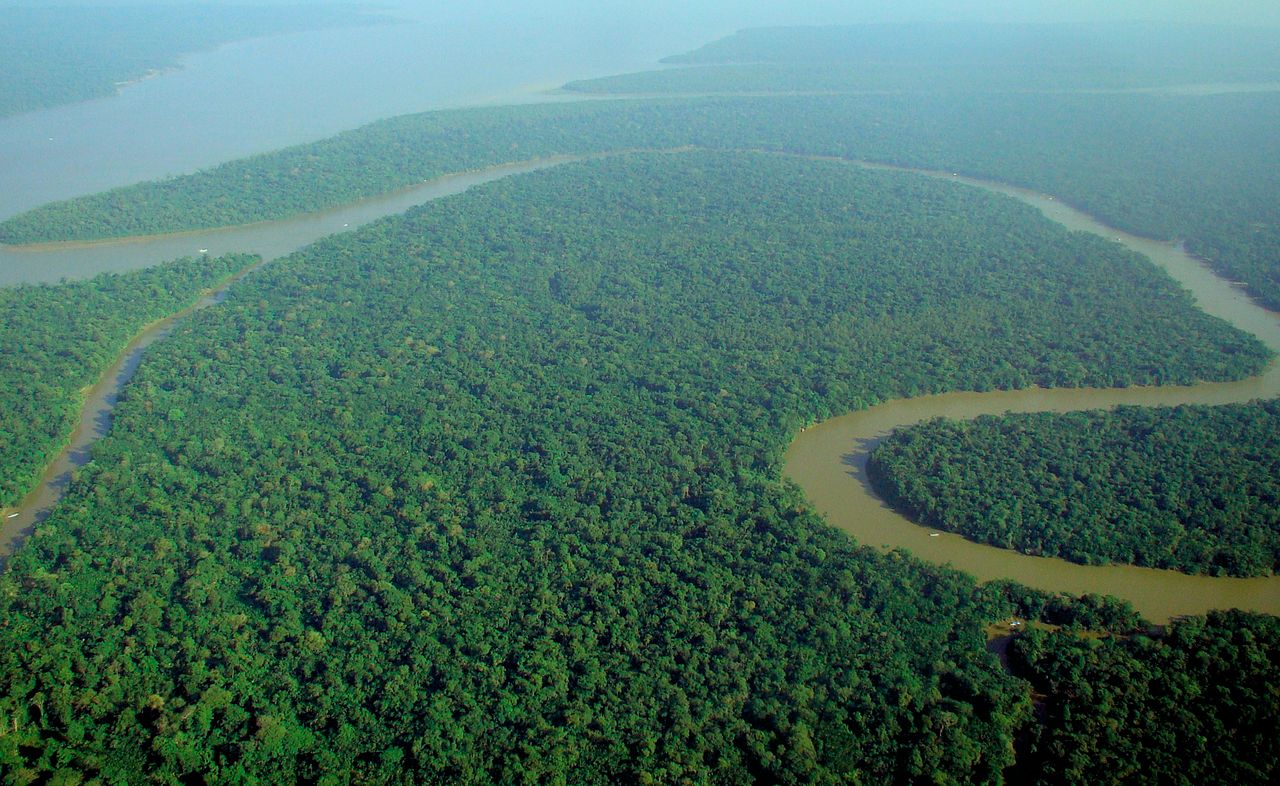
A tropical rainforest climate is hot, humid and wet all year round, with no cold season and no real dry season. In the Köppen climate classification it is labelled Af, and it has two defining rules: every month averages at least 18 °C, and even the driest month gets at least 60 mm of rain. In practice, average temperatures stay around 25 to 28 °C in every month, and most places get 1,800 to 3,000 mm of rain a year or more. The climate is found mainly within about 10 degrees of the equator: in the Amazon basin, the Congo basin, the Malay Archipelago, Papua New Guinea and parts of the Caribbean and Central American coasts.
What the Letters Af Mean
Wladimir Köppen's classification, first published in 1884 and refined until the 1930s, sorts the world's climates by temperature and rainfall. Group A contains the tropical climates, where every month averages at least 18 °C, warm enough that there is no winter in the ordinary sense. Within group A, the second letter depends on how much rain falls in the driest month. Af, where f comes from the German feucht, "moist", means every month gets at least 60 mm. Am, the tropical monsoon climate, has a short dry season but so much rain in the wet season that forest still grows. Aw, the tropical savanna climate, has a long dry season, and grassland with scattered trees replaces forest. The whole system is explained in our guide to the Köppen climate classification.
A Typical Day
In a tropical rainforest climate, the weather follows a daily rhythm more than a yearly one. Mornings are often clear or lightly clouded, warm and very humid. As the sun climbs almost overhead, it heats the ground and forest, and moist air rises. By early afternoon, towering cumulonimbus clouds have built up, and heavy thunderstorms break, often with intense rain for an hour or two. By evening the sky clears again. Humidity usually stays around 75 to 90 per cent and often reaches 100 per cent at night, when dew forms.
The difference between day and night, often 7 to 10 °C, is usually larger than the difference between the warmest and coolest months, which may be only 1 to 3 °C. Geographers sometimes say that in the tropics, night is the winter. Places with this pattern are described as isothermal: their temperature barely changes through the year. Where people do speak of seasons, they usually mean wetter and less wet months, not warm and cold ones.
Why the Equator Is So Wet
The reason lies in how the sun heats the Earth. Near the equator, the midday sun is always high in the sky, so the surface receives strong heating every day of the year. Warm air rises, cools as it climbs and releases its moisture as rain. This belt of rising air and storms, where the trade winds from the northern and southern hemispheres meet, is called the Intertropical Convergence Zone, or ITCZ. It shifts north and south a little with the seasons, following the sun. Places close to the equator stay under its influence all year and so get rain in every month, while places further away have a dry season when it moves away. In some equatorial places the passage of the ITCZ produces two rainier periods a year, around the equinoxes.
One thing the equatorial rainforest belt mostly lacks is hurricanes. Tropical cyclones need the spin supplied by the Earth's rotation, the Coriolis effect, which is almost zero at the equator. They rarely form within about 5 degrees of it, so places such as Singapore, the central Amazon and the Congo basin are rarely hit.
Where the Climate Is Found
The largest area of Af climate is in South America, covering much of the Amazon basin, especially its western and central parts, and the Pacific coast of Colombia. The Chocó region of western Colombia is one of the wettest places on Earth. The town of Quibdó averages around 7,000 to 8,000 mm of rain a year, and nearby Tutunendo has recorded more than 11,000 mm. In Africa, the climate covers the central Congo basin and parts of the Gulf of Guinea coast. The Congo rainforest, the second-largest in the world, is described in our guide to the Congo rainforest.
In Asia, the climate covers most of the Malay Peninsula, Sumatra, Borneo, Sulawesi, New Guinea and the southern Philippines. It also occurs further from the equator where moist trade winds blow onto mountainous coasts. Examples include the east coast of Madagascar, north-eastern Queensland in Australia, the Caribbean coast of Central America, and the windward sides of islands such as Hawaii.
Cities With a Rainforest Climate
Several large cities have an Af climate. Singapore, only about 137 km north of the equator, averages daily highs of about 31 to 32 °C in every month and gets more than 2,000 mm of rain a year. Its wettest months come in the north-east monsoon, from November to January, but every month is wet. Kuala Lumpur, in Malaysia, and Colombo, in Sri Lanka, have similar climates. Belém, near the mouth of the Amazon in Brazil, gets around 3,000 mm of rain a year, and it is sometimes said that residents arrange to meet "before the rain" or "after the rain", because the afternoon downpour is so reliable. Iquitos, in Peru, is the largest city in the world that cannot be reached by road, surrounded by rainforest on the Amazon. Kisangani, on the Congo River in the Democratic Republic of the Congo, is another classic example.
Neighbouring Climates: Monsoon and Savanna
Moving away from the equator, the rainforest climate gives way to its two tropical neighbours. In the tropical monsoon climate, Am, one or more months get less than 60 mm of rain, but the wet season is so heavy that the total is still large and forest can survive. Much of the Indian west coast, including Mumbai, parts of South-East Asia, and southern Florida around Miami fall into this category. In the tropical savanna climate, Aw, the dry season is longer and more severe, so grasses and scattered trees replace closed forest. Darwin in northern Australia, the Brazilian cerrado and the East African plains are examples. The boundaries between the three are drawn by rainfall alone, and on the ground forest often thins gradually from one to the next.
What the Climate Does to Soil and Forest
The constant warmth and rain create the richest land ecosystems on Earth. Tropical rainforests cover only a small part of the world's land surface, well under a tenth, yet they are thought to hold around half of all land species. The forest grows in layers: a dense canopy 30 to 45 m high, taller emergent trees rising above it, and a dim understorey below. Our guide to the tropical rainforest biome describes those layers and their wildlife.
Surprisingly, the soils are usually poor. Heavy rain washes nutrients out of the ground, a process called leaching, and warmth and moisture make dead leaves and wood decay fast. Most of the ecosystem's nutrients are stored in the living plants rather than the soil, and are recycled almost as soon as anything dies. Many tropical soils are red or yellow, rich in iron and aluminium oxides, and some harden into a brick-like layer called laterite when exposed. That is why rainforest cleared for farming often loses its fertility within a few years.
Living With the Heat and the Rain
People in rainforest climates have long built for constant heat, humidity and downpours. Traditional houses across the Malay world stand on stilts, which catch the breeze, keep the floor dry in floods and keep out animals. Steep roofs shed heavy rain, and wide eaves shade the walls. Walls are often light and partly open to let air move through. Modern cities have turned to air conditioning instead. Singapore's founding prime minister, Lee Kuan Yew, called it one of the most important inventions of the twentieth century, because it made working efficiently in the tropics practical. The warmth and damp also favour mosquitoes, and diseases such as malaria and dengue remain major health problems in many rainforest regions.
A Forest That Makes Its Own Rain
In the Amazon, the climate and the forest depend on each other. Trees draw water from the soil and release it through their leaves. Much of the rain that falls on the western Amazon has already fallen and been recycled several times as it moves inland from the Atlantic. Scientists estimate that the forest supplies a substantial share, often put at a quarter to a half, of its own rainfall, and the moisture carried south by air currents, sometimes called "flying rivers", also waters farms in southern Brazil and northern Argentina. Large-scale deforestation, combined with warming, therefore threatens the climate itself. A 2021 study found that parts of the south-eastern Amazon had begun to release more carbon than they absorbed. Many scientists warn that beyond a certain level of forest loss, parts of the Amazon could shift towards a drier savanna climate.