
The tropical rainforest biome covers approximately 6% of Earth's land surface near the equator, receiving 1,750-2,500 mm of rainfall annually with temperatures averaging 25-27 degrees C year-round. Despite covering a small area, tropical rainforests contain over 50% of all known species, organized across four distinct canopy layers: emergent (50-70 m), main canopy (25-45 m), understory (5-20 m), and forest floor (less than 2% sunlight).
Introduction
The tropical rainforest biome is Earth's richest terrestrial ecosystem, covering approximately 6% of the planet's land surface while harboring more than 50% of all known species. These forests are found in equatorial regions where warm temperatures and abundant rainfall create ideal conditions for explosive biological diversity. The Amazon alone is estimated to contain 10% of all species on Earth.
Unlike temperate forests with their seasonal rhythms, tropical rainforests operate on a continuous cycle of growth, death, and decomposition. Trees flower and fruit at different times throughout the year, ensuring a constant food supply for the millions of animal species that depend on the forest. This year-round productivity is the engine that drives the extraordinary biodiversity of the tropical rainforest biome.
The three largest tropical rainforest regions are the Amazon Basin (South America), the Congo Basin (Central Africa), and the forests of Southeast Asia and Oceania. Together, they store an estimated 250 billion tonnes of carbon and generate significant portions of regional rainfall through transpiration.
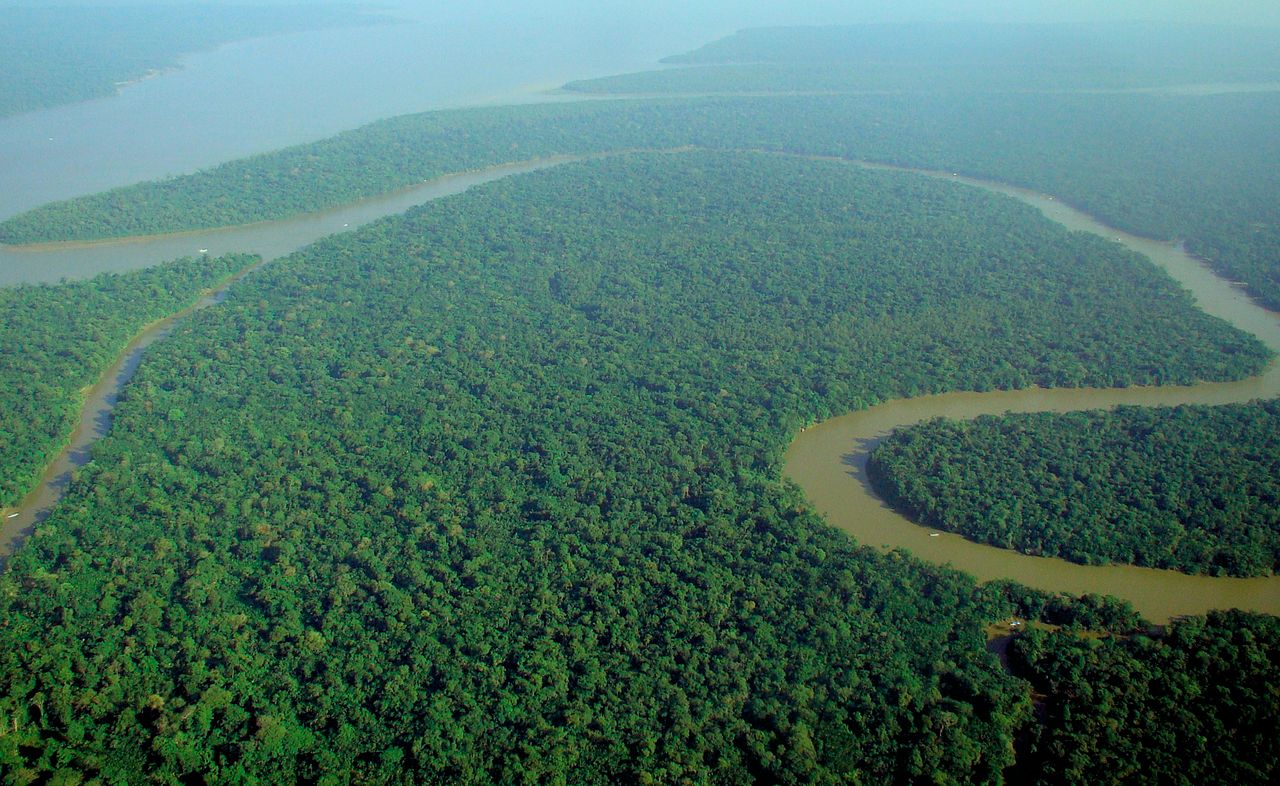
Canopy Structure
- Emergent Layer: 50-70 m, scattered giant trees above canopy
- Main Canopy: 25-45 m, continuous leaf cover
- Understory: 5-20 m, shade-tolerant saplings and palms
- Forest Floor: Less than 2% of sunlight reaches ground
The tropical rainforest is organized into distinct vertical layers, each with its own microclimate and community of species. The emergent layer consists of a few giant trees that break through the main canopy, reaching heights of 50 to 70 meters. These towering trees are exposed to high winds and intense sunlight, and they provide nesting sites for large raptors such as harpy eagles and Philippine eagles.
The main canopy at 25-45 meters is the primary zone of photosynthesis and biological activity. This dense layer of interlocking branches and leaves intercepts most of the sunlight and rainfall, creating a humid, sheltered environment below. Epiphytes — plants that grow on other plants — are particularly abundant in the canopy, with orchids, bromeliads, and ferns festooning nearly every surface.
Biodiversity
- Tree Species: ~40,000-53,000 worldwide in tropical forests
- Insect Species: Estimated 30+ million, most undescribed
- Bird Species: ~3,000 in Neotropical rainforests alone
- Endemism: Extremely high, many species restricted to single valleys
The scale of tropical rainforest biodiversity is difficult to comprehend. A single hectare of Amazonian rainforest can contain over 400 tree species, compared to roughly 50 native tree species in the entire British Isles. Scientists have found over 700 tree species in a 10-hectare plot in Borneo, more than in all of North America north of Mexico.
Insect diversity is even more staggering. Entomologist Terry Erwin's famous study of beetle species in a single tree species in Panama suggested there could be 30 million arthropod species in tropical forests, most still unknown to science. New species are described regularly, and it is estimated that the majority of tropical rainforest species have not yet been scientifically named.
Nutrient Cycling
- Soil Fertility: Paradoxically low (oxisols)
- Recycling Speed: Leaf litter decomposes in weeks
- Mycorrhizal Networks: Fungi connect tree roots underground
- Nutrient Storage: 90%+ held in living biomass, not soil
The tropical rainforest presents an ecological paradox: the world's most productive terrestrial ecosystem grows on some of the world's poorest soils. The answer lies in the extraordinarily efficient nutrient recycling system. When a leaf falls to the forest floor, it is attacked within hours by fungi, bacteria, termites, and other decomposers. Within weeks, the nutrients are released and immediately absorbed by the dense mat of shallow roots that covers the soil surface.
Mycorrhizal fungi play a critical role in this recycling system, forming vast underground networks that connect tree roots and facilitate nutrient transfer between individuals. Some researchers have dubbed these fungal networks the "wood-wide web." Over 90% of the forest's nutrients are locked in living biomass rather than stored in soil, which is why cleared rainforest land often becomes infertile within a few years.
Ecosystem Services
- Carbon Storage: ~250 billion tonnes of carbon
- Oxygen Production: Produces ~6% of atmospheric oxygen
- Water Cycling: Transpiration generates ~50% of regional rainfall
- Medicine: ~25% of modern drugs derived from rainforest organisms
Tropical rainforests provide ecosystem services worth trillions of dollars annually. They store an estimated 250 billion tonnes of carbon in their biomass and soil, acting as a massive buffer against climate change. The Amazon alone transpires 20 billion tonnes of water per day, generating roughly half of the region's rainfall and influencing weather patterns across South America.
The pharmaceutical value of rainforest biodiversity is immense. Roughly 25% of Western pharmaceuticals are derived from rainforest organisms, including treatments for cancer, malaria, and heart disease. Yet less than 1% of tropical plant species have been thoroughly tested for medicinal properties, suggesting that countless valuable compounds remain undiscovered in the disappearing forests.
Threats & Conservation
- Deforestation: ~10 million hectares lost annually
- Causes: Agriculture, logging, mining, infrastructure
- Tipping Point: Amazon may collapse at 20-25% loss
- Protected Area: ~15% of tropical forest is formally protected
Tropical rainforest destruction continues at an alarming rate, with approximately 10 million hectares lost each year — an area roughly the size of South Korea. The primary drivers are agricultural expansion (particularly cattle ranching and palm oil plantations), commercial logging, mining, and infrastructure development. In the Amazon, deforestation for soybean farming and cattle ranching accounts for the majority of forest loss.
Scientists warn that the Amazon rainforest may be approaching a tipping point beyond which it can no longer generate enough rainfall to sustain itself. If deforestation reaches 20-25% of the original forest, positive feedback loops of drying and fire could convert vast areas of rainforest into degraded savanna. This would release billions of tonnes of carbon and eliminate countless species.
Key Facts
- Tropical rainforests cover ~6% of land area but contain over 50% of all known species.
- A single hectare can host 400+ tree species — more than in many entire countries.
- Over 90% of rainforest nutrients are held in living biomass, not in the nutrient-poor soil.
- The Amazon generates roughly 50% of its own rainfall through transpiration.
- Approximately 10 million hectares of tropical forest are lost every year to deforestation.
Fun Facts
- A single tree in a tropical rainforest can host over 1,000 species of insects, epiphytes, and other organisms.
- The canopy of a tropical rainforest is so dense that rain can take 10 minutes to reach the forest floor after hitting the canopy.
- Tropical rainforests have existed in some form for at least 140 million years, predating many modern animal groups.
- The roar of a howler monkey can be heard from 5 km away through the dense forest canopy.
Tropical Rainforest Biome Summary
| Feature | Detail |
|---|---|
| Coverage | ~6% of land surface |
| Species | 50%+ of all known species |
| Temperature | 25-27 degrees C year-round |
| Rainfall | 1,750-2,500 mm/year |
| Canopy Layers | 4 (emergent, canopy, understory, floor) |
| Carbon Stored | ~250 billion tonnes |
| Deforestation Rate | ~10 million hectares/year |
| Largest | Amazon Basin |
Final Thoughts
The tropical rainforest biome is Earth's most biodiverse and ecologically complex terrestrial ecosystem, a product of millions of years of evolution under stable, warm, and wet conditions. Its extraordinary species richness, critical role in climate regulation, and pharmaceutical potential make it irreplaceable. Yet deforestation continues at a pace that threatens to transform these ancient forests within a human lifetime, making their conservation one of the most urgent challenges facing humanity.
Test Your Knowledge!
Think you know your world geography? Try our interactive quiz!
Play Geography Games →