

Introduction
Cape Verde (Cabo Verde) is an archipelago of ten volcanic islands and several islets in the central Atlantic Ocean, approximately 570 km off the west coast of Africa. The islands straddle the Tropic of Cancer and are divided into two groups: the windward Barlavento islands to the north and the leeward Sotavento islands to the south, named for their orientation to the prevailing northeast trade winds.
Despite their arid, often barren appearance, the Cape Verdean islands possess a vibrant cultural identity born from centuries of mixing Portuguese, West African, and Brazilian influences. The islands gave the world morna, a melancholic music genre immortalized by singer Cesaria Evora, and a unique Creole language and cuisine that reflect their position as a historic crossroads between Europe, Africa, and the Americas.
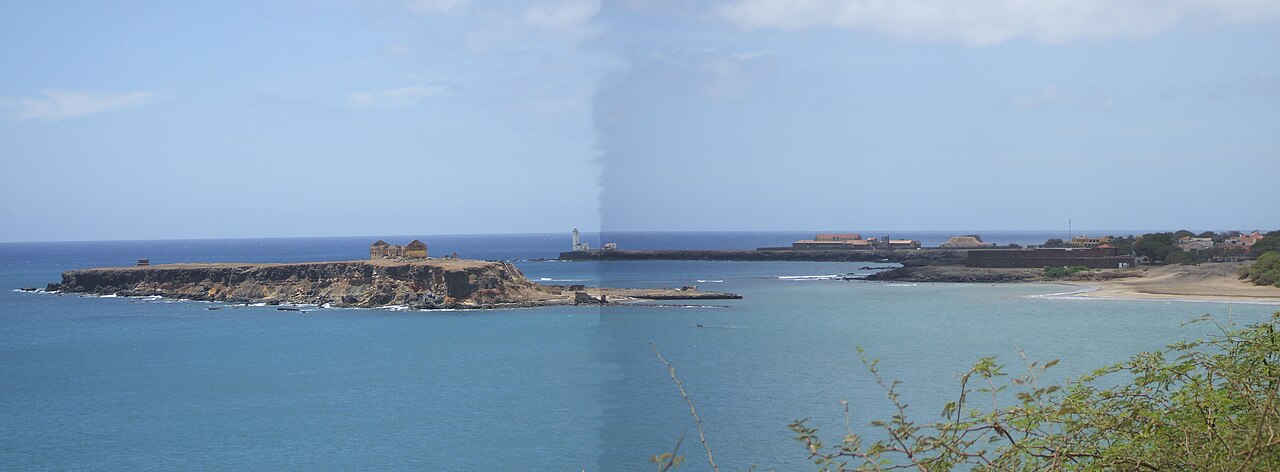
Geography & Landscape
- Location: Central Atlantic, 570 km off West Africa
- Total Area: 4,033 km²
- Islands: 10 major islands
- Highest Point: Pico do Fogo (2,829 m)
The Cape Verdean islands are volcanic in origin, formed by the Cape Verde hotspot as the African Plate drifted over it. The islands vary dramatically in character: Santo Antao features dramatic mountain ridges and deep valleys with lush vegetation, Fogo is dominated by an active stratovolcano that last erupted in 2014-15, and Sal and Boa Vista are flat, sandy, and desert-like.
Pico do Fogo, the archipelago's highest point, rises to 2,829 meters from within the massive Cha das Caldeiras caldera, where a small community lives and farms inside the volcanic crater. The 2014-15 eruption destroyed much of this village, but residents returned and rebuilt, a testament to the resilience that defines Cape Verdean life.
Climate & Environment
- Climate: Arid to semi-arid
- Average Temperature: 22-27°C
- Annual Rainfall: 60-300 mm (varies by island)
- Saharan Dust: Harmattan haze October-March
Cape Verde's climate is dominated by aridity. Most islands receive very little rainfall, concentrated in a short wet season from August to October. Periodic droughts have historically caused devastating famines — one of the primary drivers of the massive Cape Verdean diaspora. The Saharan Air Layer periodically brings Harmattan dust that reduces visibility and temperatures.
The mountainous islands like Santo Antao and Fogo catch more moisture from the trade winds, supporting terraced agriculture in their highlands. The flat eastern islands of Sal and Boa Vista are essentially desert, with long stretches of sand dunes and salt flats. Water scarcity remains one of the archipelago's most significant challenges, addressed through desalination plants on several islands.
Ecology & Biodiversity
- Loggerhead Turtles: Third largest nesting population globally
- Razo Lark: Endemic, one of world's rarest birds
- Marine Life: Humpback whales, whale sharks
- Endemic Plants: ~90 species
Cape Verde's isolation and volcanic origin have produced several endemic species. The Razo lark, found only on the tiny islet of Raso, has a population of just a few hundred individuals, making it one of the world's rarest birds. The Cape Verde warbler and giant wall gecko are other notable endemics.
The surrounding waters are a major nesting ground for loggerhead sea turtles, particularly on the island of Boa Vista, which hosts the third largest loggerhead nesting population in the world. Humpback whales breed in Cape Verdean waters during the winter months, and whale sharks are frequently spotted between August and November. The marine environment is increasingly recognized as one of the archipelago's greatest ecological assets.
Culture & History
- Population: ~590,000
- Capital: Praia (Santiago)
- Languages: Portuguese, Cape Verdean Creole
- Independence: 1975 (from Portugal)
Cape Verde was uninhabited when Portuguese sailors first arrived in 1456, and it subsequently became an important hub of the transatlantic slave trade. The forced mingling of Portuguese colonists, enslaved West Africans, and later arrivals created a unique Creole culture, language, and identity that defines Cape Verde today.
The Cape Verdean diaspora is larger than the resident population, with major communities in the United States (particularly New England), Portugal, and other European countries. Morna, the islands' signature musical genre, is characterized by haunting melodies and themes of longing (sodade) for homeland, love, and the sea. Cesaria Evora, known as the "Barefoot Diva," brought morna to international acclaim before her death in 2011.
Visitor Highlights
- Music: Morna and traditional performances
- Hiking: Santo Antao mountain trails
- Volcano: Pico do Fogo ascent
- Beaches: Boa Vista and Sal sand dunes
Santo Antao is a hiker's paradise, with trails winding through dramatic ribeiras (valleys) like the Paul Valley, where terraced sugarcane fields cling to steep mountainsides above the clouds. Climbing Pico do Fogo offers a chance to summit an active volcano and peer into its crater, with sweeping views across the archipelago.
Sal and Boa Vista attract beach lovers with their vast stretches of white sand and world-class windsurfing and kitesurfing conditions. Mindelo on Sao Vicente is the cultural capital, renowned for its live music scene, colonial architecture, and the annual Carnival celebrations that rival those of Brazil. Watching loggerhead turtles nest on Boa Vista's beaches between June and October is a powerful wildlife experience.
Key Facts
- Cape Verde consists of 10 volcanic islands located 570 km off the west coast of Africa.
- Pico do Fogo (2,829 m) is an active volcano that last erupted in 2014-15.
- The Cape Verdean diaspora outnumbers the resident population, with large communities in the US and Portugal.
- Boa Vista hosts the third largest loggerhead sea turtle nesting population in the world.
- Cape Verdean Creole is a distinct language blending Portuguese and West African linguistic elements.
Fun Facts
- Cesaria Evora, Cape Verde's most famous musician, performed barefoot for most of her career in solidarity with the island's poor.
- The island of Sal gets its name from its historic salt mines, which were once the island's primary economic resource.
- Cape Verde has had no recorded cases of malaria since the early 1960s, making it one of the few African countries to effectively eliminate the disease.
- A community lives inside the crater of Fogo volcano, farming grapes to produce wine from vines grown on volcanic soil at over 1,700 meters elevation.
Final Thoughts
Cape Verde is an Atlantic archipelago of remarkable contrasts — arid deserts beside lush mountain valleys, active volcanoes beside tranquil beaches, and a small population whose cultural influence through music and diaspora far exceeds what its remote geography might suggest. These volcanic islands are a testament to human resilience and creative adaptation at the crossroads of three continents.
