
The Dnieper (Dnipro in Ukrainian) is the fourth-longest river in Europe at approximately 2,200 kilometers, flowing from the Valdai Hills of Russia through Belarus and the entire length of Ukraine to the Black Sea. The river divides Ukraine into the historically distinct Right Bank (west) and Left Bank (east) regions.
Introduction
The Dnieper has been central to the history of Eastern Slavic civilization. Kyiv, Ukraine's capital and the birthplace of Kievan Rus', was founded on its western bank. The Zaporozhian Cossacks, legendary warriors of the Ukrainian steppe, were based on islands in the Dnieper's rapids. Today, the river is one of the most heavily dammed in Europe.
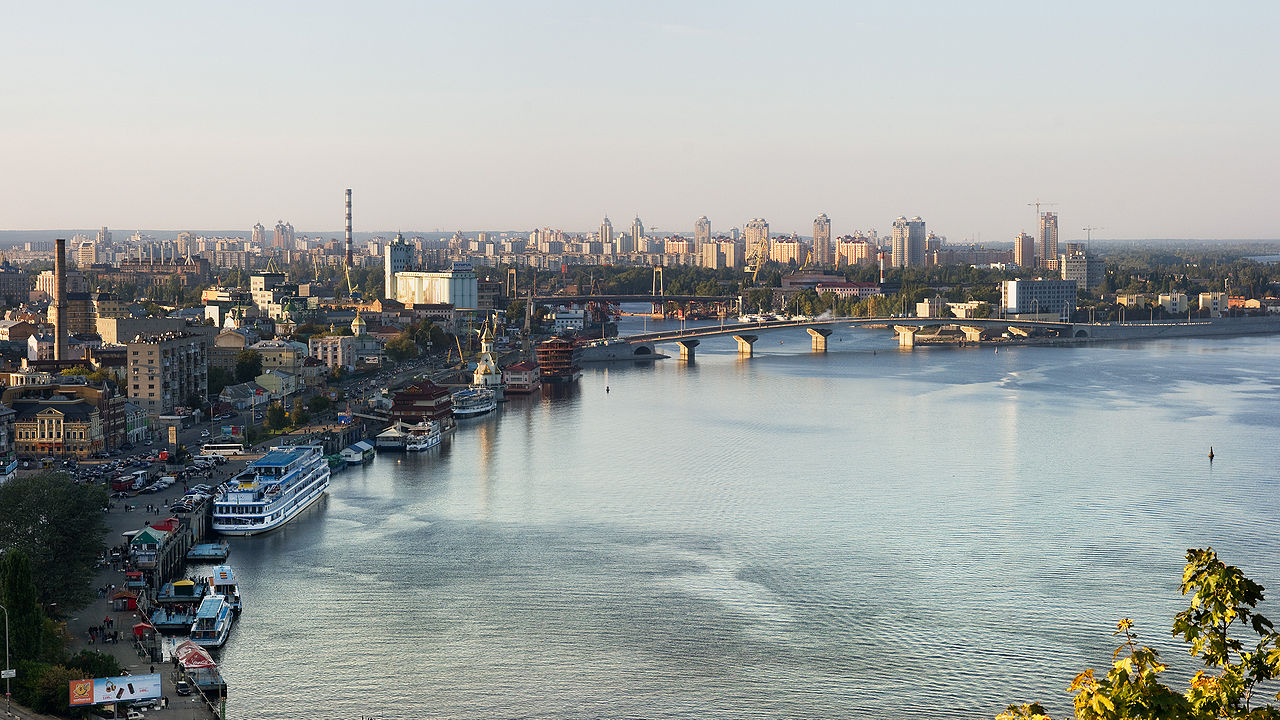
Source to Sea
- Length: ~2,200 km
- Source: Valdai Hills, Smolensk Oblast, Russia (~220 m elevation)
- Mouth: Black Sea, Dnieper-Bug estuary, near Kherson, Ukraine
The Dnieper begins in the Valdai Hills of western Russia, the same upland that gives rise to the Volga. It flows south through Belarus, passing through Mogilev, before entering Ukraine and flowing through Kyiv, Dnipro, and Zaporizhzhia to the Black Sea. In Ukraine, the river is impounded by a cascade of six major reservoirs.
The Dnieper reaches the Black Sea through a broad estuary near Kherson. The river's delta and estuary were the scene of intense fighting during the Russian-Ukrainian war, and the destruction of the Kakhovka Dam in June 2023 caused catastrophic flooding downstream, ecological devastation, and a humanitarian crisis.
Geography & Course
- Basin Area: ~504,000 km²
- Countries: Russia, Belarus, Ukraine
- Reservoirs: 6 major reservoirs in Ukraine (Kyiv, Kaniv, Kremenchuk, Dniprodzerzhynsk, Dnieper, Kakhovka)
The Dnieper Basin covers a vast area of the East European Plain, from the forests of Belarus to the steppes of southern Ukraine. The river is conventionally divided into the Upper Dnieper (in Russia and Belarus), Middle Dnieper (through central Ukraine including Kyiv), and Lower Dnieper (from the rapids to the sea).
The six Soviet-era reservoirs on the Ukrainian Dnieper have transformed the river from a free-flowing waterway with formidable rapids into a chain of artificial lakes. The Kremenchuk Reservoir is the largest, covering 2,250 square kilometers. These reservoirs provide hydroelectric power and facilitate navigation but have drowned the historic Dnieper Rapids and altered the river's ecology.
Climate & Hydrology
- Average Discharge: ~1,700 m³/s at mouth
- Ice Cover: December–March
- Kakhovka Dam Destruction: June 2023 — catastrophic downstream flooding
The Dnieper has a snowmelt-dominated flow regime, with peak flows typically in March and April. The cascade of reservoirs moderates the natural flood pulse, storing spring meltwater for year-round release and hydroelectric generation. The reservoirs collectively generate about 10 billion kilowatt-hours of electricity per year.
The destruction of the Kakhovka Dam on June 6, 2023, during the Russian-Ukrainian war, released an estimated 18 cubic kilometers of water downstream. The flood destroyed communities, contaminated water supplies, devastated agriculture, and caused long-term ecological damage to the Dnieper estuary and Black Sea coast. The disaster is considered one of the worst environmental catastrophes in European history.
Ecology & Wildlife
- Pre-Dam State: Rapids and island habitats supported unique ecosystems
- Reservoir Impact: Eutrophication, loss of native fish spawning habitat
- Kakhovka Disaster: Devastating ecological impact on lower Dnieper and Black Sea
Before the construction of the reservoir cascade, the Dnieper's rapids and associated islands supported unique ecological communities. The reservoirs flooded these habitats and created conditions for eutrophication (excessive algal growth) due to agricultural runoff and urban sewage. Blue-green algal blooms are a recurring problem in the Dnieper reservoirs.
The Kakhovka Dam disaster in 2023 drained the Kakhovka Reservoir, exposing thousands of hectares of contaminated lakebed and destroying the reservoir's fisheries. Downstream, the flood washed pollutants, munitions, and debris into the Dnieper estuary, killing aquatic life and contaminating drinking water for hundreds of thousands of people.
Human Geography & History
- Population in Basin: ~32 million people (Ukraine portion)
- Kievan Rus': First major Eastern Slavic state, founded on the Dnieper at Kyiv (~882 CE)
- Zaporozhian Cossacks: Legendary warrior society based on Dnieper islands
Kyiv, founded on the Dnieper's western bank, became the capital of Kievan Rus' in the late 9th century, the first major Eastern Slavic state and the cultural ancestor of modern Ukraine, Russia, and Belarus. The conversion of Kievan Rus' to Christianity in 988 CE reputedly took place through mass baptism in the Dnieper.
The Zaporozhian Cossacks, based on islands below the Dnieper's rapids (the Sich), were a legendary semi-autonomous warrior society that defended the Ukrainian steppe against Tatar, Ottoman, and Polish incursions from the 15th to 18th centuries. The Cossack heritage remains central to Ukrainian national identity. The Dnieper's role in the ongoing Russian-Ukrainian conflict underscores its continued geopolitical importance.
Key Facts
- The Dnieper is Europe's fourth-longest river at approximately 2,200 km.
- Six major reservoirs on the Ukrainian Dnieper generate about 10 billion kWh of electricity annually.
- Kyiv, Ukraine's capital and birthplace of Kievan Rus', was founded on the Dnieper.
- The destruction of the Kakhovka Dam in June 2023 caused one of Europe's worst environmental disasters.
- The Zaporozhian Cossacks were based on Dnieper islands and are central to Ukrainian identity.
Fun Facts
- The mass baptism of Kievan Rus' in 988 CE reputedly took place in the Dnieper River.
- The Dnieper's historic rapids, now submerged by reservoirs, were described by Byzantine Emperor Constantine VII in the 10th century.
- The Kakhovka Reservoir, before its 2023 destruction, was the largest reservoir by area in Ukraine at 2,155 km².
- The famous "Reply of the Zaporozhian Cossacks" painting by Repin depicts Cossacks writing a mocking letter on a Dnieper island.
Final Thoughts
The Dnieper is one of the most historically significant and tragically tested rivers in Europe. From the baptism of Kievan Rus' to the Cossack Sich, from Soviet industrialization to the Kakhovka Dam disaster, the Dnieper has been at the center of Eastern European history. Its future, like that of Ukraine itself, hangs in the balance.
Test Your Knowledge!
Think you know the world's rivers? Test your knowledge!
Play Geography Games →