

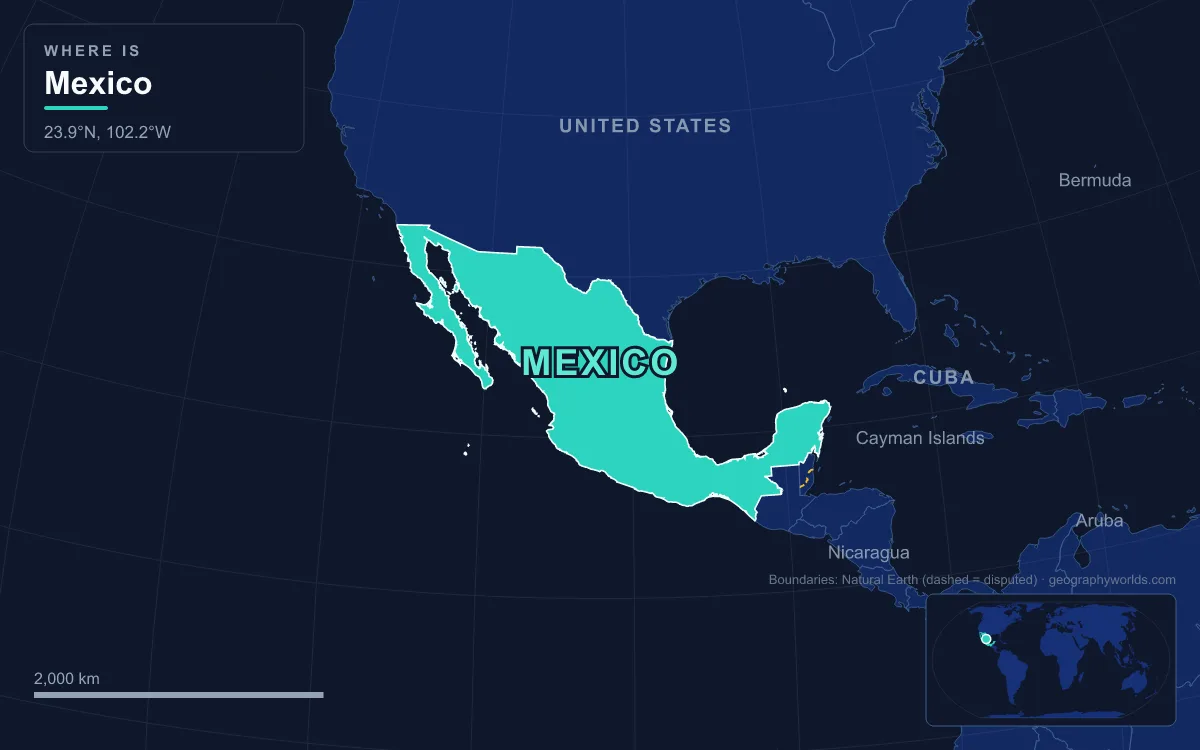
The most famous people from Mexico include the painter Frida Kahlo, the first Mexican artist bought by the Louvre; the poet Octavio Paz, winner of the 1990 Nobel Prize in Literature; the chemist Mario Molina, who shared the 1995 Nobel Prize in Chemistry for showing that CFC gases destroy the ozone layer; the film director Alfonso Cuarón, the first Latin American to win the Academy Award for Best Director; the boxer Julio César Chávez, who won his first 87 professional fights; and Benito Juárez, the country’s first Indigenous president. Mexico’s best-known names are unusually easy to pin to verifiable firsts, prizes and records, so this guide is organised around them: three Nobel Prizes, a run of Olympic and sporting firsts, a hold on the Oscars in the 2010s, and the older firsts that came before any of those prizes existed.
Three Nobel Prizes: Octavio Paz, Alfonso García Robles and Mario Molina
Mexico has three Nobel laureates, and they came in three different fields within 13 years. The first was a diplomat. Alfonso García Robles (1911–1991), born in Zamora, Michoacán, joined the foreign service in 1939, attended the 1945 San Francisco Conference that founded the United Nations and spent the 1960s pushing for a nuclear-weapons-free Latin America. The result was the Treaty of Tlatelolco, signed in 1967, the first treaty of its kind to cover a populated region, creating a nuclear-weapon-free zone from the Rio Grande southward. He shared the 1982 Nobel Peace Prize with Sweden’s Alva Myrdal.
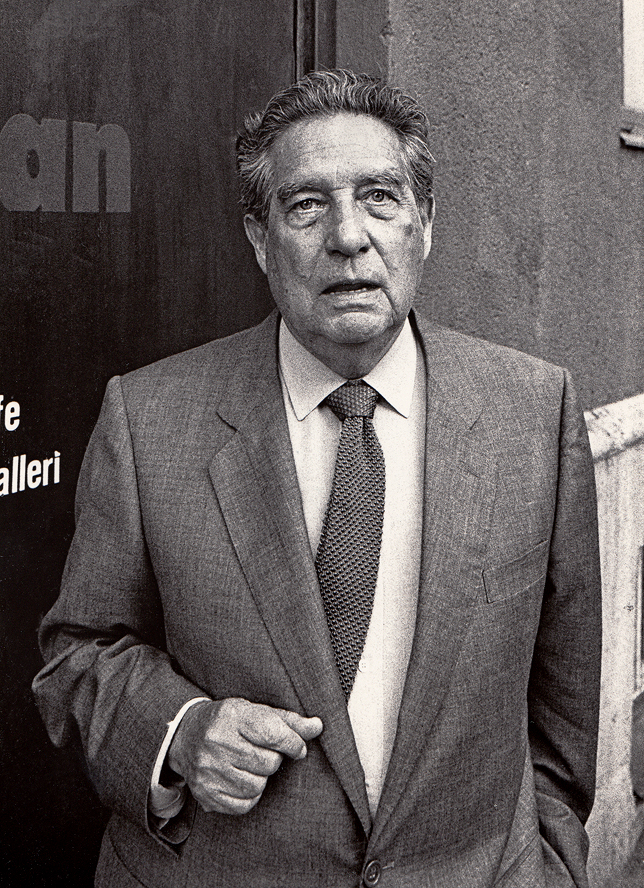
Octavio Paz (1914–1998) was born near Mexico City into a liberal political family; his grandfather had fought in the War of the Reform. As a diplomat in Paris in the 1940s he wrote The Labyrinth of Solitude (1950), an essay on Mexican identity and the Mexican personality. He served as Mexico’s ambassador to India from 1962 and resigned in 1968 in protest at the government’s massacre of student demonstrators at Tlatelolco in Mexico City. After the Cervantes Prize (1981) and the Neustadt Prize (1982), he received the Nobel Prize in Literature in 1990, the first Mexican to win it.
Mario Molina (1943–2020), born in Mexico City, was the first Mexican-born scientist to win the Nobel Prize in Chemistry. From 1973 he worked with Sherwood Rowland at the University of California, Irvine on chlorofluorocarbons, the gases then used in aerosol cans and refrigerators, and showed that they threaten the ozone layer; he also played a part in explaining the Antarctic ozone hole. He shared the 1995 prize and later ran an energy and environment centre in Mexico City that bears his name.
Olympic firsts, from Humberto Mariles in 1948 to Soraya Jiménez in 2000
Mexico’s first Olympic gold medals came on horseback. At the London Games in 1948 Humberto Mariles (1913–1972) won the individual show-jumping title and led Mexico to the team title decided in the same competition. With a third medal that year he remains the only Mexican double Olympic champion and the Mexican with the most medals at a single Games. His later life was troubled: he served five years of a prison sentence for shooting a driver in 1964 and died in a Paris jail in 1972 while awaiting trial.
The diver Joaquín Capilla (1928–2010) holds a different record: the most Olympic medals won by any Mexican. Diving from the 3-metre springboard and 10-metre platform at the 1948, 1952 and 1956 Games, he won one gold, one silver and two bronze, and was the first Mexican to win medals at three consecutive Olympics.
For 52 years every Mexican gold medallist was a man. That changed in Sydney in 2000, when the weightlifter Soraya Jiménez (1977–2013) won her weightlifting event to become the first Mexican woman to win Olympic gold. The taekwondo fighter María del Rosario Espinoza (born 1987), from La Brecha in Sinaloa, became the second in Beijing in 2008, then added bronze in London in 2012 and silver in Rio in 2016, making her the first Mexican woman to win medals at three consecutive Games.
Boxing and golf records: Julio César Chávez, Canelo Álvarez and Lorena Ochoa
Julio César Chávez (born 1962), from Ciudad Obregón in Sonora, is the benchmark for Mexican boxing. He won world titles at super featherweight, lightweight and light welterweight between 1984 and 1996, and his record stood at 89 wins, no losses and one draw before Frankie Randall beat him in 1994. His 1993 win over Greg Haugen at the Estadio Azteca in Mexico City drew 132,274 spectators, the largest crowd ever recorded for a championship boxing match.
His successor as the country’s biggest draw, Saúl “Canelo” Álvarez (born 1990), from Guadalajara, turned professional at 15 and has won world titles in four weight classes. In 2021, by beating the unbeaten Caleb Plant, he became the first boxer in history to hold all four major belts at super middleweight at once, making him undisputed champion; he regained that status in May 2025, then lost the belts to Terence Crawford on a unanimous decision in September.
In golf, Lorena Ochoa (born 1981), also from Guadalajara, was the first Mexican of either sex to be ranked number one in the world. She held the top spot for 158 consecutive weeks, from 23 April 2007 until she retired on 2 May 2010 at 28, an LPGA Tour record. Her opening round of 62 at the 2006 Kraft Nabisco Championship equalled the lowest score in any major, men’s or women’s. She was inducted into the World Golf Hall of Fame in 2017. Guadalajara, home to Álvarez, Ochoa and several other names in this article, is profiled in our guide to the largest cities in Mexico.
Five Best Director Oscars in six years: Cuarón, Iñárritu and del Toro
Between the 2014 and 2019 Academy Awards ceremonies, Mexican directors won the Oscar for Best Director five times out of six. Alfonso Cuarón (born 1961, Mexico City) started it with Gravity (2013), becoming the first Latin American to win the award, and won again for Roma (2018), a black-and-white film about a domestic worker in the Colonia Roma district of his childhood, which also earned him the Oscar for cinematography.
Alejandro González Iñárritu (born 1963, Mexico City) won in consecutive years for Birdman (2014) and The Revenant (2015), only the third director to win back-to-back after John Ford and Joseph L. Mankiewicz. Guillermo del Toro (born 1964, Guadalajara) won for The Shape of Water (2017), which also took Best Picture; he later added the Oscar for Best Animated Feature for Pinocchio (2022). The three directors are close friends and are often referred to together in the Mexican press.
The cameraman behind several of those films set a record of his own. Emmanuel Lubezki (born 1964, Mexico City) won the Oscar for Best Cinematography three years running, for Gravity, Birdman and The Revenant, with a style built on long unbroken takes and natural light.
Frida Kahlo at the Louvre and Luis Barragán’s Pritzker
Frida Kahlo (1907–1954) grew up in La Casa Azul, her family’s house in Coyoacán, now the Frida Kahlo Museum, the daughter of a German father and a mestiza mother of Purépecha descent. A bus accident at 18 left her in pain for life, and she began painting while confined to bed afterwards; self-portraits dominate her work. After her 1939 exhibition in Paris the Louvre bought her painting The Frame, making her the first Mexican artist in its collection. The records have continued since her death: her 1940 self-portrait The Dream (The Bed) sold for $54.7 million, the highest price paid at auction for a work by a woman artist.
Architecture brought another first. Luis Barragán (1902–1988), an engineer from Guadalajara who completed the extra coursework to qualify as an architect, won the Pritzker Prize in 1980, the second year it was awarded, with work built from plain walls, water and strong colour. His own house and studio near historic Tacubaya in Mexico City, built in 1948, became a UNESCO World Heritage Site in 2004.

Earlier firsts: Sor Juana, Benito Juárez, a colour-TV patent and a Space Shuttle seat
Some Mexican firsts predate the prizes. Sor Juana Inés de la Cruz (1648–1695), a Hieronymite nun in colonial New Spain, wrote poetry, plays and a defence of women’s right to learning; contemporaries called her “the Tenth Muse”, and she is counted among the most important women writers in the Spanish language. Benito Juárez (1806–1872), a Zapotec born in the village of San Pablo Guelatao in Oaxaca, became president in 1858, the first Indigenous president of Mexico and the first democratically elected Indigenous head of state in the post-colonial Americas. He led the Liberals through the Reform War and the French intervention that installed and then lost Emperor Maximilian.
In the 20th century the engineer Guillermo González Camarena (1917–1965), from Guadalajara, invented an early field-sequential colour television system and patented it in the United States as a “chromoscopic adapter for television equipment”; a similar system was used on NASA’s Voyager mission in 1979. And on 26 November 1985 Rodolfo Neri Vela (born 1952), a UNAM engineer from Chilpancingo, Guerrero, flew on the Space Shuttle Atlantis mission STS-61-B as the first Mexican in space, helping deploy the Morelos-B communications satellite.
Many of these lives ran through the same city: Paz, Molina, Cuarón, Iñárritu, Kahlo and Barragán all lived and worked in the capital, which our guide to Mexico City as the capital of Mexico covers district by district, while the passion behind Chávez and Álvarez is explained in our look at the national sport of Mexico.