
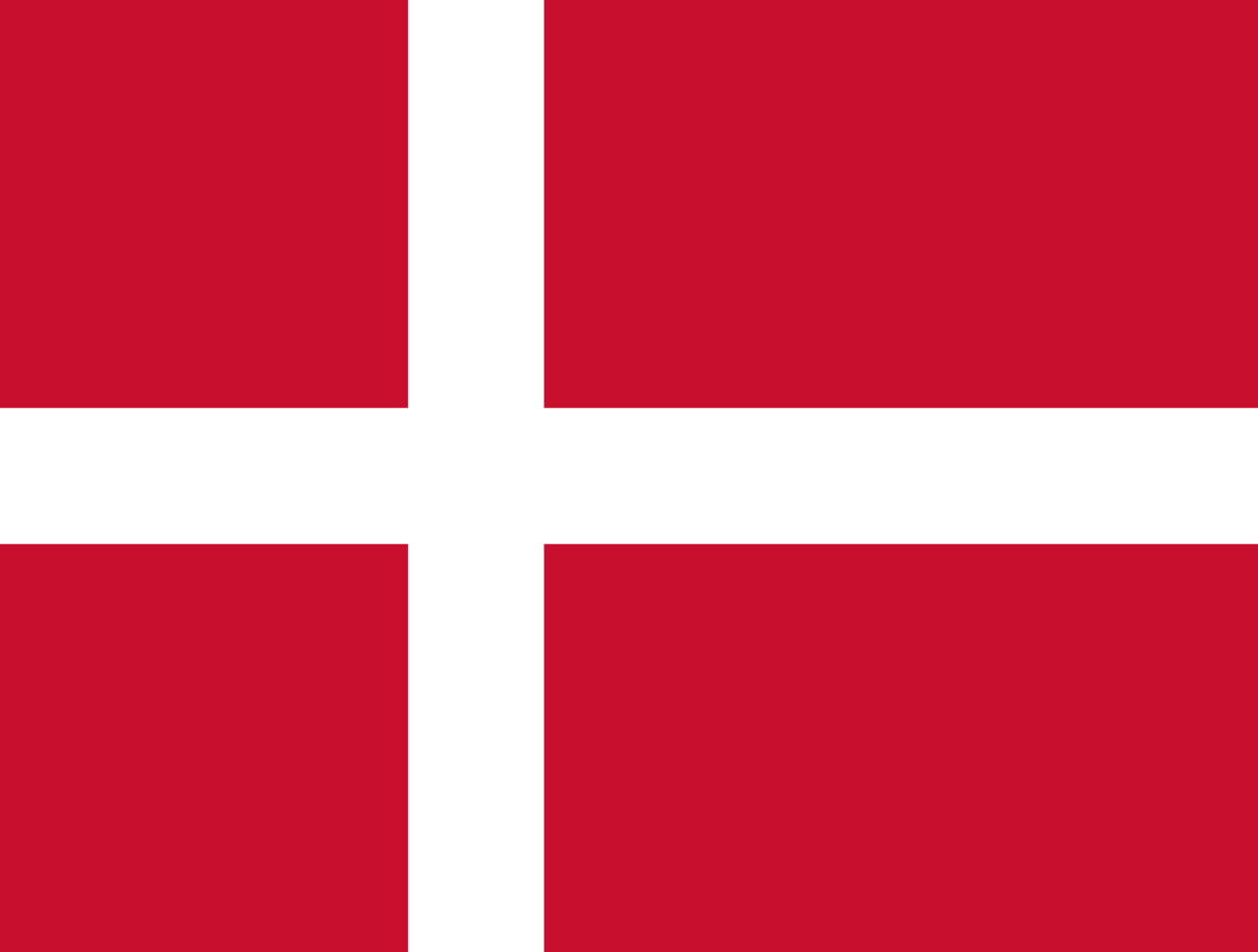
Few national symbols carry the weight of history quite like the Dannebrog, the red-and-white banner of Denmark. With its bold crimson field split by a clean white cross, it looks deceptively simple, yet this flag is widely regarded as the oldest continuously used national flag in the world. Danes do not merely tolerate their flag; they embrace it with an everyday warmth that surprises many visitors, hanging it in gardens, waving it at birthdays, and threading it through cakes and Christmas trees. To understand the Dannebrog is to understand something essential about Danish identity itself.
A Flag Older Than Most Nations
The story of the Dannebrog reaches back to 1219, a date that makes it astonishingly ancient by the standards of national emblems. While most countries adopted their flags in the eighteenth, nineteenth, or twentieth centuries, Denmark's banner predates the printing press, the discovery of the Americas, and the rise of the modern nation-state. That continuity is part of what makes the flag so cherished: a Dane waving the Dannebrog today is raising the same essential design that medieval Danes are said to have rallied behind. This unbroken thread of use, century after century, is precisely why historians point to it as the oldest national flag still in service.
The Legend of a Banner from the Sky
No discussion of the Dannebrog is complete without its founding legend. According to tradition, the flag descended from the heavens during a battle in 1219, when Danish forces, hard-pressed and on the verge of defeat, saw a red cloth bearing a white cross fall from the sky. The sight was taken as a divine sign, the tide of the fighting turned, and victory followed. Whether or not one accepts the tale as literal history, the legend has shaped how Danes feel about their flag for centuries. It frames the Dannebrog not as a design chosen by committee but as something almost gifted to the nation, lending it an aura of destiny and protection that few flags can claim.
Colors and Their Meaning
The Dannebrog is built from just two colors, and that restraint is part of its enduring power. The field is a vivid red, while the cross laid upon it is a crisp white. The red has long been associated with courage, sacrifice, and the blood spilled in defense of the homeland, themes that echo the flag's battlefield origin legend. The white cross, meanwhile, speaks to the Christian faith that anchored medieval Scandinavia and to ideals of peace and honesty. Together, the two colors create a striking contrast that is instantly legible from a distance, a practical virtue for a banner that originally needed to be recognized amid the smoke and confusion of combat.
Design and the Nordic Cross
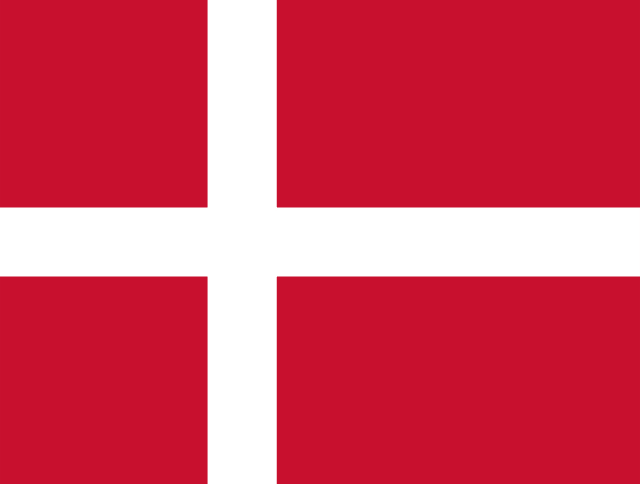
The defining feature of the Dannebrog is its Nordic cross, sometimes called the Scandinavian cross. Rather than sitting centered on the cloth, the vertical arm of the cross is shifted toward the hoist, the edge nearest the flagpole. This off-center placement gives the design its distinctive look and means the cross stretches all the way to each edge of the flag, dividing the red field into four rectangles, two squares near the pole and two longer rectangles flying free.
What makes this layout historically significant is that Denmark did not just adopt a cross; it originated the template that the entire region would follow. Every Nordic flag you can name borrows this same off-center cross arrangement, a direct visual inheritance from the Dannebrog. The simplicity of the design is intentional and effective: there are no intricate emblems, no heraldic clutter, just two colors and a single geometric form that any child could draw from memory.
A Family of Flags: How the Dannebrog Compares
The Dannebrog stands at the head of a recognizable family of banners. Norway, Sweden, Finland, Iceland, and the Faroe Islands all fly variations of the Nordic cross, and every one of them traces its layout back to Denmark's example. The shared structure means these flags are easy to group at a glance, yet each is distinguished by its own palette. Sweden pairs blue with a gold cross; Finland sets a blue cross on white; Iceland and Norway add a third color and an inner cross to their red, white, and blue designs.
Against this backdrop, the Dannebrog is the simplest and the most spare, relying on red and white alone. That economy is exactly what sets it apart. Where its neighbors layer in additional hues, Denmark's flag holds to a two-color scheme that feels almost elemental. If you would like to explore the country behind the banner in more depth, our denmark country guide covers its geography, culture, and travel highlights. For now, it is enough to note that the Dannebrog is both the ancestor and the most minimalist member of the Scandinavian flag family.
The Flag in Danish Daily Life
Perhaps the most charming thing about the Dannebrog is how thoroughly it has woven itself into ordinary Danish life, far beyond official ceremonies. In Denmark, the flag is not reserved for somber state occasions; it is a symbol of celebration and warmth. Danes raise it for birthdays, and miniature paper versions of the flag decorate cakes, gift wrap, and festive tables. At Christmas, small Dannebrog garlands are draped around the tree, an image that captures how the flag signals joy rather than mere patriotism.
It appears at sporting events, where fans paint the red and white across their faces; it flies from countless private flagpoles dotting suburban gardens; and it marks public holidays and national observances throughout the calendar. This everyday intimacy is somewhat unusual. In many countries the national flag is treated with formal distance, but in Denmark the Dannebrog functions as a cheerful, affectionate emblem of belonging, equally at home at a state event and a child's birthday party.
Interesting Facts About the Dannebrog
- It is widely recognized as the oldest national flag still in continuous use, dating to 1219.
- The name Dannebrog is often understood to mean "Danish cloth" or "the cloth of the Danes."
- Its off-center Nordic cross became the template for every other Scandinavian flag.
- Legend holds the flag fell from the sky during a battle, turning the fight in Denmark's favor.
- Danes use the flag for joyful occasions like birthdays and Christmas, not only formal events.
- The design uses only two colors, red and white, making it one of the simplest national flags.
Frequently Asked Questions
When was the flag of Denmark adopted?
The Dannebrog traces its origins to 1219, according to tradition, which is why it is celebrated as the oldest national flag still in continuous use. While its details have been formalized over the centuries, the essential red field and white Nordic cross have endured for roughly eight hundred years.
What do the colors of the Danish flag mean?
The flag uses red and white. The red is traditionally linked to courage, sacrifice, and the bloodshed of battle that features in the flag's founding legend, while the white cross reflects Christian heritage and ideals of peace. The high contrast also made the banner easy to recognize from a distance.
Who designed the flag of Denmark?
The Dannebrog has no known individual designer. Instead, its origin is wrapped in legend: it is said to have fallen from the sky during a battle in 1219 as a divine sign. Because the flag is so ancient, it emerged from medieval tradition rather than from any documented act of design.
What continent is Denmark on, and how does its flag compare to similar ones?
Denmark is a country in Europe, in the Scandinavian region of the north. Its flag is the original Nordic cross banner, and every other Scandinavian flag, including those of Sweden, Norway, Finland, and Iceland, follows the same off-center cross layout. The Dannebrog stands out as the simplest of them, using only red and white.