

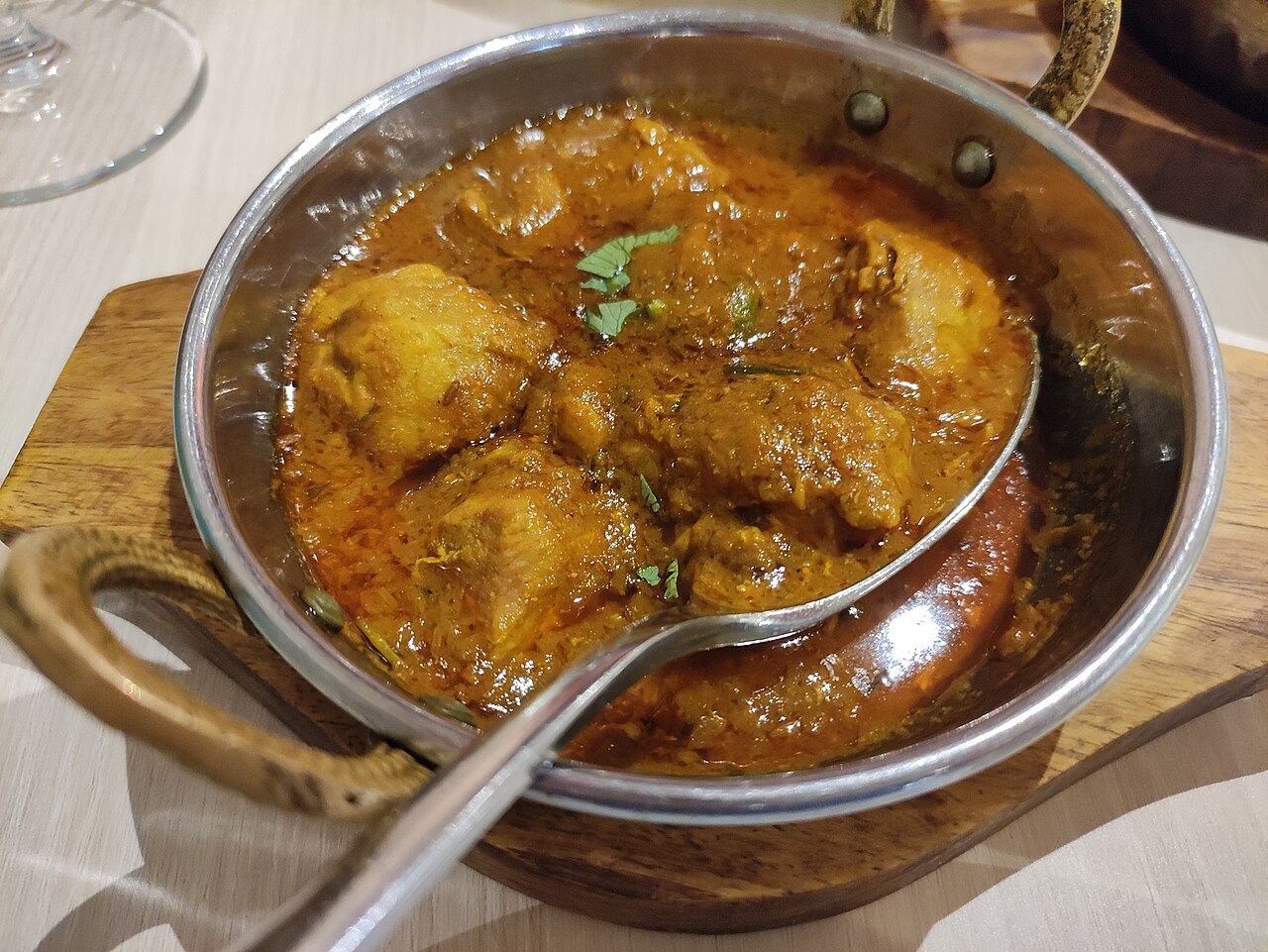
The word "curry" describes not a single dish but a vast family of spice-based preparations that vary dramatically by geography. From the fiery vindaloo of Goa to the mild, sweet Japanese katsu curry, the flavors we call "curry" are shaped by local spices, climate, available ingredients, and centuries of cultural exchange.
Introduction
India is the epicenter of curry culture, with each of its 28 states producing distinctive spice blends and cooking styles. But curry traditions extend across South and Southeast Asia, through the Indian Ocean trade routes to East Africa, and via British colonialism to Britain and Japan. Understanding curry is understanding the geography of spices.
Origins & History
- Origin: Indian subcontinent, at least 4,000 years ago
- Word "Curry": From Tamil kari, meaning sauce or gravy
- British Adoption: East India Company era, 18th century
Archaeological evidence from the Indus Valley civilization shows that spice blends containing turmeric, ginger, and garlic were used in cooking at least 4,000 years ago in what is now Pakistan and northwestern India. The tradition of combining multiple ground spices into complex blends is a defining feature of South Asian cooking.
The English word "curry" comes from the Tamil word kari, meaning sauce or gravy. British colonists in India adopted the term as a catch-all for the diverse spiced dishes they encountered, and they brought the concept home. The first curry recipe appeared in an English cookbook in 1747.
Growing Regions
- North India: Rich, creamy curries with dairy (Punjab, Lucknow)
- South India: Coconut, tamarind, curry leaf-based (Kerala, Tamil Nadu)
- Thailand: Coconut milk curries: red, green, yellow, Massaman
- Japan: Mild, thick curry (kare raisu) adapted from British navy
Northern Indian curries, particularly from Punjab, Kashmir, and Lucknow, tend to use cream, yogurt, butter, and ghee, reflecting the dairy farming geography of the Indo-Gangetic Plain. Spice blends like garam masala feature warming spices: cumin, coriander, cardamom, and cinnamon.
Southern Indian curries from Kerala, Tamil Nadu, and Karnataka use coconut milk, coconut oil, curry leaves, tamarind, and mustard seeds, reflecting the tropical coastal geography and coconut palm abundance of the region. The flavors are often sharper and more sour than northern dishes.
Climate & Conditions
- Spice Availability: Tropical regions grow the widest variety of spices
- Preservation: Hot climates drove the use of antimicrobial spices
- Coconut: Available in tropical coastal areas, absent in continental interiors
- Dairy: Available in cooler pastoral regions with cattle
The geography of curry directly reflects the geography of available ingredients. Coastal regions use coconut and seafood. Interior regions use dairy and meat. Tropical areas have access to fresh chilies, lemongrass, galangal, and turmeric. Drier regions rely more on dried spices and preserved ingredients.
Research has shown that cuisines from hotter climates tend to use more antimicrobial spices, supporting the hypothesis that spice use evolved partly as a food preservation strategy. This geographic pattern explains why tropical cuisines are generally more heavily spiced than temperate ones.
Global Trade & Economics
- Indian Spice Exports: $4+ billion annually
- British Curry Industry: £5+ billion annually, 12,000+ restaurants
- Japanese Curry: Most popular dish in Japan
The global appetite for curry has created enormous economic value. Britain's curry industry generates over 5 billion pounds per year, with over 12,000 curry restaurants employing more people than the steel, coal, and shipbuilding industries combined. Chicken tikka masala is widely cited as Britain's national dish.
Japan's curry (kare raisu) is the country's most popular dish, consumed over 60 times per year by the average Japanese person. Japanese curry evolved from British navy curry introduced in the late 1800s, passing through two cultural filters to become something uniquely Japanese: mild, thick, and served over rice.
Cultural Impact
- Cultural Exchange: Curry shows how food moves along trade and colonial routes
- Regional Pride: Each Indian state defends its curry traditions passionately
- Global Fusion: Thai-Indian, Japanese-British fusion curries
Curry's geography traces the paths of trade, migration, and colonialism. Indian traders brought spice blends to Southeast Asia. Arab merchants carried them to East Africa. British colonists took curry to England, and the Royal Navy carried it to Japan. Each transfer created a new local adaptation.
The diversity of curry within India alone demonstrates how geography shapes cuisine. A Kashmiri rogan josh, a Goan vindaloo, a Bengali fish curry, and a Chettinad pepper chicken share the label "curry" but taste completely different, reflecting the distinct climates, ingredients, and cultures of their home regions.
Key Facts
- India is the epicenter of curry culture, with each of its 28 states having distinctive spice traditions.
- The word "curry" comes from the Tamil word kari, meaning sauce or gravy.
- Britain has over 12,000 curry restaurants generating more than 5 billion pounds in annual revenue.
- Japanese curry, adapted from British navy curry, is Japan's most popular dish.
- Cuisines from hotter climates tend to use more antimicrobial spices, explaining tropical curry richness.
Fun Facts
- Chicken tikka masala, not fish and chips, is often called Britain's national dish.
- Japanese school lunches regularly feature curry, making it one of the country's most consumed dishes.
- The Portuguese introduced chili peppers to India in the 16th century, transforming Indian curry forever.
- Vindaloo gets its name from the Portuguese carne de vinha d'alhos (meat in wine and garlic).
Final Thoughts
The geography of curry is a culinary map of the tropical and subtropical world, tracing how spices, trade routes, and colonial connections have created a global family of dishes. From the dairy-rich curries of Punjab to the coconut-based preparations of Kerala and Thailand, curry proves that geography is the most important ingredient of all.
Test Your Knowledge!
Think you know your food geography? Try our interactive quiz!
Play Geography Games →