
Islands form through four main processes: volcanic eruptions building new land above the ocean surface, tectonic forces uplifting or separating pieces of continental crust, sediment deposition by rivers and ocean currents, and coral organisms constructing reef structures that rise above sea level.
Introduction
There are approximately 900,000 islands on Earth, ranging from tiny sand cays to continental giants like Greenland. Each island tells a geological story about the forces that created it, whether the explosive power of an undersea volcano or the patient construction of billions of tiny coral polyps over millennia.
The Short Answer
- Volcanic Islands: Formed by undersea eruptions (Hawaii, Iceland)
- Continental Islands: Separated from mainland by rising seas or rifting (Britain, Madagascar)
- Coral Islands: Built by coral organisms (Maldives, Marshall Islands)
- Barrier Islands: Formed by sediment along coastlines (Outer Banks)
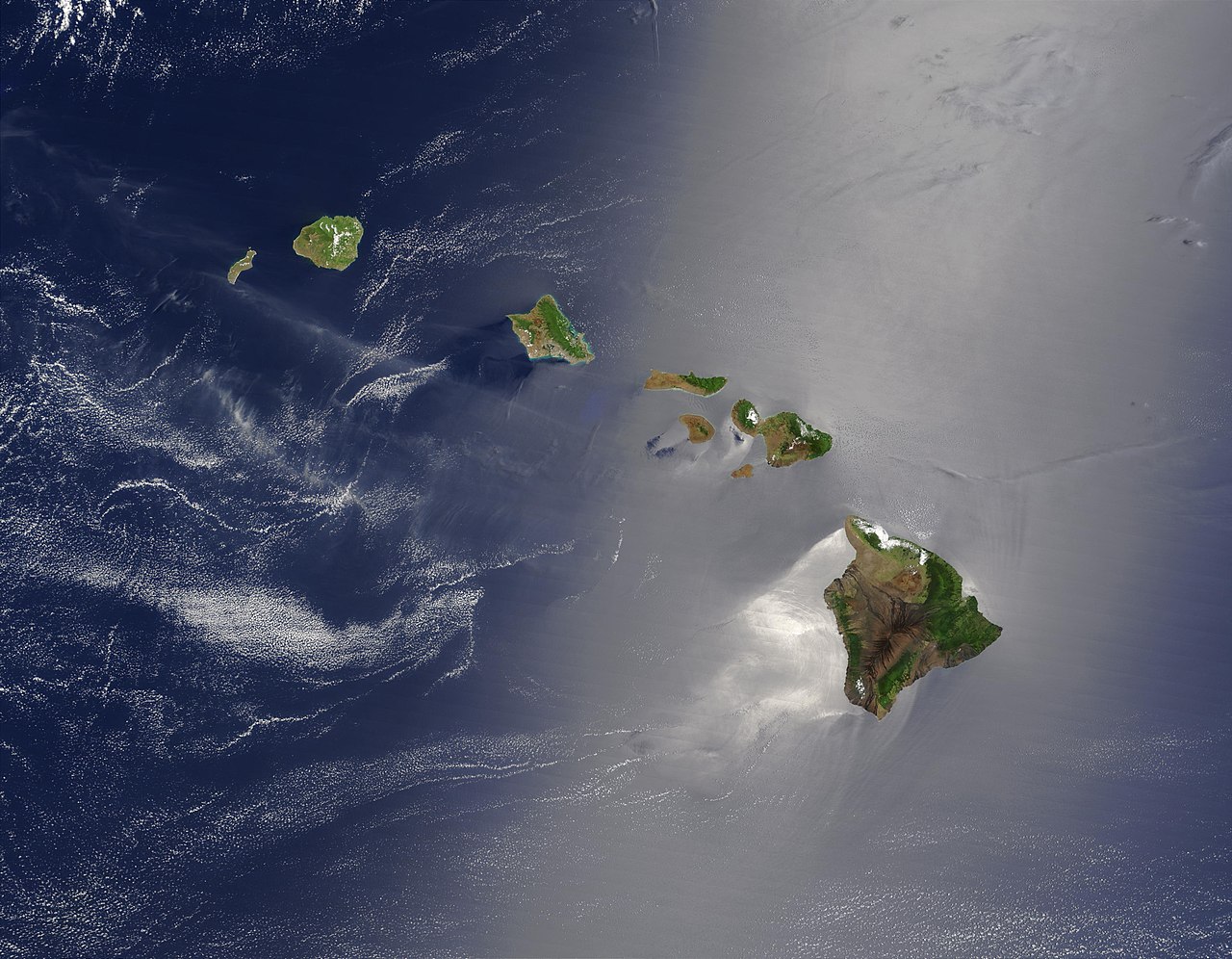
The most dramatic island formation occurs through volcanic eruptions. When an undersea volcano erupts repeatedly, lava accumulates until it breaks the ocean surface, creating a new island. The Hawaiian Islands, the Galapagos, and many islands of the Pacific were born this way.
Continental islands were once connected to a nearby continent but became separated through rising sea levels after ice ages or through tectonic rifting. Britain became an island about 8,000 years ago when melting glaciers raised sea levels and flooded the English Channel. Madagascar rifted away from Africa about 88 million years ago.
The Science Behind It
- Hotspot Volcanism: Magma plume creates island chains as plates move
- Sea Level Change: 120m rise since last glacial maximum drowned land bridges
- Coral Growth Rate: 1-3 cm per year for reef-building corals
Volcanic islands often form over hotspots, where plumes of exceptionally hot mantle material melt through the overlying tectonic plate. As the plate moves over the stationary hotspot, a chain of islands is created. Hawaii is the classic example: the Big Island is currently over the hotspot, while older islands to the northwest have moved off it and are slowly eroding and sinking.
Coral atolls form through a fascinating sequence first described by Charles Darwin. A volcanic island forms, coral grows around its shores creating a fringing reef, the island slowly subsides as it moves off the hotspot, the coral keeps growing upward to stay near sunlight, and eventually the island sinks completely, leaving a ring-shaped coral atoll surrounding a central lagoon.
Types & Variations
- Oceanic Volcanic: Mid-ocean hotspot or ridge (Iceland, Azores)
- Island Arc: Subduction zone chain (Japan, Philippines, Aleutians)
- Atolls: Coral ring on sunken volcano (Bikini, Maldives)
- Artificial Islands: Human-built (Palm Islands Dubai, Kansai Airport)
Island arcs form at subduction zones where one oceanic plate dives beneath another. The subducting plate generates magma that rises to form a curved chain of volcanic islands parallel to the oceanic trench. Japan, Indonesia, the Philippines, and the Caribbean islands are all island arcs. These tend to be volcanically active and earthquake-prone.
Barrier islands are low, narrow sandy islands that form parallel to mainland coastlines. They are built by wave action, longshore currents, and wind depositing sediment into elongated bars. The Outer Banks of North Carolina, Galveston Island in Texas, and the Frisian Islands of the North Sea are barrier islands. They are dynamic landforms that constantly shift and reshape.
Famous Examples
- Hawaii: Hotspot volcanic chain, Big Island still growing
- Iceland: Sits on Mid-Atlantic Ridge, volcanic and tectonic origin
- Maldives: Coral atolls, highest point only 2.4 meters above sea level
- Madagascar: Continental island, separated from Africa 88 million years ago
Madagascar is the world's fourth-largest island and a prime example of a continental island. It rifted away from the Indian subcontinent about 88 million years ago and has been isolated long enough to develop extraordinary biodiversity, with over 90 percent of its wildlife found nowhere else on Earth. Lemurs, baobab trees, and thousands of endemic species evolved in this island laboratory.
The Maldives, a chain of 1,192 coral islands grouped into 26 atolls, is the world's lowest-lying country with an average elevation of just 1.5 meters above sea level. These islands sit atop ancient volcanic peaks that have long since sunk beneath the waves, their positions marked only by the coral reefs that kept growing upward. Rising sea levels threaten to submerge the entire nation within this century.
Why It Matters
- Biodiversity: Islands are hotspots of unique species and endemism
- Climate Change: Low-lying islands face existential threat from rising seas
- Geopolitics: Island territories define exclusive economic zones in oceans
Islands have played an outsized role in the history of science. Darwin's observations in the Galapagos helped him develop the theory of evolution. Alfred Russel Wallace's work in the Malay Archipelago led to the Wallace Line, a fundamental concept in biogeography. Islands remain living laboratories for studying speciation, adaptation, and extinction.
Climate change poses an existential threat to low-lying island nations. The Maldives, Tuvalu, Kiribati, and the Marshall Islands could become uninhabitable within decades if sea levels continue to rise. Island nations have become leading voices in international climate negotiations, fighting for their survival against global temperature increases driven largely by continental nations.
Key Facts
- There are approximately 900,000 islands on Earth.
- Hawaii formed from a mantle hotspot and the chain extends over 6,000 km across the Pacific.
- Britain became an island only about 8,000 years ago when rising seas flooded the English Channel.
- Coral atolls form through the subsidence of volcanic islands while coral reefs keep growing upward.
- Madagascar has been isolated for 88 million years, giving it over 90% endemic wildlife.
Fun Facts
- Surtsey, an island off Iceland, emerged from the ocean during a volcanic eruption in 1963 and is a UNESCO site.
- The world's newest island, Hunga Tonga, formed in 2015 from a volcanic eruption near Tonga.
- Greenland is the world's largest island at 2.16 million km², but Australia is classified as a continent.
- Some islands are entirely artificial, like the Palm Islands in Dubai, built from millions of tons of sand and rock.
Final Thoughts
Islands are among the most diverse and fascinating landforms on Earth, each one a product of volcanic fury, tectonic forces, patient coral construction, or shifting sediments. They harbor unique ecosystems, shape ocean currents, and define maritime boundaries. As sea levels rise and volcanic activity continues, the world's islands remain dynamic features in an ever-changing planetary landscape.
Test Your Knowledge!
Curious about geography? Test what you've learned!
Play Geography Games →