

Iron is the fourth most abundant element in the Earth's crust and the most widely used metal, forming the backbone of modern civilization through steel. Global iron ore production exceeds 2.5 billion tonnes per year, feeding blast furnaces and steel mills that produce roughly 1.88 billion tonnes of crude steel annually. The geography of iron ore is dominated by two countries — Australia and Brazil — which together supply over half the world's internationally traded iron ore.
Introduction
The most important iron ore deposits formed over 2 billion years ago as banded iron formations (BIFs), which precipitated from iron-rich seawater in the Earth's early oceans before the atmosphere contained significant oxygen. These ancient deposits, subsequently enriched by weathering processes, are the source of the massive iron ore provinces of the Pilbara (Australia), Carajas (Brazil), and the Hamersley Range.
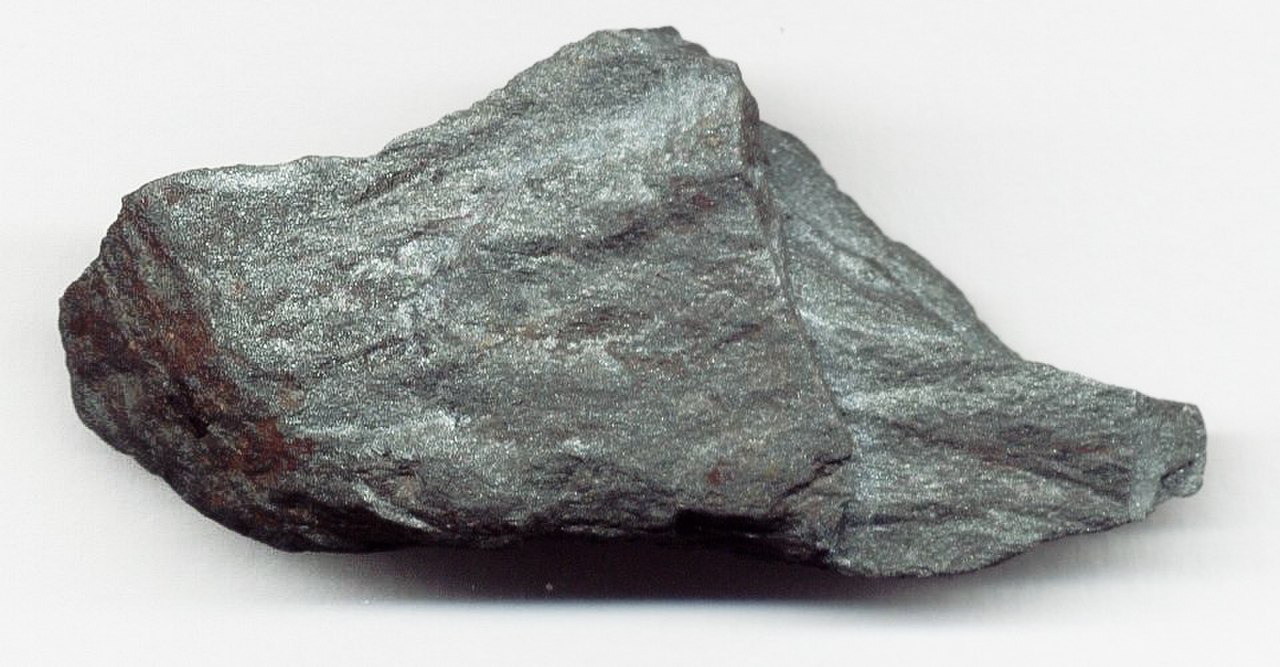
Top Iron Ore Producers
- Australia: ~920 million tonnes/year (~37% of world)
- Brazil: ~410 million tonnes/year
- China: ~360 million tonnes/year (low grade)
- India: ~270 million tonnes/year
- Russia: ~100 million tonnes/year
Australia's iron ore production is concentrated in the Pilbara region of Western Australia, one of the most productive mining provinces on Earth. Three mining giants — BHP, Rio Tinto, and Fortescue Metals — operate vast open-pit mines connected to purpose-built railways and export ports. The rail lines, some of the longest and heaviest trains in the world (up to 2.5 km long), carry ore to Port Hedland and Dampier for export primarily to China.
Brazil's iron ore industry centres on the Carajas mine in Para state, the world's largest iron ore mine, operated by Vale. Carajas produces exceptionally high-grade ore (over 65% iron content), making it the benchmark for quality. The Quadrilatero Ferrifero (Iron Quadrangle) in Minas Gerais is the other major Brazilian iron province, though it has been overshadowed by concerns about tailings dam safety after the Brumadinho disaster in 2019.
Geology of Iron Ore
- Banded Iron Formations: Precipitated from ancient oceans 2-3 billion years ago
- Enrichment: Weathering concentrated iron from ~30% to >60%
- Channel Iron Deposits: Fluvial deposits in ancient river channels
- Magnetite: High-iron mineral, requires processing
Banded iron formations (BIFs) are arguably the most geologically significant rocks on Earth. They formed when dissolved iron in the early ocean (which lacked oxygen) was oxidized by the first photosynthetic organisms and precipitated as alternating bands of iron-rich and silica-rich layers. This process, occurring roughly 2.5-1.8 billion years ago during the "Great Oxidation Event," simultaneously removed iron from the ocean and helped oxygenate the atmosphere.
Most economically mined iron ore has been naturally enriched by billions of years of weathering, which leached away the silica and concentrated the iron to grades exceeding 60%. These enriched deposits, known as "direct shipping ores" because they can be fed directly into blast furnaces, are what make the Pilbara and Carajas deposits so valuable.
The Seaborne Iron Ore Trade
- Total Trade: ~1.6 billion tonnes shipped annually
- China's Imports: ~1.1 billion tonnes/year (~70% of seaborne trade)
- Key Route: Australia/Brazil to China (Pilbara: ~3-4 week voyage)
- Capesize Vessels: Ships of 150,000-400,000 DWT carry iron ore
The seaborne iron ore trade is one of the largest commodity flows on Earth, with over 1.6 billion tonnes shipped annually — primarily from Australia and Brazil to China. China imports roughly 70% of all seaborne iron ore to feed its steel mills, which produce over half the world's steel. This trade relationship gives the iron ore price enormous influence over the Australian and Brazilian economies.
The scale of infrastructure required to move this quantity of material is staggering. Australia's Pilbara mines are connected to ports by railways that move ore in trains up to 2.5 km long. The world's largest ships — Valemax ore carriers with capacity of 400,000 dead-weight tonnes — were designed specifically to transport Brazilian iron ore to Asia.
Steel Production & Uses
- Global Steel: ~1.88 billion tonnes/year
- China: ~1.0 billion tonnes/year (~53% of world)
- Construction: ~52% of steel use
- Automotive: ~12% of steel use
Steel is the most widely used metal, essential for construction, infrastructure, transportation, and manufacturing. Producing one tonne of steel requires roughly 1.6 tonnes of iron ore, plus coking coal and limestone. China's steel industry alone consumes more iron ore than the rest of the world combined, making Chinese economic activity the dominant driver of iron ore demand and prices.
The steel industry is one of the largest industrial sources of CO2 emissions, responsible for roughly 7-9% of global emissions. Decarbonising steel production through hydrogen-based direct reduction (replacing coal with green hydrogen as the reducing agent) is one of the major industrial challenges of the energy transition.
Environmental Impact
- Scale: Some of the largest open-pit mines on Earth
- Dust: Iron ore dust is a significant air quality issue
- Tailings Dams: Catastrophic failures in Brazil (2015, 2019)
- Ecosystem Disruption: Mining in ancient and biodiverse landscapes
Iron ore mining operates at an enormous scale, with individual pits in the Pilbara spanning several kilometers. The sheer volume of material moved — billions of tonnes per year across the industry — makes iron ore mining one of the most landscape-altering human activities. Dust from mining operations and stockpiles is a persistent air quality concern for nearby communities.
The tailings dam disasters at Mariana (2015) and Brumadinho (2019) in Brazil killed a combined 290 people and released millions of cubic meters of mining waste into river systems, devastating communities and ecosystems downstream. These disasters prompted a global reassessment of tailings dam safety standards and accelerated the shift toward dry stacking of tailings as a safer alternative.
Key Facts
- Australia produces ~37% of the world's iron ore, primarily from the Pilbara region.
- Banded iron formations, the source of most iron ore, formed over 2 billion years ago.
- China imports roughly 70% of all seaborne iron ore — over 1.1 billion tonnes annually.
- The Carajas mine in Brazil produces some of the highest-grade iron ore in the world (>65% Fe).
- The steel industry accounts for 7-9% of global CO2 emissions.
Fun Facts
- Iron ore trains in Australia's Pilbara are among the longest in the world — up to 2.5 km with 268 ore cars.
- The red color of Mars is due to iron oxide (rust) on its surface, the same mineral found in iron ore.
- BHP's mining operations in the Pilbara are so large they are visible from the International Space Station.
- Before modern steel, ancient civilizations valued meteoric iron (from meteorites) more highly than gold because it was the only source of metallic iron.
Final Thoughts
The geography of iron ore deposits reaches back billions of years to the earliest transformation of Earth's atmosphere and oceans. Today, the massive iron ore provinces of the Pilbara and Carajas fuel a global steel industry that remains the structural backbone of modern civilization, even as it confronts the imperative of decarbonisation.
Test Your Knowledge!
Think you know your mining geography? Try our interactive quiz!
Play Geography Games →